
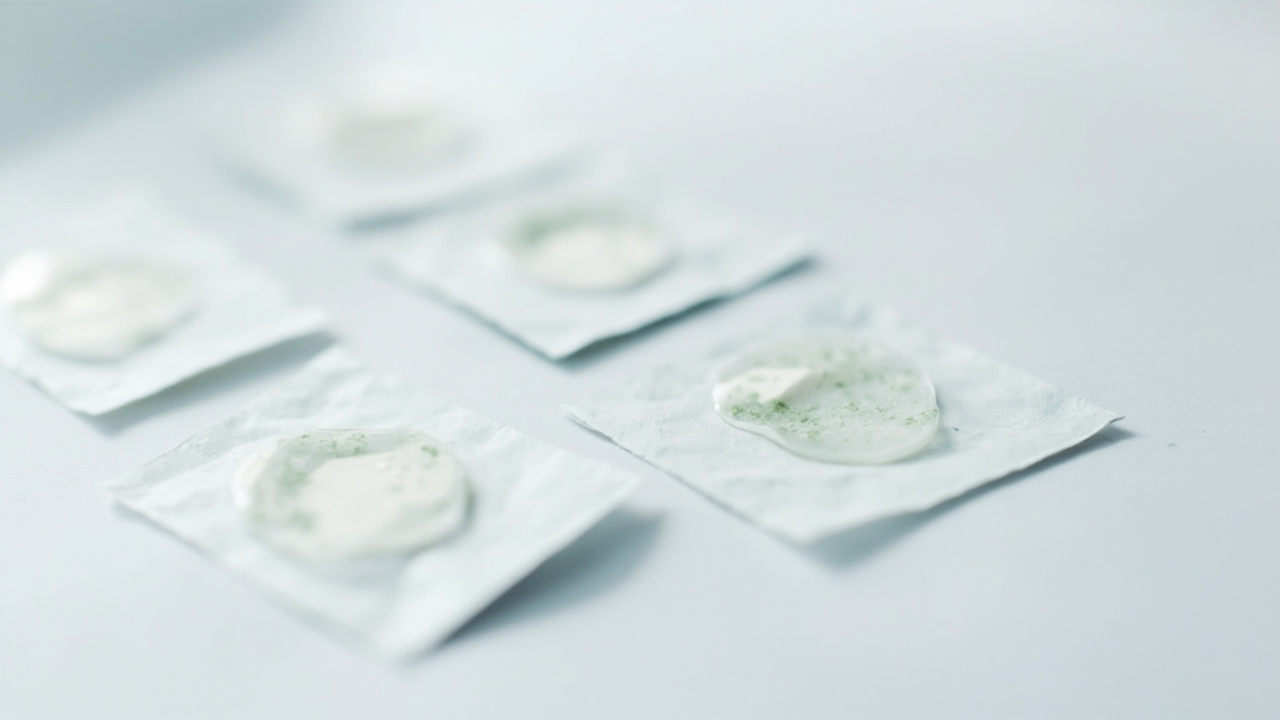
To launch a transdermal patch minimum viable product (MVP), you must first secure a contract manufacturer with ISO 13485 certification, then complete FDA establishment registration (if selling in the U.S.) and prepare a CE Declaration of Conformity for Europe. Expect to invest indicatively $15,000–$50,000 in regulatory and testing fees, with lead times of 3–9 months. This guide gives you the exact documents, costs, and timelines to plan your patch startup market entry.
Key Takeaways
- Why an MVP Approach Makes Sense for Patch Startups
- Step-by-Step MVP Development Process
- Checklist Table: Regulatory and Compliance Requirements
- Cost Breakdown and Funding Strategies
- Choosing the Right OEM Partner
- Frequently Asked Questions
Key Takeaways
- Start with a certified OEM partner (ISO 13485, GMP) to avoid costly delays; Kongdy Health offers low MOQs from 50,000 patches.
- Budget indicatively $15k–$50k for regulatory filings and testing; FDA establishment registration is free but testing can cost $5k–$20k.
- Timeline: 3–6 months for formulation and pilot, 2–4 months for regulatory review; plan 9–12 months total.
- Essential documents: Certificate of Free Sale, ISO 13485 certificate, CE Declaration of Conformity, CoA, MSDS.
- Use a checklist table to track requirements; missing ISO 13485 can block market entry entirely.
- Global transdermal patch market projected to reach $8.5 billion by 2027 (Grand View Research, 2020), growing at ~4.5% CAGR.
Entering the transdermal patch market as a startup is both promising and complex. The global transdermal patch market was valued at approximately $6.5 billion in 2020 and is projected to reach $8.5 billion by 2027, growing at a CAGR of around 4.5% (Grand View Research, 2020). This growth is driven by increasing demand for non-invasive drug delivery, rising prevalence of chronic diseases, and technological advancements in adhesive formulations. However, for a startup, the path to market is fraught with regulatory hurdles, high development costs, and complex manufacturing requirements. That’s where the minimum viable product (MVP) approach comes in. By focusing on a simplified product with essential features, startups can validate market demand, secure early revenue, and iterate toward a full-scale launch. In this comprehensive guide, we’ll walk you through the MVP approach for patch startups, covering regulatory requirements, cost breakdowns, timelines, and how to choose the right OEM partner. Whether you’re developing a nicotine replacement patch, a pain relief patch, or a cosmetic patch, this guide will provide actionable insights to navigate the complexities of market entry.
Why an MVP Approach Makes Sense for Patch Startups
The traditional path to market for a transdermal patch involves years of R&D, extensive clinical trials, and millions of dollars in investment. For a startup, this is often unfeasible. The MVP approach allows you to launch a simplified version of your product with minimal viable features, test the market, and gather customer feedback before committing to full-scale development. This is particularly relevant in the transdermal patch industry, where regulatory pathways can be streamlined for certain product classifications. For example, many over-the-counter (OTC) patches, such as cosmetic or topical analgesic patches, may not require premarket approval from the FDA, depending on their claims and ingredients. By starting with an MVP, you can avoid the lengthy and costly Premarket Approval (PMA) or New Drug Application (NDA) processes, which can take 3-7 years and cost upwards of $10 million (FDA, 2022). Instead, you can focus on a product that falls under Class I or Class II medical device regulations, which have simpler pathways like 510(k) clearance (for Class II) or exempt status (for Class I). Moreover, an MVP allows you to validate your business model with real customers. You can launch in a limited geography or through a direct-to-consumer channel, gather data on efficacy, user experience, and market demand, and then use that data to attract further investment or refine your product. This lean startup methodology is particularly effective in the medical device industry, where failure rates are high and development cycles are long.
Regulatory Landscape: What You Need to Know
Navigating the regulatory landscape is perhaps the most challenging aspect of launching a transdermal patch. The requirements vary significantly depending on the product’s claims, ingredients, and target markets. In the United States, the FDA regulates transdermal patches as either drugs, medical devices, or combination products. If your patch delivers a drug (e.g., nicotine, fentanyl, contraceptive hormones), it will likely be regulated as a drug and require an NDA or ANDA. If it’s a device (e.g., a patch that uses micro-needles or electrical stimulation), it may require 510(k) clearance or PMA. Cosmetic patches (e.g., anti-wrinkle patches) are generally not regulated as drugs or devices, but they must comply with labeling and safety requirements. For a startup, the key is to choose a product category with a manageable regulatory pathway. OTC monograph drugs, such as topical analgesics (e.g., lidocaine, menthol), can be marketed without premarket approval if they comply with the OTC monograph. Similarly, Class I exempt devices (e.g., adhesive bandages) have minimal regulatory burden. However, even for exempt products, you must register your establishment with the FDA and list your device, and comply with labeling and manufacturing regulations (21 CFR Part 820). In Europe, the Medical Device Regulation (MDR) and In Vitro Diagnostic Regulation (IVDR) have tightened requirements. Most transdermal patches are Class IIa or IIb devices under MDR, requiring a CE mark from a Notified Body. The process involves a conformity assessment, clinical evaluation, and post-market surveillance. The cost for CE marking can range from €20,000 to €100,000 depending on the device class and Notified Body, with timelines of 6-12 months. In other regions, such as China, Japan, and Brazil, similar regulatory frameworks exist. It’s crucial to identify your target markets early and understand the specific requirements. Working with an experienced OEM partner like Kongdy Health can help you navigate these complexities, as they have expertise in regulatory submissions and can provide the necessary documentation, such as Certificate of Free Sale, ISO 13485 certificate, and CE Declaration of Conformity.
Step-by-Step MVP Development Process
Developing a transdermal patch MVP involves a structured process that balances speed, cost, and compliance. Here is a detailed step-by-step guide to help you navigate the journey:
- Market Research and Product Definition: Identify a niche market with unmet needs. Analyze competitors, pricing, and distribution channels. Define your product’s key features, target users, and claims. For example, a startup might focus on a natural pain relief patch for athletes, avoiding drug claims to stay under cosmetic or device regulations.
- Select an OEM Partner: Choose a contract manufacturer with experience in transdermal patches and certifications such as ISO 13485, GMP, and FDA registration. Request samples, audit reports, and client references. Discuss minimum order quantities (MOQs), which can range from 50,000 to 100,000 patches for a first run. Kongdy Health, for instance, offers MOQs starting at 50,000 patches, making it accessible for startups.
- Formulation and Prototyping: Work with your OEM to develop a formulation that meets your requirements. This includes selecting the adhesive, backing film, release liner, and active ingredients. Conduct stability testing to ensure shelf life. Typical formulation and prototyping costs range from $5,000 to $20,000, depending on complexity.
- Regulatory Strategy and Submissions: Determine the regulatory classification in your target markets. Prepare the necessary documents: for the U.S., FDA establishment registration and device listing (if applicable); for Europe, a CE Declaration of Conformity and technical file. Engage a regulatory consultant if needed. Budget indicatively $10,000–$30,000 for regulatory affairs.
- Quality Testing and Validation: Perform biocompatibility testing (ISO 10993), stability studies, and performance testing. This can cost $5,000–$15,000 and take 2-4 months. Ensure your OEM provides a Certificate of Analysis (CoA) for each batch.
- Pilot Production and Quality Assurance: Produce a pilot batch to validate the manufacturing process. Conduct in-process and finished product testing. The OEM should provide a Certificate of Analysis (CoA) and Material Safety Data Sheet (MSDS) for the product.
- Market Launch and Feedback: Launch in a limited market, gather user feedback, and monitor adverse events. Use this data to refine the product and prepare for scale-up.
Each step requires careful planning and execution. The entire process from concept to market can take 9-12 months for a simple patch, with costs ranging from $50,000 to $150,000. By following this structured approach, startups can minimize risks and increase their chances of success.
Checklist Table: Regulatory and Compliance Requirements
To help you track the essential requirements, use the following checklist table. It outlines the key documents, issuing authorities, timelines, indicative costs, and risks if missing. This table is based on typical requirements for a Class I/II transdermal patch in the U.S. and Europe.
| Requirement | Issued by | Timeline | Indicative cost | Risk if missing |
|---|---|---|---|---|
| ISO 13485 certificate (scope covering transdermal patches) | Accredited certification body (e.g., TÜV, SGS) | 3–6 months for initial certification | $10,000–$30,000 | Cannot market in many countries; OEM partnership may be void |
| FDA establishment registration | FDA | 1–2 weeks (online) | Free (annual registration fee may apply for some establishments) | Product may be deemed adulterated; import detention |
| CE Declaration of Conformity | Manufacturer (self-declaration for Class I) or Notified Body (Class II+) | 4–12 months (depending on class) | $5,000–$50,000 | Cannot sell in EU; product withdrawal |
| Certificate of Free Sale (CFS) | Country of origin regulatory authority | 2–8 weeks | $500–$2,000 | Import rejection in many countries |
| Certificate of Analysis (CoA) per batch | Manufacturer | 1–2 weeks per batch | Included in manufacturing cost | Quality disputes; regulatory non-compliance |
| Material Safety Data Sheet (MSDS) | Manufacturer or third-party lab | 1–2 weeks | $200–$1,000 | Shipping delays; safety compliance issues |
| Biocompatibility testing (ISO 10993) | Accredited testing lab | 4–8 weeks | $3,000–$10,000 | Product safety concerns; regulatory rejection |
Note: Costs and timelines are indicative and vary by region, product complexity, and chosen service providers. Always consult with your OEM and regulatory experts for precise estimates.
Cost Breakdown and Funding Strategies
Understanding the costs involved is critical for fundraising and budgeting. A typical MVP for a transdermal patch involves several cost categories. R&D and formulation can range from $10,000 to $50,000, depending on the complexity of the active ingredients and delivery mechanism. Regulatory and testing costs, including biocompatibility, stability, and clinical evaluations (if needed), can add $15,000 to $50,000. Manufacturing of the pilot batch (50,000 patches) might cost $10,000 to $30,000, including raw materials and packaging. Legal and consulting fees for contracts, IP, and regulatory strategy can be $5,000 to $20,000. Overall, a lean MVP can be achieved with a budget of $50,000 to $150,000. To fund this, startups can explore bootstrapping, angel investors, grants (e.g., SBIR from the U.S. government), or strategic partnerships with OEMs. Some OEMs offer flexible payment terms or lower MOQs for startups. For example, Kongdy Health provides OEM/ODM services with MOQs starting at 50,000 patches and can assist with regulatory documentation, reducing the need for external consultants.
Choosing the Right OEM Partner
Your OEM partner is the backbone of your MVP. Here’s what to look for:
- Certifications: ISO 13485, GMP, FDA registration, and CE marking capability. Verify the scope of the ISO certificate covers transdermal patches.
- Experience: At least 5-10 years in transdermal patch manufacturing, with a portfolio of successful products.
- Capacity: Ability to handle small MOQs (50,000–100,000 patches) for pilot runs and scale up to millions.
- Quality Assurance: In-house testing labs, batch traceability, and a robust quality management system.
- Regulatory Support: Assistance with documentation (CoA, MSDS, CFS) and regulatory submissions.
- Communication: Responsive project management and clear timelines.
- Cost: Transparent pricing with no hidden fees; competitive per-unit costs at scale.
Kongdy Health, with over 36 years of experience since 1989, serves 120+ countries and holds FDA, ISO 13485, and GMP certifications. They offer comprehensive OEM/ODM services, from formulation to packaging, and can guide you through the regulatory maze. Their MOQs start at 50,000 patches, making them an ideal partner for startups. Explore Kongdy Health’s OEM/ODM services to learn how they can accelerate your market entry.
Frequently Asked Questions
Q1: What is the minimum order quantity (MOQ) for a transdermal patch MVP?
MOQs vary by manufacturer and product complexity. For a simple patch, MOQs can range from 50,000 to 100,000 patches. Kongdy Health offers MOQs starting at 50,000 patches, which is suitable for pilot launches. Keep in mind that lower MOQs may come with higher per-unit costs, but they reduce initial inventory risk. It’s essential to discuss MOQs early with your OEM partner to align with your budget and market testing plans.
Q2: How long does it take to get FDA approval for a transdermal patch?
The timeline depends on the regulatory pathway. For OTC monograph drugs or Class I exempt devices, you may not need FDA premarket approval, but you must register your establishment and list your product, which takes 1-2 weeks. For Class II devices requiring 510(k) clearance, the review process typically takes 3-6 months. For new drugs requiring an NDA, the process can take years. Therefore, choosing a product with a simpler pathway is key for an MVP.
Q3: What are the key documents needed for exporting transdermal patches?
Essential documents include a Certificate of Free Sale (CFS) from the country of origin, ISO 13485 certificate, CE Declaration of Conformity (for Europe), Certificate of Analysis (CoA) for each batch, and Material Safety Data Sheet (MSDS). Additionally, you may need an FDA establishment registration number for U.S. imports. Your OEM partner should provide these documents; ensure they are included in your supply agreement.
Sources
- Grand View Research – Transdermal Patch Market Size Report
- FDA – How to Register and List a Device
- ISO 13485:2016 – Medical devices — Quality management systems
- WHO – Quality Assurance of Medicines
Related reading
Comparing suppliers? Send us your specification.
Tell us the product, quantity and target market. You will get pricing, MOQ and lead time within 12 hours — no obligation, NDA available.
MOQ 10,000 pcs · Samples 7–10 days · Factory since 1989 · FDA · ISO 13485 · CE · GMP · 120+ countries
Send Us Your Inquiry
Tell us your requirements — we usually respond with a preliminary quotation and sampling plan within 12 hours.
1 thought on “Patch Startup MVP: Market Entry Guide for Transdermal Patches”
Comments are closed.