
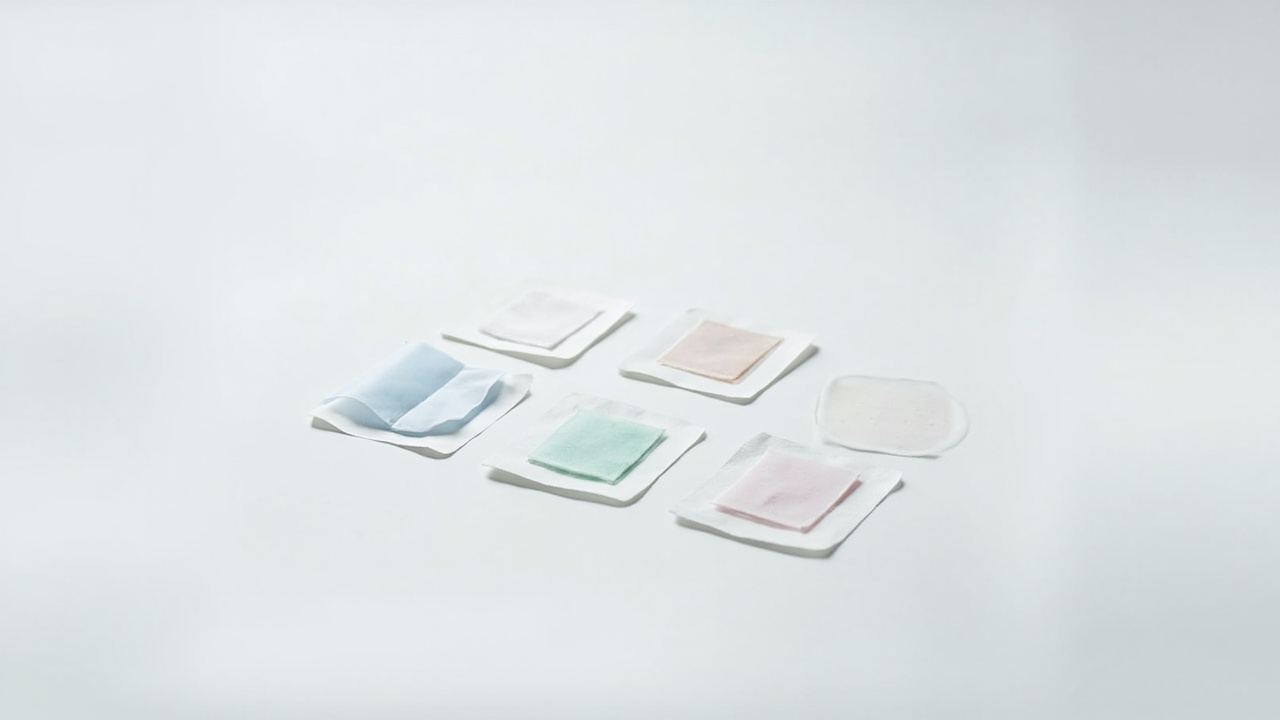
In transdermal patch manufacturing, the coating method is a critical decision that influences product quality, production efficiency, and regulatory compliance. As a leading OEM partner since 1989, Kongdy Health has witnessed the evolution of coating technologies across 120+ countries. This comprehensive guide compares solvent, hot-melt, and water-based coating methods, providing data-driven insights to help you choose the right approach for your patch product. Whether you’re developing a new transdermal system or optimizing an existing one, understanding these methods is essential for success.
Key Takeaways
- Understanding Patch Coating Methods
- Solvent Coating: Precision and Versatility
- Hot-Melt Coating: Speed and Sustainability
- Water-Based Coating: Eco-Friendly and Cost-Effective
- Key Factors in Choosing a Coating Method
- Regulatory and Quality Considerations
Key Takeaways
- Solvent coating offers precise thickness control and is ideal for heat-sensitive drugs, but requires solvent recovery systems to meet environmental regulations.
- Hot-melt coating is solvent-free, fast, and environmentally friendly, but high temperatures limit its use with thermolabile APIs.
- Water-based coating is cost-effective and safe, yet challenges remain in drying efficiency and film uniformity for hydrophobic drugs.
- Regulatory standards (FDA, ISO 13485, GMP) dictate coating method selection; solvent methods often need additional safety controls.
- Kongdy Health’s OEM services provide expertise in all three methods, ensuring optimal outcomes for your patch product.
Understanding Patch Coating Methods
Transdermal patches are sophisticated drug delivery systems that require precise manufacturing. The coating method determines how the drug-polymer matrix is applied to the backing layer. Three primary methods dominate: solvent coating, hot-melt coating, and water-based coating. Each has distinct advantages and limitations, and the choice depends on factors such as drug properties, production scale, and regulatory requirements.
The global transdermal patch market was valued at approximately $7.5 billion in 2022 and is projected to reach $10.5 billion by 2030, growing at a CAGR of 4.5% (Grand View Research, 2023). This growth is driven by increasing demand for non-invasive drug delivery and the development of novel patch technologies. As the market expands, manufacturers must optimize coating processes to stay competitive.
In this section, we’ll explore the fundamentals of each coating method, including their mechanisms, typical applications, and key considerations. By the end, you’ll have a clear framework for evaluating which method aligns with your product goals.
Solvent Coating: Precision and Versatility
Solvent coating involves dissolving the drug and polymer in an organic solvent, then coating the solution onto a substrate. The solvent is subsequently evaporated, leaving a thin, uniform film. This method is widely used for heat-sensitive drugs because the drying process occurs at relatively low temperatures (typically 40-80°C). Solvent coating offers excellent thickness control, often achieving coat weights with ±2% uniformity, which is crucial for consistent drug delivery.
However, solvent coating poses environmental and safety challenges. Organic solvents are flammable and volatile, requiring explosion-proof equipment and solvent recovery systems. Regulatory bodies such as the FDA and EPA enforce strict guidelines on solvent emissions. For instance, the FDA’s Guidance for Industry on Q3C Impurities: Residual Solvents sets limits on residual solvent levels in drug products. Compliance with these standards adds to operational complexity and cost.
Despite these challenges, solvent coating remains indispensable for certain APIs. For example, drugs like scopolamine and nicotine are commonly formulated using solvent coating due to their compatibility with organic solvents and sensitivity to heat. Additionally, solvent coating allows for the incorporation of enhancers and adhesives that are not soluble in water or stable at high temperatures.
From a production standpoint, solvent coating lines can be configured for high-speed operation, with line speeds up to 50 m/min. However, the need for solvent recovery and environmental controls can increase capital expenditure by 20-30% compared to water-based systems. Therefore, solvent coating is often chosen for high-value products where precision and drug stability justify the investment.
Hot-Melt Coating: Speed and Sustainability
Hot-melt coating is a solvent-free process where the drug-polymer mixture is melted and applied to the substrate at elevated temperatures (typically 120-180°C). The melt solidifies upon cooling, forming a stable matrix. This method is favored for its environmental benefits—no volatile organic compounds (VOCs) are emitted—and high production efficiency. Hot-melt lines can run at speeds exceeding 100 m/min, significantly higher than solvent or water-based lines.
The absence of solvents also eliminates the need for drying ovens and solvent recovery systems, reducing energy consumption and floor space. According to a 2021 study by the Institute for Manufacturing, hot-melt coating can reduce operating costs by up to 40% compared to solvent coating. Moreover, the process is easily scalable and amenable to continuous manufacturing, aligning with the FDA’s Quality by Design (QbD) initiative.
However, hot-melt coating is not suitable for thermolabile drugs, which degrade at high temperatures. Additionally, the high viscosity of polymer melts can limit the loading of certain drugs and require specialized coating dies. The method is best suited for drugs that are stable at high temperatures and for adhesives that are compatible with hot-melt processing. Common applications include nicotine patches (though some use solvent) and pain relief patches with lidocaine or diclofenac.
Regulatory considerations for hot-melt coating include ensuring that the high-temperature process does not generate degradation products. Manufacturers must conduct stability studies and validate that the drug remains stable throughout the coating process. ISO 13485 and GMP requirements mandate thorough process validation and quality control, which are achievable with hot-melt systems when properly designed.
Water-Based Coating: Eco-Friendly and Cost-Effective
Water-based coating uses water as the solvent, dispersing the drug and polymer in an aqueous medium. This method is environmentally friendly, as it eliminates organic solvents and reduces VOC emissions. It is also cost-effective, with lower raw material and disposal costs. Water-based coating is particularly suitable for hydrophilic drugs and polymers that are soluble or dispersible in water.
Despite its advantages, water-based coating faces technical challenges. Water has a high latent heat of vaporization, requiring more energy for drying compared to organic solvents. This can limit line speeds and increase energy consumption. Additionally, achieving uniform film formation can be difficult due to the surface tension of water and the potential for phase separation. However, advances in formulation science, such as the use of surfactants and co-solvents, have mitigated these issues.
Water-based coating is gaining traction due to regulatory pressure to reduce solvent use. The European Union’s REACH regulations and the U.S. EPA’s Clean Air Act encourage the adoption of water-based systems. In 2022, water-based coating accounted for approximately 25% of transdermal patch production, and this share is expected to grow as sustainability becomes a priority (MarketsandMarkets, 2023).
For OEM manufacturers, water-based coating offers a balance between cost and performance. It is ideal for products where drug loading is moderate and the API is stable in aqueous environments. Examples include patches for hormone replacement therapy and motion sickness. However, for hydrophobic drugs, solvent or hot-melt methods may be more appropriate.
Key Factors in Choosing a Coating Method
Selecting the right coating method requires a systematic evaluation of multiple factors. Below is a detailed list of considerations to guide your decision:
- Drug properties: Solubility, thermal stability, and compatibility with solvents or water.
- Production scale: Desired throughput, line speed, and available space.
- Regulatory environment: VOC limits, residual solvent limits, and safety requirements.
- Cost: Capital investment, operating costs, and waste disposal.
- Product performance: Required adhesion, drug release profile, and shelf life.
- Environmental impact: Carbon footprint and sustainability goals.
To make an informed decision, follow these steps:
- Define your product requirements: Clearly outline the drug, dosage, desired release profile, and target market.
- Evaluate drug stability: Conduct preformulation studies to assess thermal and hydrolytic stability.
- Assess production capabilities: Consider available equipment, space, and expertise.
- Review regulatory constraints: Identify relevant FDA, EMA, or other agency guidelines for your market.
- Perform cost analysis: Compare total cost of ownership for each method, including capital and operating expenses.
- Conduct pilot trials: Test each method at pilot scale to evaluate feasibility and product quality.
- Select and validate: Choose the method that best meets your criteria and validate the process under GMP.
By following this framework, you can mitigate risks and ensure a robust manufacturing process. Kongdy Health’s engineers can assist in this evaluation, leveraging decades of experience across all three coating methods.
Regulatory and Quality Considerations
Regardless of the coating method, compliance with regulatory standards is non-negotiable. The FDA’s Current Good Manufacturing Practice (cGMP) regulations (21 CFR Parts 210 and 211) require that manufacturing processes be validated and controlled. For transdermal patches, additional guidance is provided in the FDA’s Guidance for Industry: Transdermal and Topical Delivery Systems. ISO 13485:2016 sets the standard for quality management systems for medical devices, and many manufacturers also seek CE marking for European markets.
Residual solvents are a major concern for solvent coating. The FDA’s Q3C guidance classifies solvents into three classes based on toxicity, with Class 1 solvents (e.g., benzene) to be avoided, Class 2 limited, and Class 3 with low toxic potential. Manufacturers must test for residual solvents and ensure they are below permitted daily exposure (PDE) limits. For hot-melt and water-based methods, residual solvents are not an issue, but other impurities such as degradation products must be controlled.
Quality by Design (QbD) principles are increasingly applied to coating processes. By understanding how critical process parameters (e.g., coating thickness, drying temperature, line speed) affect critical quality attributes (e.g., drug content uniformity, adhesion), manufacturers can design robust processes. Kongdy Health employs QbD throughout its OEM services, ensuring that every patch meets stringent quality standards.
In addition, environmental regulations such as the EPA’s Maximum Achievable Control Technology (MACT) standards for solvent emissions impact solvent coating operations. Manufacturers must install control equipment such as thermal oxidizers or solvent recovery systems, which add to capital and operating costs. These factors should be weighed against the benefits of solvent coating.
Conclusion: Partnering for Optimal Coating Solutions
Choosing the right coating method for transdermal patches is a strategic decision that balances drug properties, production efficiency, regulatory compliance, and cost. Solvent coating offers precision for heat-sensitive drugs but requires environmental controls. Hot-melt coating provides speed and sustainability but is limited by high temperatures. Water-based coating is eco-friendly and cost-effective but faces drying challenges. By understanding these trade-offs and leveraging expert guidance, you can select the optimal method for your product.
As a trusted OEM partner since 1989, Kongdy Health has the expertise and infrastructure to support your coating needs. With FDA, ISO 13485, and GMP certifications, we ensure that your patches meet the highest quality standards. Whether you need solvent, hot-melt, or water-based coating, our team can guide you through every step, from formulation to commercialization. Contact Kongdy Health today to discuss your transdermal patch project and discover how our OEM services can accelerate your success.
Frequently Asked Questions
Q1: What are the key differences between solvent and hot-melt coating for transdermal patches?
Solvent coating involves dissolving the drug and polymer in an organic solvent, which is then evaporated, allowing for low-temperature drying and precise thickness control. Hot-melt coating, on the other hand, melts the mixture at high temperatures and requires no solvent, resulting in faster line speeds and no VOC emissions. The choice depends on drug thermal stability and environmental regulations.
Q2: How does water-based coating compare in terms of cost and performance?
Water-based coating is generally more cost-effective due to lower raw material and disposal costs, and it is environmentally friendly. However, it may require more energy for drying and can be challenging for hydrophobic drugs. Performance can be optimized with formulation adjustments, making it suitable for many hydrophilic drugs.
Q3: What regulatory standards should I consider when selecting a coating method?
Key standards include FDA cGMP (21 CFR Parts 210/211), ISO 13485 for quality management, and GMP for Europe. Residual solvent limits per FDA Q3C are critical for solvent coating. Environmental regulations such as EPA MACT and EU REACH also impact solvent use. Compliance ensures product safety and market access.
Sources
- Grand View Research: Transdermal Patch Market Analysis
- FDA Guidance Documents
- ISO 13485:2016 Medical Devices Quality Management
- MarketsandMarkets: Transdermal Patch Market Report
Related reading
Comparing suppliers? Send us your specification.
Tell us the product, quantity and target market. You will get pricing, MOQ and lead time within 12 hours — no obligation, NDA available.
MOQ 10,000 pcs · Samples 7–10 days · Factory since 1989 · FDA · ISO 13485 · CE · GMP · 120+ countries
Send Us Your Inquiry
Tell us your requirements — we usually respond with a preliminary quotation and sampling plan within 12 hours.
1 thought on “Patch Coating Methods: Solvent, Hot-Melt & Water-Based”
Comments are closed.