
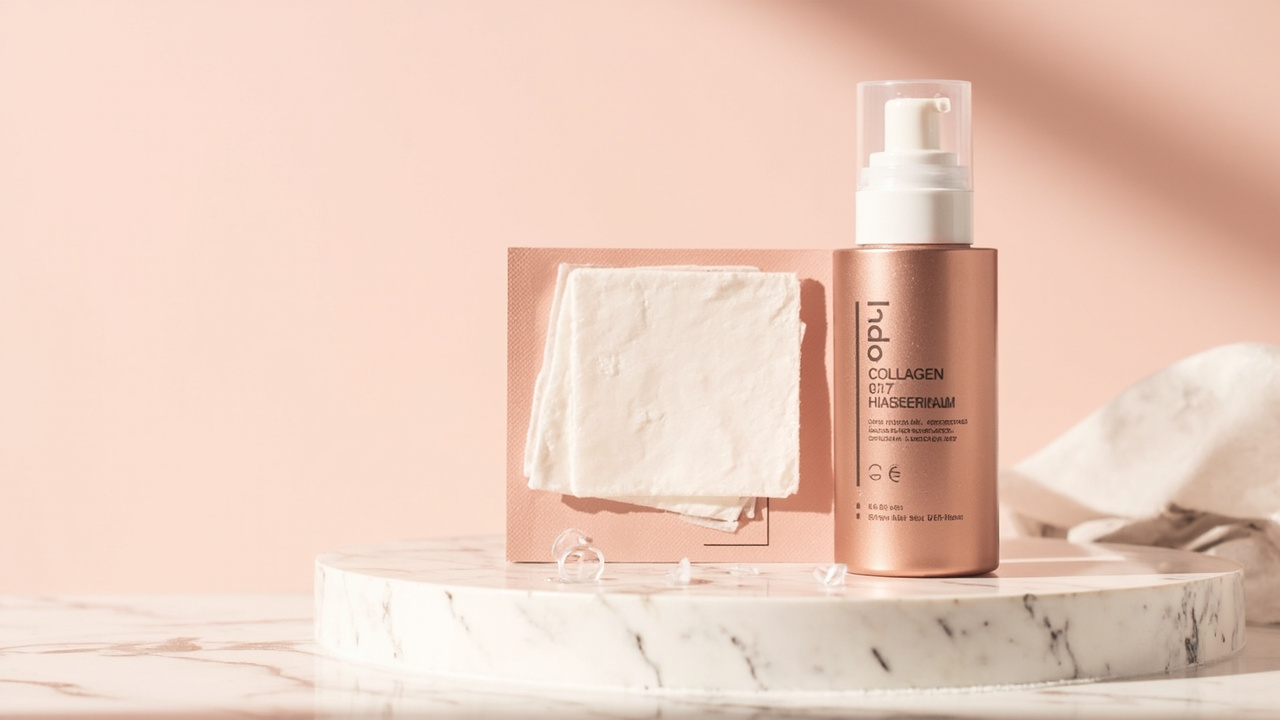
The global beauty patch category has moved decisively from novelty to a serious, formulation-driven segment of the skincare market. As a manufacturer of transdermal delivery systems since 1989, Kongdy Health has watched demand for the beauty patch evolve from simple moisturizing films into sophisticated hydrogel matrices engineered to deliver collagen, hyaluronic acid, and caffeine with measurable precision. For brands, distributors, and private-label buyers, the opportunity is substantial — but so is the complexity of choosing the right format, polymer system, and manufacturing partner. This guide breaks down the three dominant beauty patch formats, the science behind each, the regulatory landscape, and the practical criteria for selecting a collagen patch OEM that can scale with your brand.
Key Takeaways
- Why Beauty Patches Are Outperforming Conventional Skincare Formats
- The Three Core Formats: Collagen, Hyaluronic Acid, and Caffeine
- Hydrogel Face Patch Construction: What Buyers Must Understand
- Regulatory Landscape: FDA, ISO 13485, GMP, and CE
- How to Evaluate a Collagen Patch OEM Partner
- Formulation and Consumer Trends Shaping the Category
Key Takeaways
- Collagen, hyaluronic acid, and caffeine patches serve distinct consumer claims — firming, hydration, and de-puffing — and should be formulated and marketed as separate SKUs rather than one generic product.
- Hydrogel face patch construction (backing, matrix, release liner) determines wear time, adhesion, and active delivery; the matrix polymer system is the single most important technical decision.
- Global skincare patch demand continues to grow at a high single-digit CAGR, driven by Asia-Pacific consumption and Western K-beauty adoption (Grand View Research, 2023).
- Regulatory classification varies by market — cosmetics in the US/EU, quasi-drugs in Korea/Japan — so OEM partners must support FDA, ISO 13485, GMP, and CE-aligned documentation.
- OEM selection should weigh formulation capability, in-house patch manufacturing, stability testing, and scalability, not price alone.
Why Beauty Patches Are Outperforming Conventional Skincare Formats
Beauty patches occupy a unique position in the skincare market because they combine the sensory appeal of a treatment with the functional advantage of occlusion. When a patch is applied to the skin, it creates a micro-environment that limits transepidermal water loss, increases local skin temperature, and improves the penetration of actives compared with a cream or serum applied to open air. This occlusion effect is the fundamental reason patch formats can deliver ingredients like hydrolyzed collagen and low-molecular-weight hyaluronic acid more efficiently than leave-on products.
The market data supports the shift. Grand View Research estimated the global facial mask and patch market in the multi-billion-dollar range with a compound annual growth rate in the high single digits through the late 2020s (2023). Fortune Business Insights similarly projected continued expansion of hydrogel and sheet-mask formats, with Asia-Pacific accounting for the largest regional share due to entrenched K-beauty and J-beauty routines. On the supply side, the global hyaluronic acid market alone was valued at several billion dollars and is forecast to grow at a double-digit CAGR, reflecting both injectable and topical demand (Grand View Research, 2023).
For B2B buyers, this growth translates into a clear strategic signal: beauty patches are no longer a seasonal add-on but a core category that merits dedicated SKUs, dedicated packaging, and dedicated formulation investment. Brands that treat patches as a serious line — with distinct collagen, HA, and caffeine variants — capture higher repeat-purchase rates because each format addresses a specific, recognizable consumer need.
The Three Core Formats: Collagen, Hyaluronic Acid, and Caffeine
Although all three formats share a hydrogel or hydrocolloid base, their active systems and marketing claims differ substantially. Understanding these differences is essential for product development and for briefing an OEM partner accurately.
Collagen patches are positioned around firming, elasticity, and anti-aging claims. Because native collagen is a large molecule that cannot penetrate intact skin, formulators typically use hydrolyzed collagen peptides (often 1,000–5,000 Da) or marine collagen derivatives that can interact with the stratum corneum. The patch matrix may also include co-actives such as peptides, niacinamide, or vitamin C to support collagen synthesis signaling. Collagen patches are frequently used under the eyes, on the nasolabial folds, and on the neck, where skin thinning is most visible.
Hyaluronic acid patches focus on hydration, plumping, and barrier support. HA is hygroscopic and draws water into the stratum corneum, producing a visible plumping effect that is ideal for fine lines and dehydrated skin. Multi-weight HA blends (high, medium, and low molecular weight) are common because they hydrate at different depths. A well-engineered hydrogel face patch for HA delivery must balance water activity carefully — too much free water can compromise the matrix, while too little reduces the plumping effect.
Caffeine patches target de-puffing, circulation, and tired-eye concerns. Caffeine is a vasoconstrictor and antioxidant that can temporarily reduce the appearance of puffiness and dark circles. It is often combined with green tea extract, niacinamide, or peptides. Caffeine patches are especially popular in morning-routine and travel segments, where quick visible results drive repurchase. Because caffeine has a relatively narrow effective dose window, precise matrix loading is critical to avoid irritation while maintaining efficacy claims.
Hydrogel Face Patch Construction: What Buyers Must Understand
The performance of any beauty patch is determined less by the active ingredient list than by the delivery architecture. A hydrogel face patch is typically a three-layer system: a backing film, a crosslinked hydrogel matrix, and a release liner. Each layer influences wear time, adhesion, comfort, and active release kinetics.
- Backing film: Usually PET or non-woven material; determines breathability, flexibility, and how the patch conforms to curved areas like the under-eye or jawline.
- Hydrogel matrix: The core layer, built from polymers such as polyacrylic acid, sodium polyacrylate, gelatin, or cellulose derivatives, crosslinked to hold water and actives. Matrix chemistry controls release rate and mechanical strength.
- Release liner: Protects the adhesive surface before use; liner selection affects ease of application and shelf-life stability.
- Adhesion profile: Must be strong enough to stay in place for 20–30 minutes but gentle enough to remove without irritation — a key differentiator in OEM quality.
- Water activity and preservative system: Critical for microbial stability and for maintaining the patch’s physical integrity over a 24–36 month shelf life.
Beyond construction, manufacturers must consider the interaction between actives and the matrix. For example, high concentrations of electrolytes or low-pH actives can destabilize certain hydrogel polymers, causing syneresis (water weeping) or loss of adhesion. This is why formulation and patch engineering should be handled by the same team — a point that distinguishes vertically integrated OEM manufacturers from trading companies that outsource production.
Regulatory Landscape: FDA, ISO 13485, GMP, and CE
Regulatory classification is one of the most misunderstood aspects of beauty patch sourcing. In the United States, most beauty patches are regulated as cosmetics under FDA jurisdiction, provided they make appearance-related claims only. If a patch makes structural or therapeutic claims — for example, treating a medical condition — it may be regulated as a drug or device, triggering a far more rigorous pathway. In the European Union, patches fall under the Cosmetics Regulation (EC) No 1223/2009, requiring a Cosmetic Product Safety Report and Responsible Person. In Korea and Japan, many functional patches are classified as quasi-drugs, which imposes additional efficacy and safety documentation.
For buyers, the practical implication is that your OEM partner must be able to support the documentation appropriate to each target market. ISO 13485 certification signals a quality management system aligned with medical device standards, which is valuable even for cosmetic patches because it demonstrates process control. GMP compliance ensures consistent manufacturing and hygiene. CE marking applies where a product is classified as a medical device under the MDR; some advanced patches with regulated claims may require it. Kongdy Health maintains FDA registration, ISO 13485, and GMP certifications and has supported clients across 120+ countries with market-specific regulatory documentation.
How to Evaluate a Collagen Patch OEM Partner
Choosing the right manufacturing partner is the single highest-leverage decision in launching a beauty patch line. The following numbered framework reflects the criteria we recommend buyers apply during supplier evaluation.
- Verify in-house manufacturing: Confirm the supplier owns coating, crosslinking, cutting, and packaging equipment rather than outsourcing. In-house control reduces lead times and quality variance.
- Assess formulation capability: Ask for evidence of stability testing, compatibility studies between actives and matrix, and experience with collagen peptides, multi-weight HA, and caffeine loading.
- Review certifications and audit history: Request current ISO 13485, GMP, and FDA registration documents, plus any third-party audit reports. Confirm the certificates cover the specific product category.
- Evaluate scalability and MOQ: Confirm the supplier can move from pilot batches to commercial volumes without reformulation, and clarify minimum order quantities by SKU.
- Check packaging and customization: Look for capabilities in sachet design, multi-language labeling, and secondary packaging that align with your retail channel.
- Request samples and stability data: Test adhesion, wear comfort, and visible results on real users before committing to production.
- Confirm regulatory support: Ensure the partner can provide documentation for each target market, including safety assessments and ingredient disclosure.
Price should be evaluated last, after technical and regulatory fit are established. A lower unit cost that requires reformulation or fails stability testing is far more expensive over the product lifecycle.
Formulation and Consumer Trends Shaping the Category
Consumer expectations for beauty patches have matured. Buyers now expect clean-label ingredient decks, fragrance-free options, and transparent claims. The clean-beauty movement has pushed formulators toward preservative systems that are effective but gentle, and toward actives with published safety profiles. At the same time, the “skinimalism” trend favors multi-functional patches that combine, for example, caffeine with niacinamide for de-puffing and brightening in a single under-eye product.
Another significant trend is personalization by skin concern and by occasion. Brands are launching collagen patches for nighttime recovery, HA patches for post-procedure or post-sun hydration, and caffeine patches for morning de-puffing and travel. This segmentation increases SKU count but also increases basket size and repeat purchase. For OEM buyers, the implication is that formulation flexibility — the ability to produce multiple actives on the same hydrogel platform — is a major competitive advantage.
Sustainability is also influencing purchasing decisions. Biodegradable backings, reduced packaging, and water-efficient manufacturing are increasingly requested in RFQs. Manufacturers that can document environmental initiatives and offer recyclable or mono-material packaging options are better positioned for long-term partnerships.
Partnering with Kongdy Health for Beauty Patch OEM
Kongdy Health has manufactured transdermal and topical patch systems since 1989, and our beauty patch line draws on that decades-long expertise in polymer science and controlled release. We operate FDA-registered, ISO 13485-certified, and GMP-compliant facilities and have supplied clients in more than 120 countries across cosmetic, wellness, and medical patch categories. Our team supports end-to-end development: formulation, hydrogel matrix engineering, stability testing, regulatory documentation, and packaging customization.
Whether you are launching a single collagen under-eye patch or a full three-format beauty line, our OEM/ODM services are structured to move from concept to commercial production efficiently. We encourage buyers to request samples and technical documentation early so that formulation and regulatory decisions are made on evidence rather than assumption. To discuss your project, visit our OEM/ODM services page and connect with our team.
Frequently Asked Questions
What is the difference between a collagen patch and a hyaluronic acid patch?
Collagen patches are formulated with hydrolyzed collagen peptides and positioned around firming, elasticity, and anti-aging claims, often for under-eye and neck areas. Hyaluronic acid patches use multi-weight HA to draw water into the skin, producing hydration and plumping effects that target fine lines and dehydration. While both use hydrogel matrices, their active systems, release profiles, and marketing claims differ, so they should be developed and sold as distinct SKUs.
How long should a hydrogel face patch be worn, and what affects wear time?
Most hydrogel face patches are designed for 20 to 30 minutes of wear, though some overnight formats extend to several hours. Wear time depends on the matrix’s water activity, adhesion profile, and backing film breathability. A well-engineered patch should remain comfortable and in place for the intended duration without slipping or leaving residue, which is why buyers should evaluate adhesion and comfort during sample testing.
What certifications should I look for in a collagen patch OEM manufacturer?
At minimum, look for ISO 13485 certification, GMP compliance, and FDA registration where relevant to your target market. If you plan to sell in the EU, confirm the manufacturer can support documentation aligned with the Cosmetics Regulation and, where applicable, CE marking for medical device classifications. You should also request stability testing data, ingredient disclosure, and evidence of in-house manufacturing rather than outsourced production.
Sources
- Grand View Research — Hyaluronic Acid Market Report
- Fortune Business Insights — Facial Mask Market Report
- U.S. FDA — Cosmetics Regulation
- ISO — ISO 13485 Medical Devices Quality Management
Related reading
Comparing suppliers? Send us your specification.
Tell us the product, quantity and target market. You will get pricing, MOQ and lead time within 12 hours — no obligation, NDA available.
MOQ 10,000 pcs · Samples 7–10 days · Factory since 1989 · FDA · ISO 13485 · CE · GMP · 120+ countries
Send Us Your Inquiry
Tell us your requirements — we usually respond with a preliminary quotation and sampling plan within 12 hours.
4 thoughts on “Beauty Patch Manufacturing: Collagen, HA & Caffeine Guide”
Comments are closed.