
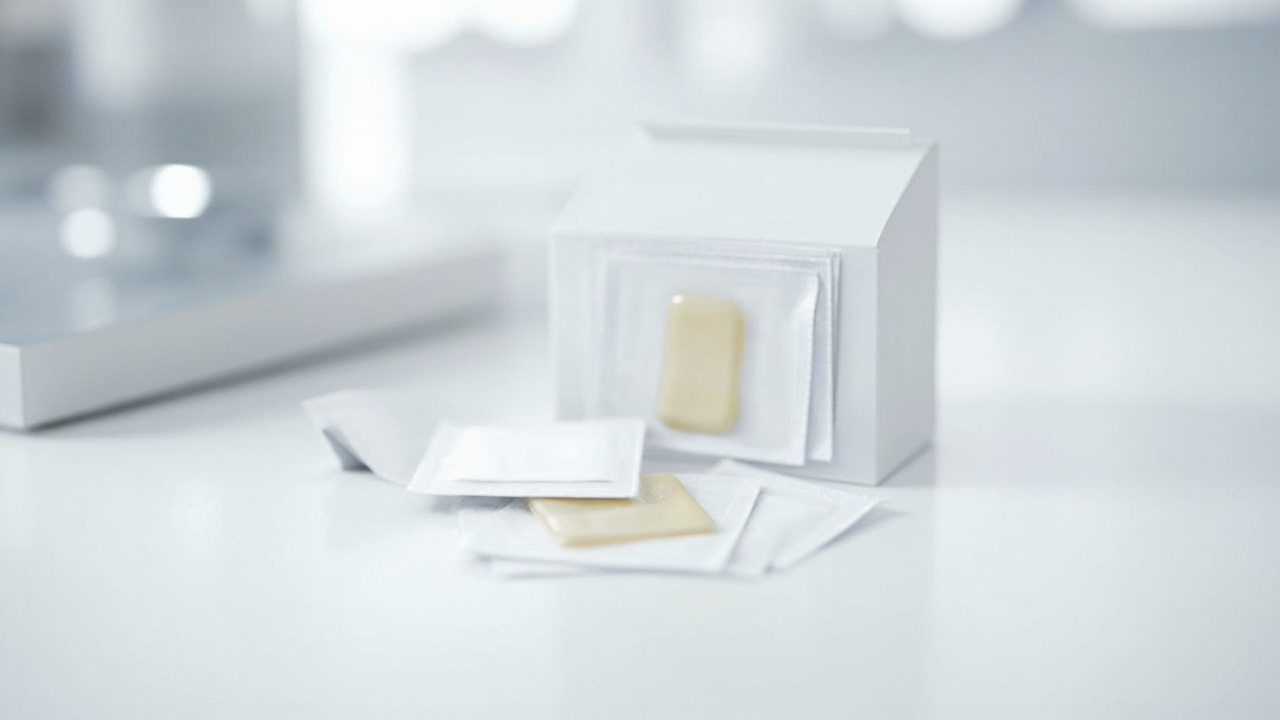
To launch a transdermal patch in the U.S. or EU, you must secure child-resistant patch packaging that passes 16 CFR 1700.20 testing and tamper-evident pouch validation, typically adding $8,000–$15,000 in testing and 6–10 weeks to your timeline. This guide gives you the exact documents, costs, and lead times for compliance.
Key Takeaways
- Why Child-Resistant and Tamper-Evident Packaging Matters for Patches
- Regulatory Landscape: FDA, ISO 13485, GMP, and CE
- Designing Effective Child-Resistant Patch Packaging
- Step-by-Step Guide to Implementing Compliant Packaging
- Cost and Lead Time Analysis for B2B Buyers
- Common Pitfalls and How to Avoid Them
Key Takeaways
- Child-resistant patch packaging must pass 16 CFR 1700.20 (U.S.) or ISO 8317 (EU) testing; budget $8,000–$15,000 and 6–10 weeks for third-party validation.
- Tamper-evident pouch designs (e.g., peel-push, tear-notch) require ISO 11607 validation and add $0.02–$0.08 per unit at volumes above 100,000.
- ISO 13485 certification and FDA establishment registration are non-negotiable; missing them can delay market entry by 3–6 months and cost $20,000+ in remediation.
- Typical lead times for custom child-resistant patch packaging are 12–16 weeks from design freeze, with MOQs of 50,000–100,000 units.
- Kongdy Health provides turnkey OEM/ODM services with FDA, ISO 13485, and GMP certifications, reducing compliance risk and time-to-market.
Child-resistant patch packaging, tamper-evident pouch design, and patch safety packaging are no longer optional—they are regulatory prerequisites in most markets. Whether you are a pharmaceutical brand, a contract manufacturer, or a distributor, understanding the compliance landscape is critical to avoiding recalls, delays, and costly redesigns. This guide breaks down the requirements, costs, and timelines so you can make informed decisions.
Why Child-Resistant and Tamper-Evident Packaging Matters for Patches
Transdermal patches deliver potent active pharmaceutical ingredients (APIs) through the skin, making accidental exposure—especially to children—a serious health risk. According to the American Association of Poison Control Centers, pediatric exposures to transdermal patches increased by 15% between 2015 and 2020, with cardiovascular and opioid patches accounting for the majority of serious outcomes (AAPCC, 2021). This trend has prompted regulators to tighten packaging requirements. In the U.S., the Poison Prevention Packaging Act (PPPA) and its implementing regulation 16 CFR 1700 require child-resistant packaging for most prescription patches. The EU similarly mandates child-resistant packaging under Directive 2001/62/EC and ISO 8317. Tamper-evident features are equally important: a tamper-evident pouch ensures the patch has not been compromised before use, protecting both patient safety and brand integrity. The global transdermal patch market was valued at $7.5 billion in 2022 and is projected to reach $10.9 billion by 2030 (Grand View Research, 2023), driving demand for advanced packaging solutions. As the market grows, so does regulatory scrutiny. Investing in compliant child-resistant patch packaging and tamper-evident pouch systems is not just a legal obligation—it is a competitive advantage that signals quality and reliability to healthcare providers and patients.
Regulatory Landscape: FDA, ISO 13485, GMP, and CE
Navigating the regulatory requirements for patch safety packaging can be complex, as different markets have distinct standards. In the United States, the FDA enforces child-resistant packaging under 16 CFR 1700.20, which requires testing with panels of children and adults. Manufacturers must also comply with FDA establishment registration and device listing if the patch is a combination product. For EU markets, the Medical Device Regulation (MDR 2017/745) and ISO 13485:2016 govern quality management systems, while CE marking is mandatory. ISO 8317:2015 specifies test methods for reclosable child-resistant packaging, and ISO 11607-1:2019 covers sterile barrier systems for terminally sterilized medical devices, which often applies to patch pouches. Good Manufacturing Practice (GMP) requirements, such as 21 CFR Part 211 for pharmaceuticals, dictate packaging operations, including line clearance and reconciliation. In practice, a patch manufacturer must maintain an ISO 13485-certified quality system, undergo regular FDA inspections, and ensure packaging materials meet USP <671> Containers—Performance Testing. For OEM partners, it is essential to verify that the packaging supplier holds these certifications. Kongdy Health, for example, operates an ISO 13485:2016 certified facility and is FDA-registered, ensuring that every child-resistant patch packaging solution meets the highest regulatory standards. The table below summarizes key requirements and their implications.
| Requirement | Issued by | Timeline | Indicative cost | Risk if missing |
|---|---|---|---|---|
| 16 CFR 1700.20 Child-Resistant Testing | FDA / Third-party lab | 6–10 weeks | $8,000–$15,000 | Product recall, FDA warning letter, market withdrawal |
| ISO 8317 Certification (EU) | Notified Body | 8–12 weeks | $10,000–$20,000 | CE mark refusal, customs seizure |
| ISO 13485:2016 Certification | Notified Body | 6–12 months | $20,000–$50,000 | Loss of CE mark, inability to export |
| FDA Establishment Registration | FDA | 2–4 weeks | $4,580 (FY2024) | Import detention, warning letter |
| Tamper-Evident Validation (ISO 11607) | In-house / Third-party | 4–8 weeks | $5,000–$12,000 | Sterility breach, product recall |
These figures are indicative and vary by product complexity and testing laboratory. Early engagement with a certified packaging partner can streamline the process and reduce costs.
Designing Effective Child-Resistant Patch Packaging
Child-resistant packaging for patches must balance safety with usability for adults, particularly the elderly or those with limited dexterity. The most common designs include peel-push pouches, where the user must peel a corner and then push to open, and tear-notch pouches with a reinforced edge that requires deliberate force. According to a 2022 study in the Journal of Packaging Technology and Research, peel-push designs achieved a 92% child-resistance success rate while maintaining adult usability above 90%. However, design alone is not enough—materials play a critical role. The pouch must provide a barrier against moisture, oxygen, and light to protect the patch’s adhesive and API. Common materials include aluminum foil laminates, PET/PE structures, and Tyvek for breathability. Tamper-evident features can be integrated through heat-sealed edges with visible indicators, such as a color-changing strip or a perforated tear line that becomes irreversibly damaged upon opening. When designing your patch safety packaging, consider the following key factors:
- Child-resistance testing: Ensure the design passes 16 CFR 1700.20 or ISO 8317 with a minimum of 85% child-resistance and 90% adult usability.
- Material compatibility: Select laminates that are compatible with the patch’s adhesive and API, and validate shelf life through accelerated stability studies.
- Tamper evidence: Incorporate a feature that clearly shows if the pouch has been opened, such as a tear-off top or a sealed label.
- Usability: Test with target patient populations, including seniors, to ensure the packaging is not overly difficult to open.
- Manufacturability: Work with your packaging supplier to ensure the design can be produced at scale with consistent quality.
- Regulatory compliance: Verify that all materials meet FDA food-contact and USP Class VI requirements where applicable.
Collaborating with an experienced OEM partner like Kongdy Health can help you navigate these design considerations efficiently. Their team provides design for manufacturability (DFM) reviews and rapid prototyping to ensure your packaging meets all requirements.
Step-by-Step Guide to Implementing Compliant Packaging
Implementing child-resistant and tamper-evident packaging for patches requires a structured approach. Below is a step-by-step guide to help you navigate the process from concept to commercialization. Each step includes typical timelines and costs to aid budgeting.
- Define requirements and select a packaging partner: Determine target markets and applicable regulations (e.g., FDA, EU MDR). Select an OEM partner with ISO 13485 and FDA certifications. Timeline: 2–4 weeks. Cost: internal resources.
- Design and prototype: Develop packaging concepts that incorporate child-resistant and tamper-evident features. Create prototypes for testing. Timeline: 4–6 weeks. Cost: $5,000–$15,000 for design and tooling.
- Conduct child-resistance and usability testing: Engage a third-party lab to perform 16 CFR 1700.20 or ISO 8317 testing. Timeline: 6–10 weeks. Cost: $8,000–$15,000.
- Validate tamper-evident and sterile barrier performance: Perform seal strength, dye penetration, and accelerated aging tests per ISO 11607. Timeline: 4–8 weeks. Cost: $5,000–$12,000.
- Execute stability studies: Test the packaged patch under accelerated and real-time conditions to establish shelf life. Timeline: 3–6 months (accelerated). Cost: $10,000–$25,000.
- Prepare regulatory submissions: Compile data for FDA 510(k) or EU MDR technical file. Timeline: 4–8 weeks. Cost: $15,000–$50,000 (including consultant fees).
- Scale-up and commercial production: Finalize specifications, conduct process validation, and begin production. Timeline: 8–12 weeks. Cost: dependent on volume; MOQ typically 50,000–100,000 units.
This process typically takes 9–15 months from concept to launch, with total costs ranging from $50,000 to $150,000 depending on complexity. Early planning and a reliable partner are key to staying on schedule.
Cost and Lead Time Analysis for B2B Buyers
Understanding the cost structure and lead times for child-resistant patch packaging is essential for budgeting and supply chain planning. Based on industry data and Kongdy Health’s project experience, here are typical cost ranges for key components. Child-resistant testing (16 CFR 1700.20) costs $8,000–$15,000 and takes 6–10 weeks. Tamper-evident pouch development, including design and validation, ranges from $10,000 to $25,000. Tooling for custom pouch formats (e.g., die-cut shapes) can cost $5,000–$20,000. Material costs vary: a standard aluminum foil laminate pouch costs $0.05–$0.12 per unit at volumes of 100,000, while specialized child-resistant designs may cost $0.08–$0.15 per unit. Minimum order quantities (MOQs) for custom printed pouches are typically 50,000–100,000 units, with lead times of 12–16 weeks from design freeze. For standard stock pouches, MOQs can be as low as 10,000 units with 6–8 week lead times. According to a 2023 industry survey by Healthcare Packaging, 68% of pharmaceutical companies reported that packaging lead times increased by 20% post-pandemic, making early planning critical. Additionally, tariffs on imported packaging materials can add 5–25% to landed costs, depending on country of origin. Working with a domestic or certified overseas manufacturer like Kongdy Health can mitigate these risks through established supply chains and quality systems. For a detailed quote, request a consultation.
Common Pitfalls and How to Avoid Them
Even with careful planning, companies often encounter pitfalls when implementing child-resistant and tamper-evident packaging. One common mistake is neglecting to test with the actual patient population—what works for a 30-year-old may fail for a 70-year-old with arthritis. Another is underestimating the importance of material compatibility; using a pouch that does not adequately protect the patch can lead to adhesive degradation and API loss. Regulatory submissions are frequently delayed due to incomplete testing data or failure to follow ISO 11607 for sterile barrier systems. To avoid these issues, engage a packaging partner early, conduct thorough design reviews, and validate all materials and processes. Kongdy Health offers comprehensive support, from initial concept through regulatory submission, ensuring your packaging meets all requirements. Their ISO 13485-certified processes and FDA registration provide assurance of quality and compliance. Additionally, consider the environmental impact: sustainable packaging options, such as recyclable mono-material pouches, are increasingly demanded by consumers and regulators. While these may cost 10–20% more, they can enhance brand reputation and align with corporate sustainability goals. By anticipating these challenges, you can streamline your path to market.
Frequently Asked Questions
Q1: What is the difference between child-resistant and tamper-evident packaging?
Child-resistant packaging is designed to prevent children from opening the package, typically through mechanisms that require adult-level dexterity and cognitive ability. Tamper-evident packaging, on the other hand, provides a visual indication if the package has been opened or compromised. While they serve different purposes, many patch packages incorporate both features. For example, a peel-push pouch can be child-resistant and also have a tamper-evident seal that changes color or tears upon opening. Both are often required by regulations for pharmaceutical products.
Q2: How long does it take to get child-resistant certification for patch packaging?
Child-resistant certification typically takes 6–10 weeks for testing and reporting, assuming the design passes on the first attempt. This includes sequential testing with children and adults per 16 CFR 1700.20 or ISO 8317. However, if the design fails, redesign and retesting can add another 8–12 weeks. It is advisable to budget 12–16 weeks for the entire process, including contingency. Working with an experienced packaging partner can help minimize delays by ensuring the design is robust before testing.
Q3: What are the typical costs for child-resistant patch packaging development?
Development costs for child-resistant patch packaging vary widely based on complexity and volume. Testing alone costs $8,000–$15,000. Design and prototyping add $5,000–$15,000, and tooling for custom pouches can be $5,000–$20,000. Material costs range from $0.05 to $0.15 per unit at volumes of 100,000. Overall, budget $30,000–$60,000 for development and first production run, excluding regulatory submission fees. For a precise quote, consult with a manufacturer like Kongdy Health, who can provide detailed pricing based on your specifications.
Conclusion
Child-resistant and tamper-evident packaging for patches is a critical component of pharmaceutical product development, ensuring patient safety and regulatory compliance. By understanding the requirements, costs, and timelines, you can navigate the process efficiently. Partnering with an experienced OEM like Kongdy Health, with over 36 years of experience and FDA, ISO 13485, and GMP certifications, can help you avoid pitfalls and accelerate time-to-market. Contact Kongdy Health today to discuss your patch safety packaging needs and request a quote.
Sources
- FDA – Guidance Documents
- ISO 13485:2016 – Medical devices — Quality management systems
- Grand View Research – Transdermal Patch Market Report
- WHO – Medical Device Regulations
Related reading
Comparing suppliers? Send us your specification.
Tell us the product, quantity and target market. You will get pricing, MOQ and lead time within 12 hours — no obligation, NDA available.
MOQ 10,000 pcs · Samples 7–10 days · Factory since 1989 · FDA · ISO 13485 · CE · GMP · 120+ countries
Send Us Your Inquiry
Tell us your requirements — we usually respond with a preliminary quotation and sampling plan within 12 hours.
2 thoughts on “Child-Resistant Patch Packaging: Tamper-Evident Guide”
Comments are closed.