
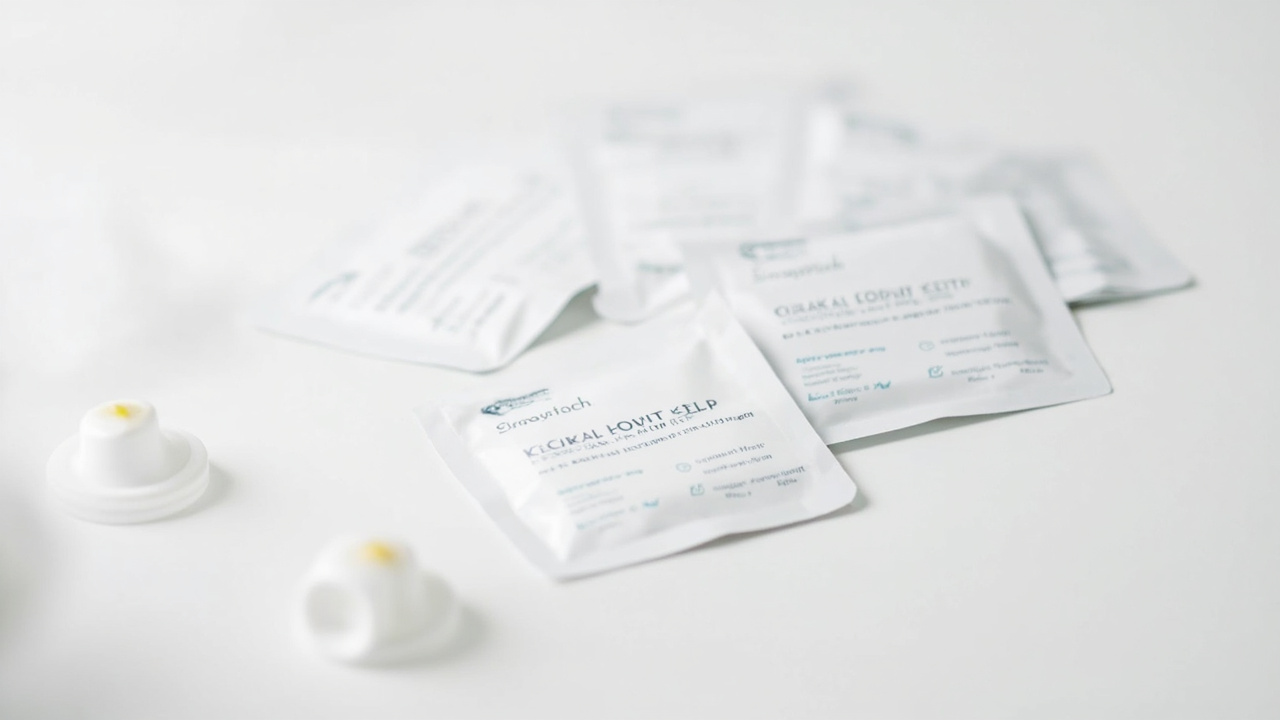
The global market for energy and functional patches has moved well beyond novelty status. As consumers seek alternatives to sugary energy drinks and caffeine pills, the caffeine patch and B vitamin energy patch categories have matured into serious product lines for supplement brands, wellness retailers, and sports nutrition companies. For buyers evaluating an energy patch OEM partner, the challenge is no longer whether demand exists—it is choosing a manufacturer that can deliver consistent transdermal performance, regulatory compliance, and scalable output. Kongdy Health has manufactured transdermal patches since 1989 and serves clients across 120+ countries, giving us a front-row view of how this category is evolving. This guide breaks down the science, the market data, the formulation variables, and the manufacturing standards that separate a successful energy patch program from a costly misfire.
Key Takeaways
- Why Energy Patches Are Gaining Ground: Market Context and Consumer Demand
- The Science of Caffeine and B-Vitamin Transdermal Delivery
- Formulation and Design Variables That Determine Product Success
- A Step-by-Step OEM Development Process
- Regulatory Landscape: FDA, ISO 13485, GMP, and CE
- Quality Assurance and Manufacturing Standards to Vet
Key Takeaways
- Energy patches deliver caffeine and B vitamins through the skin, offering a slower, steadier release profile than beverages or capsules—a key differentiator for brand positioning.
- The broader transdermal patch market is growing at a high single-digit CAGR, with functional and wellness patches among the fastest-expanding subsegments (Grand View Research, 2023).
- Formulation matters: caffeine loading, adhesive matrix chemistry, and penetration enhancers all affect onset time, duration, and skin tolerability.
- Regulatory classification varies by market—some countries treat energy patches as cosmetics, others as dietary supplements or medical devices—so OEM partners must support multiple compliance pathways.
- ISO 13485, GMP, FDA registration, and CE marking capability are baseline requirements when vetting an energy patch OEM.
- Kongdy Health offers end-to-end OEM/ODM services from formulation to packaging for brands entering or scaling in this category.
Why Energy Patches Are Gaining Ground: Market Context and Consumer Demand
The energy patch category sits at the intersection of two powerful consumer trends: the search for clean, convenient energy delivery and the broader shift toward transdermal formats for supplements. According to Grand View Research, the global transdermal patch market was valued at approximately USD 7.5 billion in 2022 and is projected to expand at a compound annual growth rate of roughly 6–8% through 2030, driven in part by demand for non-invasive drug delivery and consumer wellness formats. Within that figure, functional patches—including caffeine, vitamin, sleep, and pain-relief variants—represent one of the fastest-moving segments, particularly in North America and parts of Asia-Pacific.
Consumer behavior reinforces this. Energy drink consumption has faced growing scrutiny over sugar content and cardiovascular effects, pushing a segment of buyers toward lower-dose, sustained-release alternatives. A caffeine patch typically delivers a controlled amount over several hours rather than a single bolus, which aligns with the “steady energy, no crash” narrative that resonates with fitness consumers, shift workers, students, and long-haul travelers. B vitamin energy patches add a second layer of value, since B-complex vitamins (B6, B12, niacin, riboflavin) are widely recognized for their role in normal energy-yielding metabolism—a claim structure that is defensible in many markets when worded carefully.
For B2B buyers, the implication is clear: the category has enough consumer awareness and regulatory precedent to support legitimate product launches, but it is still young enough that brand differentiation through formulation, wear time, and design remains achievable. That combination—proven demand with room to innovate—is exactly what makes a reliable energy patch OEM partner strategically important.
The Science of Caffeine and B-Vitamin Transdermal Delivery
Transdermal delivery works by moving active compounds across the stratum corneum, the outermost skin layer, into the microcirculation beneath. Caffeine is a relatively small, moderately lipophilic molecule (molecular weight approximately 194 g/mol), which makes it a reasonable candidate for transdermal absorption when paired with the right adhesive matrix and penetration enhancers. B vitamins are more varied: B12 is a large molecule and absorbs poorly through intact skin, while niacin and riboflavin present different solubility challenges. This is why formulation expertise—not simply mixing actives into an adhesive—determines whether an energy patch performs as marketed.
In practice, a well-designed caffeine patch uses a pressure-sensitive adhesive matrix that holds the active in a stable suspension, releases it gradually over a defined wear period (commonly 8–12 hours), and maintains skin adhesion through sweat and movement. Penetration enhancers such as certain fatty acids or terpenes can improve flux, but they must be balanced against irritation risk. Similarly, B vitamin energy patch formulations often combine selected B vitamins with supporting ingredients and are designed around realistic absorption expectations rather than overpromising. Reputable manufacturers conduct in vitro skin permeation testing and stability studies to validate release profiles before scale-up.
From a product design standpoint, the variables buyers should discuss with their OEM partner include: target dose per patch, desired onset and duration, adhesive type (hydrogel versus acrylic versus silicone), backing film and release liner selection, patch dimensions, and wear comfort. Each choice affects both the consumer experience and the regulatory claims the finished product can support. A manufacturer with decades of formulation history can shorten this development cycle considerably.
Formulation and Design Variables That Determine Product Success
Two patches can carry identical label claims and perform very differently in the market. The difference usually comes down to formulation discipline and manufacturing consistency. Buyers entering the category should understand the following technical levers before committing to a development timeline.
- Active loading and dose accuracy: The amount of caffeine or B vitamins per patch must be controlled within tight tolerances to support label claims and batch-to-batch consistency.
- Adhesive matrix chemistry: Hydrogel matrices offer good skin compatibility and a cooling feel; acrylic and silicone adhesives offer different release kinetics and adhesion profiles.
- Penetration enhancement: Enhancers can improve absorption but must be selected to minimize irritation, especially for products worn daily.
- Release profile design: Onset time and duration (e.g., fast-onset versus 12-hour sustained release) should match the intended use occasion.
- Patch geometry and backing: Size, shape, breathability, and edge design influence comfort, adhesion, and perceived quality.
- Stability and shelf life: Accelerated stability testing confirms that actives and adhesives remain within specification over the product’s commercial life.
- Skin tolerability testing: Patch testing and irritation/sensitization evaluation reduce returns and negative reviews.
Each of these variables interacts with the others. Increasing caffeine loading, for example, may require adhesive reformulation to maintain cohesion, which in turn affects release rate. This is why a structured development process—rather than a catalog selection—is the right approach for serious brands.
A Step-by-Step OEM Development Process
Working with an experienced energy patch OEM should feel predictable. At Kongdy Health, projects typically follow a phased path from concept to commercial shipment. The sequence below reflects the standard approach for caffeine and B vitamin energy patch programs, and it illustrates the checkpoints where buyers should expect documentation and approval gates.
- Discovery and requirements definition: Define target markets, claims, dose, wear time, patch size, packaging format, and volume forecasts.
- Regulatory pathway mapping: Determine whether the product will be classified as a cosmetic, dietary supplement, or medical device in each target country, and identify the documentation required.
- Formulation development: Select actives, adhesive system, and excipients; prepare prototype batches for internal evaluation.
- In vitro permeation and stability testing: Validate release behavior and shelf-life characteristics under accelerated conditions.
- Skin tolerability assessment: Conduct irritation and sensitization testing appropriate to the intended use and market.
- Sample approval: Produce pilot samples for client evaluation of feel, adhesion, and performance.
- Scale-up and process validation: Transfer the approved formulation to production equipment and validate coating, drying, lamination, and die-cutting parameters.
- Quality documentation and release: Complete batch records, certificates of analysis, and regulatory dossiers; release finished goods under GMP conditions.
- Packaging and logistics: Finalize primary and secondary packaging, labeling compliance, and export documentation.
Timelines vary with formulation complexity and regulatory scope, but buyers who engage early on documentation tend to avoid the most common delays. It is also worth noting that ISO 13485 certification—the international standard for medical device quality management—provides a strong signal of process discipline even for products ultimately classified as cosmetics or supplements.
Regulatory Landscape: FDA, ISO 13485, GMP, and CE
Regulatory classification is the single most misunderstood element of the energy patch business. In the United States, a caffeine patch marketed with structure/function claims may fall under FDA dietary supplement rules (21 CFR Part 111 for cGMP), while a patch making therapeutic claims could be regulated as a drug or device. In the European Union, many wellness patches are marketed as cosmetics under the EU Cosmetics Regulation, but claims must comply with the Common Criteria regulation, and products with medicinal claims may require a medical device or drug pathway. Other markets—Japan, Australia, Brazil—have their own frameworks.
This complexity is precisely why buyers should prioritize OEM partners with multi-market experience. Kongdy Health operates under ISO 13485 quality management, GMP manufacturing practices, FDA registration, and CE marking capability, and has supported clients across 120+ countries. That breadth matters because a formulation acceptable in one jurisdiction may need adjustment in another—whether due to permitted actives, labeling language, or claims substantiation requirements.
Practical advice for buyers: map your target markets before finalizing the formulation, request written confirmation of the regulatory pathway from your OEM partner, and budget for testing documentation. A patch that cannot be legally sold in your priority market is an expensive prototype, no matter how well it performs.
Quality Assurance and Manufacturing Standards to Vet
When evaluating an energy patch OEM, quality systems should be audited, not assumed. Request the manufacturer’s certificates (ISO 13485, GMP), recent audit reports, and examples of batch documentation. Ask how incoming raw materials are tested, how coating weight and active content are verified in-process, and how finished patches are sampled for release. For transdermal products, coating uniformity and adhesive consistency are especially critical because they directly affect dose delivery and adhesion performance.
Environmental controls also matter. Patch manufacturing requires controlled humidity and temperature during coating and drying, plus cleanroom conditions appropriate to the product classification. A manufacturer that can walk you through these controls—and show you the data—is far more likely to deliver consistent commercial batches. Finally, confirm the partner’s capacity and lead times against your forecast; category demand can spike seasonally, and a supplier that cannot scale becomes a bottleneck.
Partnering with Kongdy Health for Energy Patch OEM
Kongdy Health has specialized in transdermal patch manufacturing since 1989, combining formulation expertise with large-scale production and export experience across 120+ countries. Our OEM/ODM services cover the full journey: concept consultation, formulation development, regulatory documentation support, pilot and commercial manufacturing, and packaging. For caffeine patch and B vitamin energy patch programs, our team can help you select the right adhesive system, design an appropriate release profile, and prepare the quality documentation your market requires.
If you are evaluating the category or ready to move from concept to samples, explore our OEM/ODM services to see how Kongdy Health can support your energy patch launch. A short discovery call is usually enough to clarify feasibility, timelines, and the regulatory path for your priority markets.
Frequently Asked Questions
How long does a caffeine patch take to work, and how long does it last?
Onset and duration depend on the formulation, adhesive system, and dose per patch. Many commercial caffeine patches are designed for a gradual onset over 20–60 minutes with a wear time of 8–12 hours, but these figures must be validated through in vitro permeation testing and, where required, clinical evaluation. Buyers should define the intended use occasion—pre-workout, shift work, travel—before finalizing the release profile with their OEM partner. A reputable manufacturer will provide test data supporting the claimed performance rather than relying on general assumptions.
Are B vitamin energy patches regulated as supplements, cosmetics, or medical devices?
Classification varies by market and by the claims made. In the United States, products with structure/function claims are often marketed as dietary supplements under FDA cGMP rules, while therapeutic claims could trigger drug or device regulation. In the EU, many wellness patches are treated as cosmetics, but claims must comply with the Common Criteria regulation. Because classification affects labeling, testing, and permissible claims, buyers should map target markets early and confirm the pathway in writing with their OEM partner before committing to a formulation.
What should I look for when vetting an energy patch OEM manufacturer?
Start with certifications: ISO 13485, GMP, FDA registration, and CE marking capability are strong baseline indicators. Then request evidence—recent audit reports, batch documentation examples, and stability testing protocols. Ask specifically about coating uniformity controls, adhesive consistency, and cleanroom conditions, since these directly affect dose delivery and product quality. Finally, confirm capacity, lead times, and experience with your target markets; a partner with multi-country export experience can anticipate regulatory and logistics issues that less experienced suppliers may miss.
Sources
- Grand View Research – Transdermal Patches Market Analysis
- U.S. FDA – Current Good Manufacturing Practice (cGMP) Regulations
- ISO – ISO 13485:2016 Medical Devices Quality Management
- World Health Organization
1 thought on “Energy Patch OEM: Caffeine & B-Vitamin Transdermal Guide”
Comments are closed.