
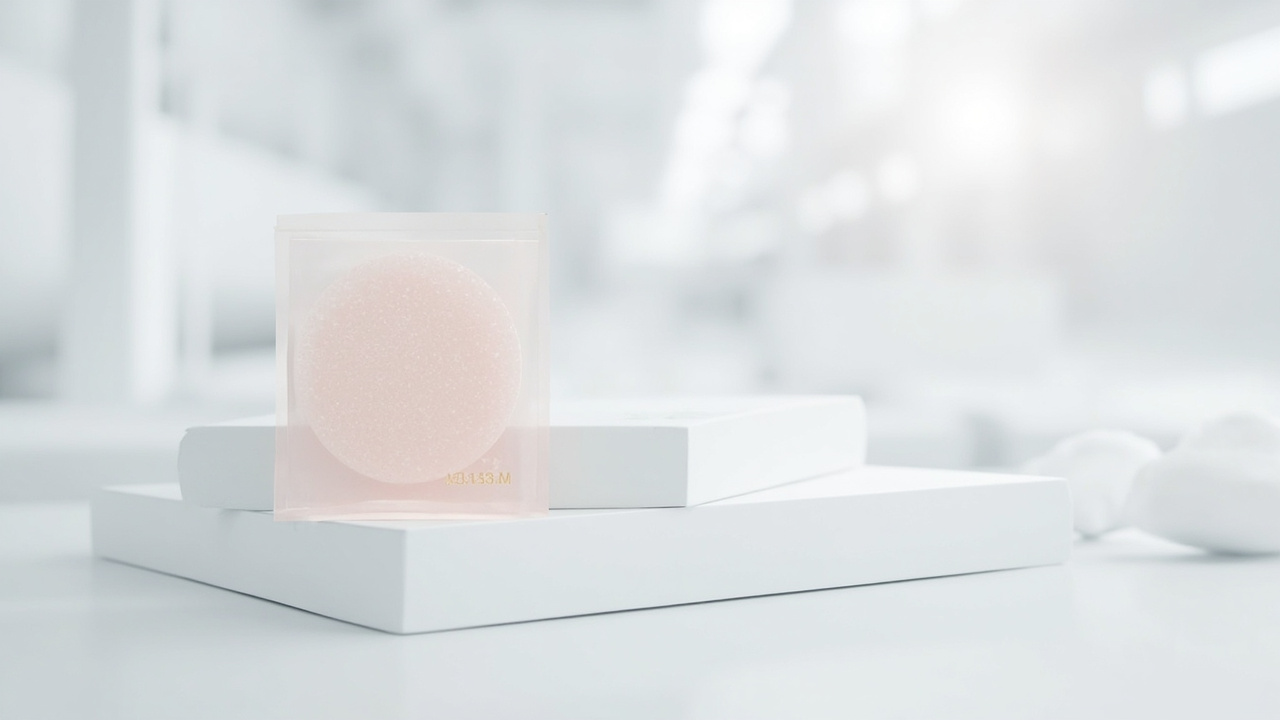
In the rapidly growing sleep wellness market, aroma patches have emerged as a convenient, drug-free solution for improving sleep quality. Among these, lavender sleep patches stand out due to the well-documented calming effects of lavender essential oil. The key to a successful product lies in the microencapsulation technology that controls the release of lavender aroma over time. This guide explores the science, manufacturing, and market potential of lavender microencapsulation for sleep patches, providing B2B buyers with actionable insights.
Key Takeaways
- The Science of Lavender and Sleep
- Microencapsulation Technology for Aroma Patches
- Market Trends and Statistics
- Designing an Effective Lavender Sleep Patch
- Quality Control and Regulatory Standards
- OEM Partnership with Kongdy Health
Key Takeaways
- Lavender microencapsulation enables controlled release of aroma for up to 8 hours, enhancing sleep quality.
- The global sleep aids market is projected to reach $XX billion by 2030, driven by increasing consumer demand for natural solutions.
- OEM partnerships with certified manufacturers like Kongdy Health ensure compliance with FDA, ISO 13485, and GMP standards.
- Microencapsulation technology protects essential oils from degradation, extending shelf life and ensuring consistent performance.
- Successful product development requires careful selection of wall materials, encapsulation methods, and rigorous quality testing.
As the demand for sleep aids continues to rise, understanding the intricacies of aroma patch manufacturing becomes crucial for brands looking to differentiate themselves. This article delves into the technical aspects, market data, and regulatory considerations necessary for launching a competitive lavender sleep patch.
The Science of Lavender and Sleep
Lavender (Lavandula angustifolia) has been used for centuries for its calming and sedative properties. Modern research supports these traditional uses: studies have shown that inhaling lavender aroma can reduce heart rate, lower blood pressure, and improve sleep quality. A 2015 systematic review published in the Journal of Alternative and Complementary Medicine found that lavender aromatherapy significantly improved sleep quality in adults. The primary active compounds, linalool and linalyl acetate, interact with the limbic system to exert anxiolytic and sedative effects.
For transdermal patches, the challenge is to deliver a consistent dose of lavender aroma over an extended period. Unlike oral supplements or topical creams, patches must release the volatile essential oil gradually to maintain therapeutic levels. This is where microencapsulation becomes essential. By encapsulating lavender oil in microscopic capsules, manufacturers can control the release rate, protect the oil from evaporation and degradation, and ensure a steady aroma profile throughout the night.
Microencapsulation also allows for the incorporation of higher concentrations of essential oil without overwhelming the user with an initial burst of scent. This controlled release is critical for sleep patches, as a sudden strong aroma might be disruptive rather than calming. The technology enables a smooth, sustained release that aligns with the body’s natural sleep cycles, providing support when it’s most needed.
Microencapsulation Technology for Aroma Patches
Microencapsulation is a process where tiny particles or droplets are surrounded by a coating to give small capsules with many useful properties. In the context of aroma patches, the core material is lavender essential oil, and the wall material is typically a polymer such as gelatin, gum arabic, or modified starch. The choice of wall material and encapsulation method determines the release profile, stability, and compatibility with the patch adhesive.
Several encapsulation techniques are used in the industry, including spray drying, coacervation, and interfacial polymerization. Spray drying is the most common due to its cost-effectiveness and scalability. In this process, the essential oil is emulsified in a polymer solution and then atomized into a hot air stream, causing the polymer to solidify around the oil droplets. The resulting microcapsules are then incorporated into the patch adhesive matrix. Coacervation offers higher encapsulation efficiency and better control over release, but it is more complex and expensive.
Recent advancements in microencapsulation have led to the development of stimuli-responsive capsules that release their contents in response to body heat or moisture. For sleep patches, body heat-triggered release is particularly attractive because it ensures that the aroma is released only when the patch is worn, reducing waste and improving user experience. Kongdy Health has invested in R&D to incorporate such smart release mechanisms into their OEM offerings, providing brands with a competitive edge.
Market Trends and Statistics
The global sleep aids market is experiencing robust growth, driven by increasing prevalence of insomnia and sleep disorders, rising awareness of the importance of sleep, and a shift towards natural and non-pharmacological solutions. According to Grand View Research, the global sleep aids market size was valued at USD 58.7 billion in 2022 and is expected to expand at a compound annual growth rate (CAGR) of 6.5% from 2023 to 2030. The aroma patch segment, although niche, is growing faster than the overall market due to its convenience and perceived safety.
Another key trend is the rising consumer preference for drug-free sleep solutions. A survey by the National Sleep Foundation found that 35% of adults have used some form of aromatherapy to help them sleep, and 62% of those users reported improvement in sleep quality. This growing acceptance of aromatherapy is driving demand for innovative delivery formats such as patches. Furthermore, the COVID-19 pandemic has accelerated the focus on wellness and self-care, with consumers increasingly seeking products that support mental well-being and relaxation.
Geographically, North America and Europe dominate the sleep aids market, but Asia-Pacific is expected to witness the fastest growth due to increasing disposable incomes and changing lifestyles. In these regions, OEM manufacturers like Kongdy Health are well-positioned to serve brands looking to enter the market with high-quality, certified products. The company’s 36+ years of experience and FDA, ISO 13485, and GMP certifications make it a trusted partner for brands worldwide.
Designing an Effective Lavender Sleep Patch
Creating a successful lavender sleep patch involves a systematic approach that balances efficacy, safety, and user experience. Here is a step-by-step guide to the development process:
- Formulation Development: Select high-quality lavender essential oil (preferably organic and tested for purity) and determine the optimal concentration. Typical concentrations range from 5% to 15% w/w. Conduct stability studies to ensure the oil does not degrade or interact with the adhesive.
- Microencapsulation: Choose the encapsulation method and wall material based on the desired release profile. Spray drying with gum arabic or modified starch is common for sustained release over 6-8 hours. Optimize the oil-to-wall ratio to achieve encapsulation efficiency above 90%.
- Patch Design: Design the patch structure with a backing layer, adhesive matrix containing microcapsules, and a release liner. Ensure the adhesive is compatible with the microcapsules and provides adequate adhesion without irritation. Consider the use of a rate-controlling membrane for precise release.
- In Vitro Release Testing: Develop a validated method to measure the release of lavender oil from the patch over time. Use techniques such as gas chromatography to quantify linalool and linalyl acetate. The release profile should match the target (e.g., zero-order or first-order).
- Clinical Evaluation: Conduct small-scale human studies to assess sleep quality, user satisfaction, and skin irritation. Use validated questionnaires such as the Pittsburgh Sleep Quality Index (PSQI). Ensure the patch is comfortable to wear and does not cause allergic reactions.
- Regulatory Compliance: Prepare documentation for regulatory submissions, including safety assessments, stability data, and manufacturing records. For the US market, the patch may be regulated as a cosmetic or a drug depending on claims. Work with regulatory experts to determine the appropriate pathway and ensure compliance with FDA, ISO 13485, and GMP requirements.
Each step requires careful attention to detail and collaboration between formulation scientists, engineers, and quality assurance teams. Partnering with an experienced OEM manufacturer can streamline this process and reduce time-to-market.
Quality Control and Regulatory Standards
Quality control is paramount in the manufacturing of transdermal patches, especially those containing essential oils that can vary in composition. A robust quality control program includes raw material testing, in-process controls, and finished product testing. Key tests for lavender sleep patches include:
- Identification and Assay: Verify the identity and potency of lavender oil using gas chromatography-mass spectrometry (GC-MS).
- Microencapsulation Efficiency: Measure the percentage of oil encapsulated and the surface oil content.
- Release Profile: Conduct in vitro release testing to ensure batch-to-batch consistency.
- Adhesion and Peel Strength: Test the patch’s adhesive properties to ensure it stays in place for the intended duration.
- Skin Irritation and Sensitization: Perform biocompatibility testing (e.g., ISO 10993) to ensure the patch is safe for prolonged skin contact.
- Stability Studies: Conduct accelerated and real-time stability studies to determine shelf life and storage conditions.
Regulatory standards vary by region, but common requirements include FDA registration for the facility, ISO 13485 certification for medical devices (if applicable), and GMP compliance for cosmetics or drugs. In Europe, the CE mark may be required for medical devices, while in the US, the FDA regulates patches as either cosmetics or drugs based on claims. Kongdy Health maintains all necessary certifications and follows strict quality management systems to ensure products meet global standards.
OEM Partnership with Kongdy Health
Choosing the right OEM partner is critical for the success of your lavender sleep patch. Kongdy Health has been a trusted manufacturer of transdermal patches since 1989, serving over 120 countries. With FDA, ISO 13485, and GMP certifications, Kongdy Health offers end-to-end OEM/ODM services, from formulation development to packaging and regulatory support.
Kongdy Health’s expertise in microencapsulation and transdermal technology allows brands to create customized products that meet specific market needs. The company’s state-of-the-art facilities and rigorous quality control ensure that every patch meets the highest standards of safety and efficacy. Whether you are a startup looking to launch a new product or an established brand seeking to expand your portfolio, Kongdy Health provides scalable solutions with competitive pricing and fast turnaround times.
To learn more about Kongdy Health’s OEM/ODM services for aroma patches, visit https://www.kongdymed.com/oem-odm-services/. Their team of experts can guide you through the entire process, from concept to commercialization, ensuring a successful product launch.
Frequently Asked Questions
Q1: How long does the lavender aroma last in a microencapsulated sleep patch?
The duration of aroma release depends on the microencapsulation technology and patch design. Typically, a well-formulated lavender sleep patch can release aroma for 6 to 8 hours, covering a full night’s sleep. Factors such as the wall material, capsule size, and environmental conditions (temperature, humidity) influence the release rate. Manufacturers can tailor the release profile to meet specific requirements, such as a faster release for immediate relaxation or a slower release for sustained effect throughout the night.
Q2: Are lavender sleep patches safe for sensitive skin?
Lavender sleep patches are generally safe for most skin types, but individuals with sensitive skin or allergies to essential oils should exercise caution. It is important to use high-quality, purified lavender oil and hypoallergenic adhesives to minimize the risk of irritation. Conducting a patch test on a small area of skin before full application is recommended. OEM manufacturers should perform biocompatibility testing (e.g., ISO 10993) to ensure the patch is non-irritating and non-sensitizing. If you have known allergies, consult a healthcare professional before use.
Q3: What certifications should I look for in an OEM manufacturer for aroma patches?
When selecting an OEM manufacturer for aroma patches, look for certifications that demonstrate compliance with quality and safety standards. Key certifications include FDA registration (for US market), ISO 13485 (for medical devices, if applicable), GMP (Good Manufacturing Practice), and CE marking (for European market). Additionally, the manufacturer should have experience in microencapsulation and transdermal technology, and provide documentation for raw materials and finished products. Kongdy Health holds all these certifications and has a proven track record of delivering high-quality patches to global clients.
Sources
- Grand View Research: Sleep Aids Market Size Report
- National Sleep Foundation
- U.S. Food and Drug Administration (FDA)
- ISO 13485: Medical Devices Quality Management
1 thought on “Lavender Sleep Patch: Aroma Microencapsulation Guide”
Comments are closed.