
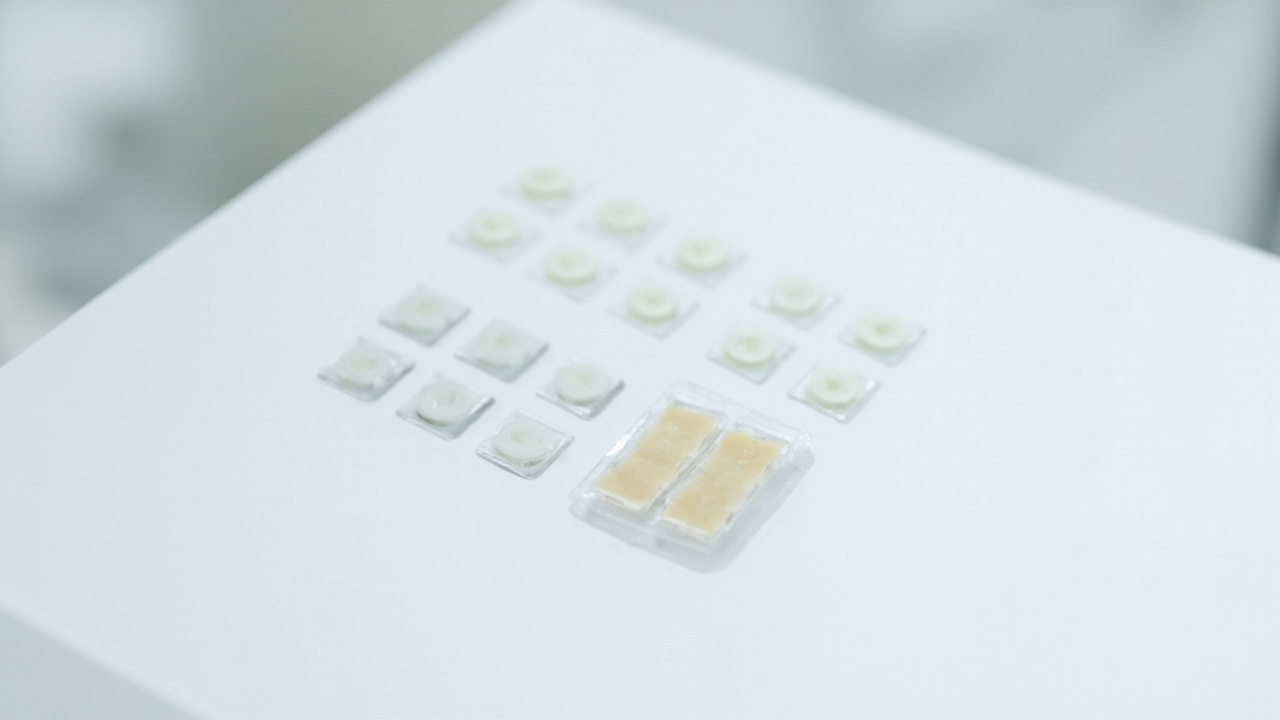
When a pharmaceutical or wellness brand decides to launch a transdermal patch product, the journey from a concept to a finished, shippable product is complex and highly regulated. Behind every successful patch lies a meticulously engineered manufacturing process that ensures safety, efficacy, and consistency. This article takes you inside a transdermal patch factory, revealing the step-by-step journey from initial sample to final shipment. Whether you’re a procurement manager, a startup founder, or a quality assurance professional, understanding this process is critical for selecting the right OEM partner and ensuring your product meets the highest standards.
Key Takeaways
- The Growing Demand for Transdermal Patches
- Step 1: Receiving Raw Materials and Incoming Quality Control
- Step 2: Formulation and Drug Delivery System Design
- Step 3: Coating and Laminating: The Heart of the Production Line
- Step 4: Drying, Curing, and Solvent Removal
- Step 5: Slitting and Die-Cutting: Shaping the Patch
Key Takeaways
- Transdermal patch manufacturing involves a multi-stage process that integrates advanced coating, laminating, and die-cutting technologies, with strict environmental controls.
- Regulatory compliance with FDA, ISO 13485, and GMP is non-negotiable; a reliable OEM partner holds these certifications and follows them rigorously.
- Quality control is woven into every step, from raw material inspection to finished product testing, ensuring batch-to-batch consistency.
- The transdermal patch market is growing at a CAGR of about 5.5%, with an estimated value of $7.5 billion in 2023, making it a lucrative sector for brands.
- Choosing an OEM with in-house R&D and pilot lines accelerates product development and reduces time-to-market.
- Effective communication and transparent documentation are essential for a successful OEM partnership, from sample approval to final shipment.
The Growing Demand for Transdermal Patches
The transdermal patch market has witnessed significant growth over the past decade, driven by the advantages of controlled drug delivery, improved patient compliance, and the convenience of non-invasive administration. According to a report by Grand View Research, the global transdermal patch market size was valued at approximately $7.5 billion in 2023 and is projected to expand at a compound annual growth rate (CAGR) of 5.5% from 2024 to 2030. This growth is fueled by the rising prevalence of chronic diseases, an aging population, and the increasing demand for pain management and hormone replacement therapies.
For B2B buyers, this growth translates into a need for reliable manufacturing partners who can scale production while maintaining regulatory compliance. A transdermal patch factory is not just a production facility; it is a center of precision engineering, where every layer of the patch—backing, adhesive, drug reservoir, and release liner—is produced and assembled with micron-level accuracy. In this article, we will dissect the manufacturing process, highlighting the critical points where quality and compliance are ensured.
Step 1: Receiving Raw Materials and Incoming Quality Control
Every transdermal patch begins with high-quality raw materials. These include the backing film (often polyester or polyethylene), the adhesive layer (silicone, acrylic, or polyisobutylene-based), the drug or active ingredient, permeation enhancers, and the release liner (typically a fluoropolymer-coated polyester). A reputable factory like Kongdy Health maintains strict supplier qualification programs, ensuring that all materials meet specifications before they enter the production line.
Upon arrival, each batch of raw materials undergoes rigorous incoming quality control (IQC). This involves testing for identity, purity, viscosity, and physical properties such as tensile strength and thickness. For example, the adhesive’s viscosity must be within a narrow range to ensure uniform coating, while the release liner’s peel force must be consistent for easy removal. Any deviation can lead to defective patches, so materials that fail are rejected and returned to the supplier. This proactive approach minimizes production disruptions and ensures the final product’s integrity.
Additionally, documentation is crucial. Each material lot is assigned a unique identifier, and all test results are recorded in a batch record that follows the material through the entire manufacturing process. This traceability is a cornerstone of GMP and is essential for audits and recalls.
Step 2: Formulation and Drug Delivery System Design
Before mass production, the product goes through a formulation phase, often in an R&D laboratory. Here, scientists develop the drug-in-adhesive (DIA) or drug-in-matrix (DIM) system, determining the optimal concentration of the active ingredient, the choice of adhesive, and the addition of permeation enhancers to achieve the desired release profile. This stage is critical for ensuring that the patch delivers the drug at a therapeutic rate over the intended duration.
For OEM partnerships, this phase is collaborative. The client provides the drug specifications and desired performance characteristics, and the factory’s R&D team formulates a prototype. For instance, a pain relief patch might require a controlled release over 12 hours, while a nicotine patch needs a 24-hour steady release. The formulation is fine-tuned using in-vitro permeation tests through synthetic membranes or human cadaver skin, which predict how the drug will penetrate the skin.
Once the formulation is optimized, a pilot batch is produced to scale up the process. This batch is used for stability studies, which evaluate the patch’s shelf life under various temperature and humidity conditions. According to the FDA, stability testing must be conducted according to ICH guidelines, with at least three batches to establish a shelf life. This data is essential for regulatory submissions and ensures that the product remains effective throughout its intended life.
Step 3: Coating and Laminating: The Heart of the Production Line
The core of a transdermal patch production line is the coating and laminating process. This is where the adhesive-drug mixture is applied to the backing film. The process begins with a large roll of backing material, which is unwound and passed through a coating head. The coating head applies a precise, uniform layer of the drug-adhesive formulation onto the backing. The thickness of this layer is controlled to within micrometers, as it directly affects the drug release rate.
Modern factories use solvent-based or hot-melt coating systems. Solvent-based coating involves dissolving the adhesive in a solvent, which is then evaporated in a drying oven, leaving a uniform film. Hot-melt coating, on the other hand, uses a molten adhesive that solidifies upon cooling, eliminating the need for solvents and reducing environmental concerns. Both methods require precise control of temperature, speed, and coating weight, often monitored by inline sensors that provide real-time feedback to the control system.
After coating, the material is laminated with the release liner. The release liner protects the adhesive layer until use and is designed to be easily peeled off. The lamination process must ensure that the liner adheres firmly but can be removed without damaging the patch. Any air bubbles or wrinkles can compromise the patch’s integrity, so the process is carried out in a cleanroom environment with controlled humidity and temperature.
Step 4: Drying, Curing, and Solvent Removal
Once the adhesive is coated, it must be dried or cured. In solvent-based systems, the coated film passes through a series of ovens where heated air evaporates the solvent. The temperature and airflow are carefully controlled to ensure complete solvent removal without degrading the drug. Residual solvent levels are tested to comply with ICH guidelines, which set limits for toxic solvents like toluene or ethyl acetate.
For water-based or hot-melt adhesives, the process may involve cooling or UV curing, depending on the adhesive chemistry. During curing, the adhesive cross-links to achieve its final properties, such as tack and cohesion. This step is critical for ensuring that the patch adheres well to the skin but leaves no residue upon removal.
In a typical production line, the drying section can be 20-30 meters long, allowing sufficient residence time for complete drying. The line speed is optimized to balance productivity and quality, with typical speeds ranging from 5 to 20 meters per minute, depending on the coating thickness and solvent system. Real-time monitoring of temperature and air flow ensures consistency across batches.
Step 5: Slitting and Die-Cutting: Shaping the Patch
After the laminate is formed, it is slit into narrower rolls and then die-cut into individual patches. Slitting involves cutting the wide roll into smaller widths that correspond to the final patch dimensions. This is done using rotary knives that are precisely aligned to avoid any variation in width.
Die-cutting is the process of punching out the individual patches from the continuous laminate. This is typically done using a rotary die press, which cuts through the backing and adhesive but not the release liner, leaving a continuous web of liner with patches attached. The patches are then removed, and the remaining matrix is wound up as scrap for recycling or disposal.
Die-cutting must be extremely accurate to ensure that each patch has the correct dimensions and that the edges are clean. Any nicks or tears can cause the patch to fail during use. High-speed presses can produce thousands of patches per hour, but quality checks are performed in-line to catch any defects, such as missing adhesive or misaligned cuts.
Step 6: Quality Control and Assurance: Ensuring Every Patch Meets Standards
Quality control is not a single step but a continuous thread throughout the manufacturing process. In-process checks include visual inspection, thickness measurement, and weight variation testing. For example, a sample patch is weighed at regular intervals to ensure that the drug content is within the specified range, as the weight correlates with the amount of adhesive-drug mixture applied.
Finished product testing is more comprehensive. Each batch undergoes a series of tests, including drug content uniformity, release testing (using a dissolution apparatus that measures the drug released over time), and adhesion testing (measuring peel strength and tack). Additionally, sterility and microbial limits are tested for patches that are marketed as sterile, though most transdermal patches are not sterile but must be free of harmful microbes.
The FDA and ISO 13485 require that all testing be documented and reviewed by a quality assurance unit. At Kongdy Health, we follow a rigorous QA protocol, with a dedicated team that releases each batch only after all specifications are met. This includes stability testing under accelerated and real-time conditions to ensure the product’s shelf life claim is valid. Furthermore, we maintain a robust deviation and change control system, ensuring that any process changes are thoroughly validated before implementation.
Step 7: Packaging and Labeling: Preparing for Market
Once the patches pass quality control, they are packaged. Packaging serves multiple purposes: it protects the patches from moisture, light, and physical damage; it provides the necessary labeling information; and it ensures tamper-evidence. Primary packaging typically consists of a foil pouch or a blister pack that is sealed to maintain product integrity. Each pouch is labeled with the product name, strength, lot number, and expiration date, as required by regulatory authorities.
The packaging process is automated, with machines that feed the patches into pouches, print labels, and seal them. In a high-volume factory, this line can package thousands of pouches per hour. However, like the rest of the process, packaging must be validated to ensure that the seal integrity is consistent and that labels are accurate. Serialization, or the assignment of a unique identifier to each package, is becoming increasingly common to combat counterfeiting and comply with track-and-trace regulations.
After primary packaging, the pouches are placed into cartons, which are then packed into shipping cases. The final step is palletization and warehousing. Throughout packaging, random samples are taken for verification, and the batch records are compiled for final release.
Step 8: Regulatory Compliance and Documentation
Regulatory compliance is the backbone of transdermal patch manufacturing. A reputable factory operates under a Quality Management System (QMS) that meets ISO 13485 and follows Good Manufacturing Practices (GMP) as outlined by the FDA and international bodies. This involves detailed standard operating procedures (SOPs), validation protocols, and comprehensive documentation.
For a B2B client, this means that the factory can provide the necessary documentation for product registration, such as Drug Master Files (DMF) or Device Master Records, and can support regulatory submissions to agencies like the FDA, EMA, or WHO. The factory must also be prepared for audits by regulatory authorities and clients. Kongdy Health, for instance, is FDA-registered, ISO 13485 and GMP certified, and has passed numerous client audits, which is a testament to our commitment to quality.
Documentation covers every aspect of production, from raw material certificates of analysis to batch production records and deviations. This paper trail ensures traceability and accountability, which is essential in the event of a recall or investigation. For a brand, working with a compliant factory reduces the risk of regulatory delays and product recalls, protecting both revenue and reputation.
The Role of an OEM/ODM Partner: From Sample to Shipment
Choosing the right OEM partner is a strategic decision that impacts product quality, time-to-market, and regulatory success. A full-service OEM/ODM partner like Kongdy Health offers end-to-end services, including formulation development, scale-up, manufacturing, packaging, and regulatory support. We also provide pilot production for clinical trials and small batches, allowing clients to test the market before committing to large-scale production.
The journey from sample to shipment typically involves several stages: initial consultation, formulation development, sample production, client evaluation, regulatory filing, and mass production. Throughout this process, effective communication is key. Our project managers keep clients updated at every milestone, and our engineers work closely with clients to address any technical challenges.
One of the advantages of working with an experienced factory is the ability to leverage their expertise in troubleshooting and optimization. For example, if a drug is known to be sensitive to heat, our team can adjust the drying temperature to minimize degradation. Similarly, if a client requires a specific release profile, we can modify the adhesive composition or add a rate-controlling membrane. This collaborative approach ensures that the final product meets the client’s specifications and performance expectations.
Cost Considerations and Lead Times
Understanding the cost structure of transdermal patch manufacturing helps B2B buyers budget effectively. The total cost includes raw materials, labor, overhead, and quality control. Raw materials, especially the drug and specialty adhesives, can account for 40-60% of the total cost. Labor costs vary by region, but automated lines reduce labor intensity, making the process more cost-effective at scale.
Lead times are another critical factor. A typical timeline for a new product from sample to commercial shipment is 6 to 8 weeks for standard formulations, while complex or regulated products can take longer, depending on the complexity of the formulation and the regulatory requirements. For a simple patch, the initial sample may be delivered within 7-10 days, but stability testing and scale-up can take several months. It’s essential to plan for these timelines to avoid market delays.
Additionally, minimum order quantities (MOQs) vary by manufacturer. Some factories require large MOQs to justify tooling costs, while others, like Kongdy Health, offer flexible MOQs to accommodate startups and niche products. We also provide cost breakdowns and transparent pricing, ensuring that clients understand what they are paying for and can make informed decisions.
Frequently Asked Questions
Q1: How long does it take to develop and produce a transdermal patch from sample to shipment?
The timeline can vary significantly based on the product’s complexity and regulatory requirements. For a straightforward patch with an existing formulation, initial samples can be ready in 7-10 days. However, full-scale production requires scaling up, stability testing, and regulatory documentation, which typically takes 6-12 months from initial concept to commercial shipment. Factors such as the need for clinical trials or novel drug approvals can extend this timeline. An experienced OEM partner can streamline the process by providing guidance on regulatory strategy and efficient scale-up.
Q2: What certifications should a transdermal patch manufacturer have?
A reputable manufacturer should hold certifications like ISO 13485, which specifies requirements for a quality management system for medical devices, and be compliant with Good Manufacturing Practices (GMP) as enforced by the FDA and other regulatory bodies. Additionally, the facility may be FDA-registered and have CE marking for European markets. These certifications ensure that the manufacturer follows strict quality controls, maintains proper documentation, and undergoes regular audits. Always verify these credentials when selecting an OEM partner.
Q3: Can an OEM help with regulatory approval for my transdermal patch?
Yes, most full-service OEMs provide regulatory support. They can prepare and submit necessary documentation, such as Drug Master Files (DMF) or Device Master Records, and assist with regulatory filings to agencies like the FDA or EMA. They also conduct stability studies and provide data required for approval. However, the regulatory approval is ultimately the responsibility of the product owner. An experienced partner will guide you through the process and ensure that all manufacturing aspects meet regulatory standards, reducing the risk of delays.
Sources
- Grand View Research – Transdermal Patch Market Report
- FDA – Quality System (QS) Regulation/Medical Device Good Manufacturing Practices
- ISO 13485:2016 – Medical devices – Quality management systems
- WHO – Good Manufacturing Practices (GMP)
If you are considering launching a transdermal patch product, partnering with a certified OEM like Kongdy Health can provide you with the expertise, facilities, and regulatory support needed to bring your product to market successfully. With over 30 years of experience and a commitment to quality, we are your trusted partner from sample to shipment.