
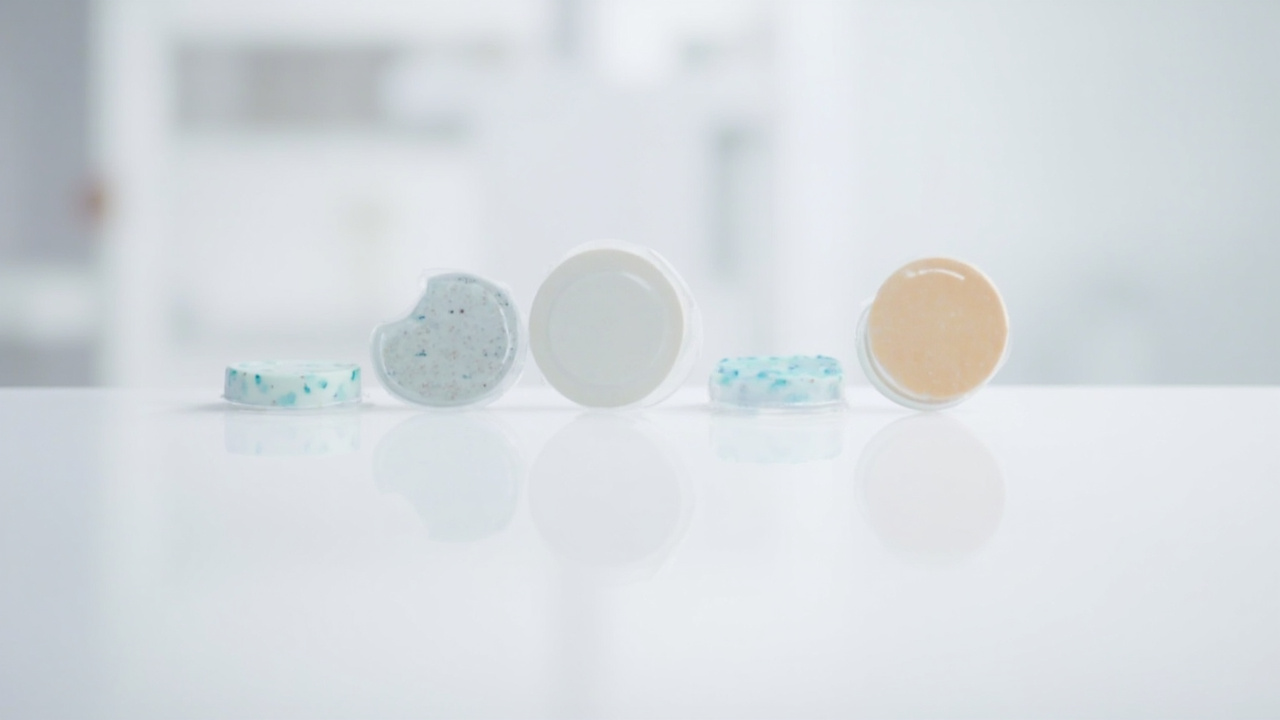
If you import transdermal patches into the EU, you must register in each member state’s Extended Producer Responsibility (EPR) packaging registry before your first shipment arrives, typically within 1–4 weeks and at a cost of €200–€2,000 per country per year. The exact requirement depends on your role: if you are the importer of record, you are the ‘producer’ under EU packaging EPR law and must register with the national EPR authority, file packaging data, pay fees, and appoint an authorized representative if you are not established in the EU. This guide gives you the exact documents, timelines, costs, and risk points for patch importers.
Key Takeaways
- Why EU EPR Packaging Rules Hit Patch Importers First
- The Country-by-Country Registration Map for Patch Importers
- Documents You Must Prepare Before Registering
- Step-by-Step Registration Process for Patch Importers
- Costs, Fines, and Financial Planning
- How Kongdy Health Supports EPR Compliance for OEM Partners
Key Takeaways
- As the importer of record, you are legally the ‘producer’ for packaging EPR in most EU member states — even if the patch manufacturer is in Asia.
- Registration is country-by-country: Germany (LUCID/ZSVR), France (ADEME/Refashion), Spain (Ecoembes), Italy (CONAI), and others each have separate portals, fees, and deadlines.
- Typical registration fees range from €200 to €2,000 per country per year, plus volume-based fees of €0.05–€0.50 per kg of packaging placed on market.
- Missing registration can trigger fines up to €200,000, shipment holds, and marketplace delisting (e.g., Amazon requires EPR registration numbers for Germany and France).
- You need a Certificate of Free Sale, ISO 13485 certificate, CE Declaration of Conformity, and packaging weight data to complete most registrations.
- Kongdy Health provides OEM/ODM partners with packaging weight declarations and compliance documentation to streamline EPR registration.
Why EU EPR Packaging Rules Hit Patch Importers First
Extended Producer Responsibility (EPR) for packaging is not new, but its enforcement has tightened dramatically since 2019, when the EU Single-Use Plastics Directive and the revised Waste Framework Directive pushed member states to digitize and cross-check producer registries. For transdermal patch importers, the trigger is simple: under the EU Packaging and Packaging Waste Directive (94/62/EC, as amended), the entity that first places packaged goods on the national market is the ‘producer.’ If you import patches from a contract manufacturer in China or India and sell them under your brand, that entity is you — not the factory.
This catches many B2B buyers off guard. They assume the OEM manufacturer handles all compliance, but EPR obligations attach to the economic operator placing the product on the market. The patch manufacturer’s ISO 13485 certificate and CE Declaration of Conformity cover product safety and quality, not packaging waste. In practice, customs clearance rarely checks EPR registration, but national environmental agencies and online marketplaces do — and penalties are rising.
Market data underscores the scale: the EU generated approximately 79 million tonnes of packaging waste in 2021 (Eurostat, 2023), and packaging EPR schemes now cover over 90% of EU packaging placed on market. For patch importers, this means every carton, blister, pouch, and label must be accounted for in a national registry. The good news: the process is manageable if you know the documents and timelines.
The Country-by-Country Registration Map for Patch Importers
There is no single EU EPR registration. Each member state operates its own scheme, often through a monopoly compliance organization. For patch importers, the five markets that matter most — Germany, France, Spain, Italy, and the Netherlands — have distinct requirements. Germany’s Verpackungsgesetz (Packaging Act) requires registration with LUCID, the central registry operated by ZSVR, plus a contract with a dual system (e.g., Der Grüne Punkt, Interseroh). France requires registration with ADEME via the Refashion/Eco-Emballages portal and an EPR ID number, which marketplaces like Amazon now demand. Spain requires registration with Ecoembes and, for some regions, regional authorities. Italy requires CONAI registration and a compliance fee. The Netherlands uses the Afvalfonds Verpakkingen registry.
The table below summarizes the core requirements, issuers, timelines, indicative costs, and risks for a typical patch importer placing, say, 5 tonnes of packaged patches on market per year. Costs are indicative and vary by packaging volume, material type, and whether you use a compliance scheme or register directly.
| Requirement | Issued by | Timeline | Indicative cost | Risk if missing |
|---|---|---|---|---|
| Germany LUCID registration (EPR number) | ZSVR / LUCID portal | 1–2 weeks | €0–€300 registration; €500–€2,000 dual system fee | Fines up to €200,000; sales ban; marketplace delisting |
| France EPR ID (ADEME/Refashion) | ADEME | 2–4 weeks | €200–€1,000 registration; volume fees €0.10–€0.40/kg | Fines up to €100,000; Amazon France delisting |
| Spain Ecoembes registration | Ecoembes | 2–3 weeks | €300–€1,500 annual fee | Fines €1,000–€100,000; shipment holds |
| Italy CONAI registration | CONAI | 1–2 weeks | €100–€500 registration; €0.05–€0.30/kg | Fines up to €50,000; customs delays |
| Packaging weight declaration (per SKU) | Self-declared / supplier data | 1–2 weeks | Internal cost; lab testing €200–€500 if disputed | Fee underpayment; audit penalties |
| Authorized representative (non-EU importers) | Compliance scheme or legal firm | 1–2 weeks | €500–€2,000/year | Registration invalid; fines |
Note that the table covers packaging EPR only. Patch importers may also face WEEE (for electronic applicators) and batteries EPR if their products include those components, but most transdermal patches are passive and fall under packaging EPR alone.
Documents You Must Prepare Before Registering
Registration portals ask for a consistent set of documents. Missing one can delay your application by weeks. For patch importers, the critical documents are: (1) Certificate of Free Sale from the manufacturing country, (2) ISO 13485 certificate with a scope covering transdermal patches, (3) CE Declaration of Conformity for the patch (Class IIa or IIb under MDR), (4) packaging weight declaration per SKU (grams of paper, plastic, aluminum, glass), (5) company registration documents, and (6) VAT number in the country of registration. If you are not established in the EU, you also need a signed authorized representative mandate.
In our experience supporting OEM partners, the packaging weight declaration is the most common bottleneck. Patch packaging typically includes a foil pouch (often aluminum/plastic laminate), a carton, a patient leaflet, and sometimes a blister. Each material stream has a different EPR fee rate. A typical 10-patch carton weighs 25–40 g, with the pouch accounting for 30–50% of the weight. If your supplier cannot provide accurate weights, you may overpay fees or face audit adjustments. Kongdy Health provides detailed packaging specifications and material weight breakdowns as part of its OEM documentation package, which simplifies registration.
Also prepare a data file for annual reporting. Most schemes require you to report packaging placed on market by material type and weight, typically by March 31 for the previous calendar year. Late reporting triggers penalties and estimated fees, which are often higher than actuals.
Step-by-Step Registration Process for Patch Importers
While each country differs, the workflow follows a common sequence. The numbered list below reflects the process for a first-time importer entering Germany and France, the two largest markets for transdermal patches in the EU.
- Determine your producer status. Confirm whether you are the importer of record or whether your EU distributor is. If you sell via an EU-established distributor who places the product on market under their name, they may be the producer. Get this in writing.
- Collect packaging weight data per SKU. Request a material breakdown (paper, plastic, aluminum, other) from your patch manufacturer. Validate with a sample weighing if needed.
- Appoint an authorized representative (if non-EU). Sign a mandate with a compliance scheme or legal representative in each country. This typically costs €500–€2,000 per year per country.
- Register with the national EPR authority. For Germany, register in LUCID and obtain your EPR number. For France, register with ADEME and obtain your unique identifier (IDU). Timelines: 1–4 weeks.
- Contract with a compliance scheme. In Germany, sign with a dual system; in France, join an eco-organization (e.g., Citeo). Provide your packaging data and pay the first fee installment.
- File initial declaration and pay fees. Fees are typically invoiced quarterly or annually based on declared volumes. Budget €500–€5,000 per country per year for a mid-sized importer.
- Set up annual reporting calendar. Mark deadlines (e.g., March 31 in Germany, February 28 in France) and assign responsibility. Late filing can trigger estimated fees 20–50% higher than actuals.
- Maintain audit-ready records. Keep packaging specs, invoices, and registration certificates for at least 5 years. National agencies can audit and back-charge for undeclared volumes.
Total lead time from decision to full compliance is typically 6–10 weeks if documents are ready. Start at least one quarter before your first shipment to avoid customs or marketplace holds.
Costs, Fines, and Financial Planning
EPR costs are modest relative to product value but can escalate if ignored. For a patch importer placing 5 tonnes of packaging on the German market annually, expect: LUCID registration free, dual system fee €500–€2,000, and volume fees of €0.20–€0.50 per kg for plastic and €0.05–€0.15 per kg for paper. That totals roughly €1,500–€4,500 per year. France is similar, with volume fees of €0.10–€0.40 per kg. Spain and Italy are lower, at €300–€1,500 per year for the same volume.
Fines for non-compliance vary widely. Germany’s packaging act allows fines up to €200,000 for failing to register or report. France can impose fines up to €100,000 and publish non-compliant companies. Marketplaces add commercial risk: Amazon requires EPR registration numbers for Germany and France and will delist non-compliant listings. For a patch brand selling on Amazon EU, delisting can cost thousands in lost sales per day.
Budget also for audit costs. If an agency audits your declarations, you may need to provide packaging samples and lab verification, costing €200–€500 per SKU. The cheapest strategy is accurate data from the start — which is why choosing an OEM partner that provides detailed packaging specifications matters.
How Kongdy Health Supports EPR Compliance for OEM Partners
As an OEM/ODM transdermal patch manufacturer operating since 1989, Kongdy Health has supplied partners in 120+ countries with patches and the documentation needed for EU market entry. Our ISO 13485, GMP, and FDA certifications are backed by a documentation package that includes packaging material specifications, weight breakdowns per SKU, Certificate of Free Sale, and CE Declaration of Conformity support. This reduces the data-gathering phase of EPR registration from weeks to days.
We also help partners align packaging design with EPR fee optimization. For example, reducing aluminum content in pouches or switching to mono-material films can lower plastic fees in Germany and France. Our OEM/ODM services cover formulation, patch design, packaging, and regulatory documentation, so you can focus on market access. To discuss your EU import project, visit our OEM/ODM services page and request a compliance documentation sample.
Frequently Asked Questions
Do I need to register for EU EPR packaging if my patch manufacturer is in the EU?
It depends on who places the packaged product on the market. If your EU manufacturer sells to you as an importer outside the EU, the manufacturer is likely the producer. But if you import the patches into the EU and sell under your brand, you are the producer even if the factory is in the EU. The key is the first placement on the national market. Always clarify contractually who holds EPR responsibility, and keep evidence of registration numbers.
What happens if I miss the EPR registration deadline?
Penalties range from fines of €1,000 to over €200,000 depending on the country and volume. Beyond fines, you risk shipment holds at customs, marketplace delisting (especially Amazon Germany and France), and retroactive fee assessments for undeclared volumes. Authorities can also publish non-compliant companies, damaging brand reputation. In practice, enforcement is increasing through data cross-checks between customs and EPR registries, so non-compliance is harder to hide.
Can my patch OEM manufacturer register for EPR on my behalf?
No, in most cases the manufacturer cannot register on your behalf because the legal obligation attaches to the producer placing the product on the market. However, the manufacturer can provide the packaging weight data, material specifications, and product documentation you need to register. Some OEMs offer to act as authorized representative, but this is uncommon and requires a legal mandate. The safest approach is to register yourself or through a compliance service, using your OEM’s data.
Sources
- Eurostat – Packaging waste statistics
- ZSVR / LUCID – German packaging register
- ADEME – French environment agency
- ISO 13485 – Medical devices quality management
Related reading
Comparing suppliers? Send us your specification.
Tell us the product, quantity and target market. You will get pricing, MOQ and lead time within 12 hours — no obligation, NDA available.
MOQ 10,000 pcs · Samples 7–10 days · Factory since 1989 · FDA · ISO 13485 · CE · GMP · 120+ countries
Send Us Your Inquiry
Tell us your requirements — we usually respond with a preliminary quotation and sampling plan within 12 hours.