
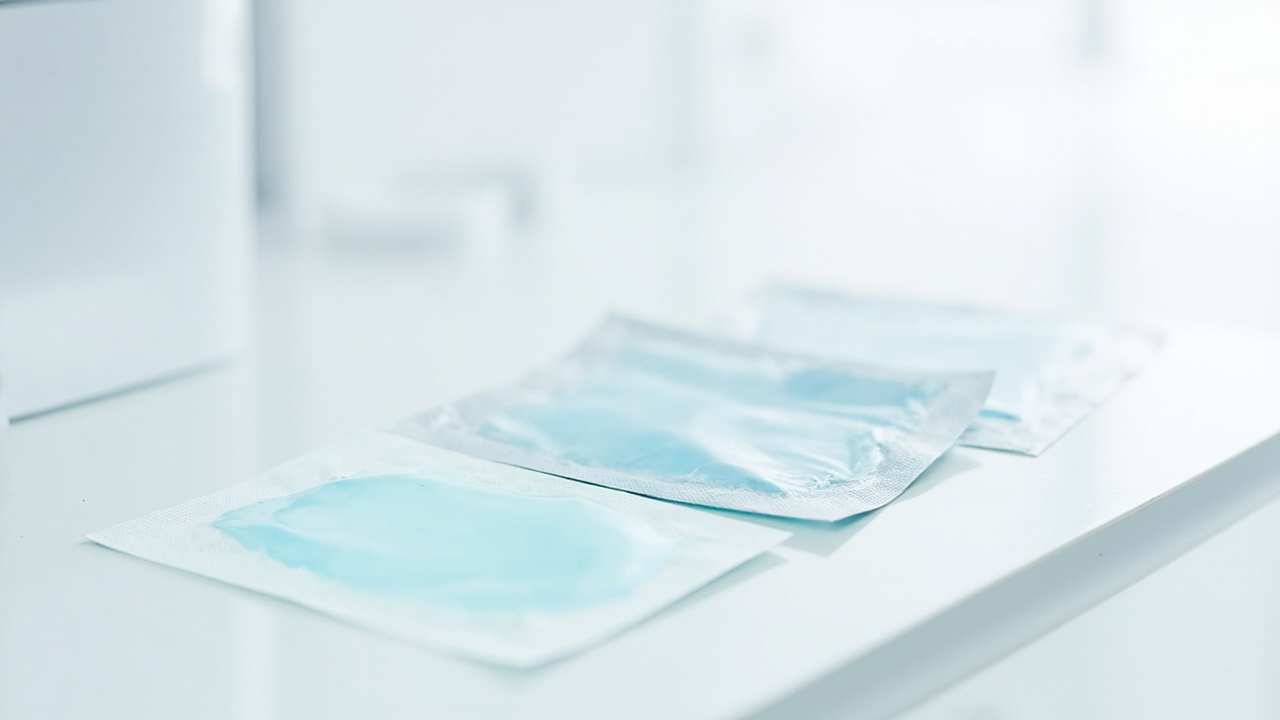
The global transdermal patch market is projected to reach $12.8 billion by 2030, with cooling gel patches capturing a significant share due to rising demand for non-invasive fever management and pain relief. As a B2B buyer or healthcare brand, understanding the intricacies of cooling gel patch manufacturing—from initial concept to commercial production—is critical for selecting a reliable OEM partner. This definitive guide walks you through every stage, backed by industry data and regulatory insights, to help you make informed decisions for your product line.
Understanding Cooling Gel Patch Technology and Market Demand
Cooling gel patches, also known as hydrogel patches, are adhesive patches that provide a cooling sensation through evaporative cooling and phase-change materials. They are widely used for fever reduction, minor pain relief, and post-workout recovery. According to a 2023 market analysis by Grand View Research, the global cooling patch market was valued at $2.1 billion in 2022 and is expected to grow at a CAGR of 6.8% from 2023 to 2030. This growth is driven by increasing consumer preference for drug-free pain management and the expansion of over-the-counter (OTC) healthcare products in emerging markets.
As a contract manufacturer, Kongdy Health has observed a surge in requests for customized cooling gel patches with specific cooling durations, adhesive properties, and skin-friendly ingredients. The technology behind these patches involves a hydrogel matrix that retains water and active cooling agents, such as menthol or peppermint oil, which are released upon skin contact. The manufacturing process must ensure consistent gel thickness, uniform cooling effect, and biocompatibility to meet FDA and ISO 13485 standards.
Raw Material Selection and Formulation Development
The foundation of any high-quality cooling gel patch lies in its formulation. Key raw materials include water, gelling agents (e.g., sodium polyacrylate, gelatin), humectants (glycerin), cooling agents (menthol, camphor), and preservatives. For fever patch manufacturing, the formulation must be non-irritating and safe for prolonged skin contact, especially for pediatric use. Kongdy Health’s R&D team typically develops 5–10 prototype formulations per project, testing for viscosity, pH, cooling duration (target: 4–8 hours), and adhesion to various skin types.
Data from a 2021 study published in the Journal of Pharmaceutical Sciences indicates that hydrogel patches with a water content of 60–80% provide optimal cooling without causing maceration. Additionally, the inclusion of phase-change materials like paraffin wax can extend cooling duration by up to 30%. During formulation development, manufacturers must consider stability under different storage conditions (25°C/60% RH, 40°C/75% RH) to ensure a shelf life of at least 24 months. Kongdy Health’s ISO 13485-certified quality management system ensures that every batch meets predefined specifications before moving to production scale-up.
Hydrogel Patch Production Process: Step-by-Step
The production of hydrogel patches involves several precise steps that must be controlled to maintain quality and consistency. Below is a detailed numbered list of the key stages in hydrogel patch production:
- Mixing and Gel Preparation: Raw materials are weighed and mixed in a high-shear mixer under controlled temperature (25–30°C) to form a homogeneous gel. Air bubbles are removed via vacuum deaeration to prevent defects.
- Coating and Casting: The gel is coated onto a release liner using a slot-die coating system, achieving a uniform thickness of 0.5–2.0 mm. Precise control of coating speed (1–5 m/min) and gap ensures consistent weight per unit area.
- Drying and Curing: The coated liner passes through a multi-zone drying oven (40–80°C) to remove excess water and activate crosslinking agents. Dwell time is optimized to achieve target gel strength and flexibility.
- Lamination and Cutting: A backing fabric (non-woven or polyurethane) is laminated onto the gel layer. The laminate is then die-cut into desired shapes (rectangular, oval, or custom) with kiss-cut or through-cut options.
- Packaging and Sealing: Individual patches are sealed into pouches using heat-sealable foil or plastic films. Nitrogen flushing may be used to extend shelf life by reducing oxidation.
- Inspection and Labeling: Automated vision systems check for defects (air bubbles, uneven coating, missing cut lines). Labeling includes batch number, expiration date, and regulatory markings (CE, FDA registration).
Throughout the process, in-process controls monitor gel viscosity, moisture content, and adhesion strength. Kongdy Health’s GMP-compliant facilities use real-time data logging to ensure traceability from raw material to finished product.
Regulatory Compliance and Quality Assurance
Navigating the regulatory landscape is a critical aspect of cooling gel patch OEM. In the United States, cooling gel patches are typically classified as medical devices (Class I or II) or OTC drugs, depending on claims. For fever patches marketed as fever reducers, FDA clearance via a 510(k) premarket notification may be required. Kongdy Health maintains FDA registration and ISO 13485:2016 certification, ensuring that all manufacturing processes adhere to international quality standards. Additionally, CE marking under the EU Medical Device Regulation (MDR) is essential for European market entry.
Quality assurance involves rigorous testing at multiple stages: raw material inspection (identity, purity, microbial limits), in-process checks (gel pH, viscosity, coating weight), and finished product testing (sterility, stability, skin irritation). According to a 2022 industry report by MarketsandMarkets, 45% of OEM buyers cite regulatory compliance as the top factor when selecting a manufacturing partner. Kongdy Health’s dedicated regulatory team assists clients with documentation for FDA, CE, and other global submissions, reducing time-to-market by up to 30%.
Customization Options for Cooling Gel Patch OEM
One of the key advantages of working with an experienced OEM manufacturer like Kongdy Health is the ability to customize every aspect of the cooling gel patch. Below is a bullet-point list of common customization options:
- Shape and Size: Standard sizes include 50×70 mm (forehead), 70×100 mm (back), and custom shapes for specific body parts. Die-cutting can produce irregular shapes for branding or ergonomic fit.
- Cooling Duration: Adjustable from 2 to 12 hours by modifying water content, gel thickness, or adding phase-change materials. Rapid-cool formulations achieve peak cooling within 5 minutes.
- Active Ingredients: In addition to menthol, options include camphor, eucalyptus oil, lidocaine (for numbing), or herbal extracts (aloe vera, chamomile). Drug release profiles can be tailored for immediate or sustained effect.
- Adhesive Properties: Hypoallergenic acrylic or silicone adhesives are available for sensitive skin. Peel strength can be adjusted from low (easy removal) to high (sports use).
- Packaging: Single-use pouches (foil or plastic), multi-packs, or bulk rolls for institutional use. Custom printing with brand logo, instructions, and regulatory information.
- Scent and Color: Fragrance-free or scented options (mint, lavender). Gel can be tinted with FDA-approved colorants for brand differentiation.
Kongdy Health’s R&D team collaborates with clients to develop prototypes within 2–4 weeks, followed by stability testing and pilot production before mass manufacturing.
Scale-Up and Commercial Production Considerations
Transitioning from lab-scale to commercial production requires careful planning to maintain quality and cost-efficiency. Key factors include equipment scalability (from benchtop coater to industrial roll-to-roll line), process validation (IQ/OQ/PQ), and supply chain management for raw materials. Kongdy Health’s production facility in China operates 10 automated production lines with a combined capacity of 50 million patches per month, ensuring on-time delivery for large-volume orders.
Cost analysis for a typical cooling gel patch (50×70 mm) shows that raw materials account for 40–50% of total cost, with gelling agents and cooling agents being the largest components. Labor and overheads constitute 20–30%, while packaging and logistics make up the remainder. By optimizing coating efficiency and reducing waste, Kongdy Health achieves a 95% yield rate, translating to cost savings of 10–15% compared to industry averages. For clients, minimum order quantities (MOQs) start at 10,000 units per SKU, with lead times of 4–6 weeks for first production runs.
Frequently Asked Questions
Q1: What is the typical lead time for a custom cooling gel patch OEM project?
The lead time for a custom cooling gel patch project depends on the complexity of the formulation and packaging requirements. Typically, the process includes formulation development (2–4 weeks), prototyping and stability testing (4–6 weeks), and commercial production (4–6 weeks after approval). Total time from concept to first shipment is usually 10–16 weeks. Kongdy Health streamlines this by offering pre-validated base formulations that can be customized with specific active ingredients, reducing development time by up to 40%.
Q2: What certifications does a reliable cooling gel patch manufacturer need?
A reputable OEM manufacturer should hold ISO 13485:2016 certification for medical device quality management, GMP compliance for pharmaceutical products, and FDA registration for products sold in the U.S. Additional certifications like CE marking under EU MDR, Health Canada license, or TGA (Australia) registration may be required depending on target markets. Kongdy Health maintains all these certifications and provides full documentation to support clients’ regulatory filings, including Device Master Record and Design History File.
Q3: Can I manufacture cooling gel patches with drug ingredients like lidocaine?
Yes, it is possible to incorporate active pharmaceutical ingredients (APIs) such as lidocaine, menthol, or camphor into cooling gel patches. However, this changes the regulatory classification from a medical device to a drug-device combination product, requiring additional FDA approval (e.g., 505(b)(2) NDA or 510(k) with drug claims). Kongdy Health has experience with both OTC drug monographs and new drug applications, and can guide clients through the regulatory pathway. The manufacturing process must ensure uniform drug distribution and stability, which we validate through dissolution testing and accelerated stability studies.
Partnering with an experienced OEM manufacturer is the key to bringing your cooling gel patch product to market efficiently and compliantly. Kongdy Health offers end-to-end services from concept to commercial production, with a proven track record of delivering high-quality patches to 120+ countries. Contact Kongdy Health today to discuss your project requirements and receive a customized quote.