
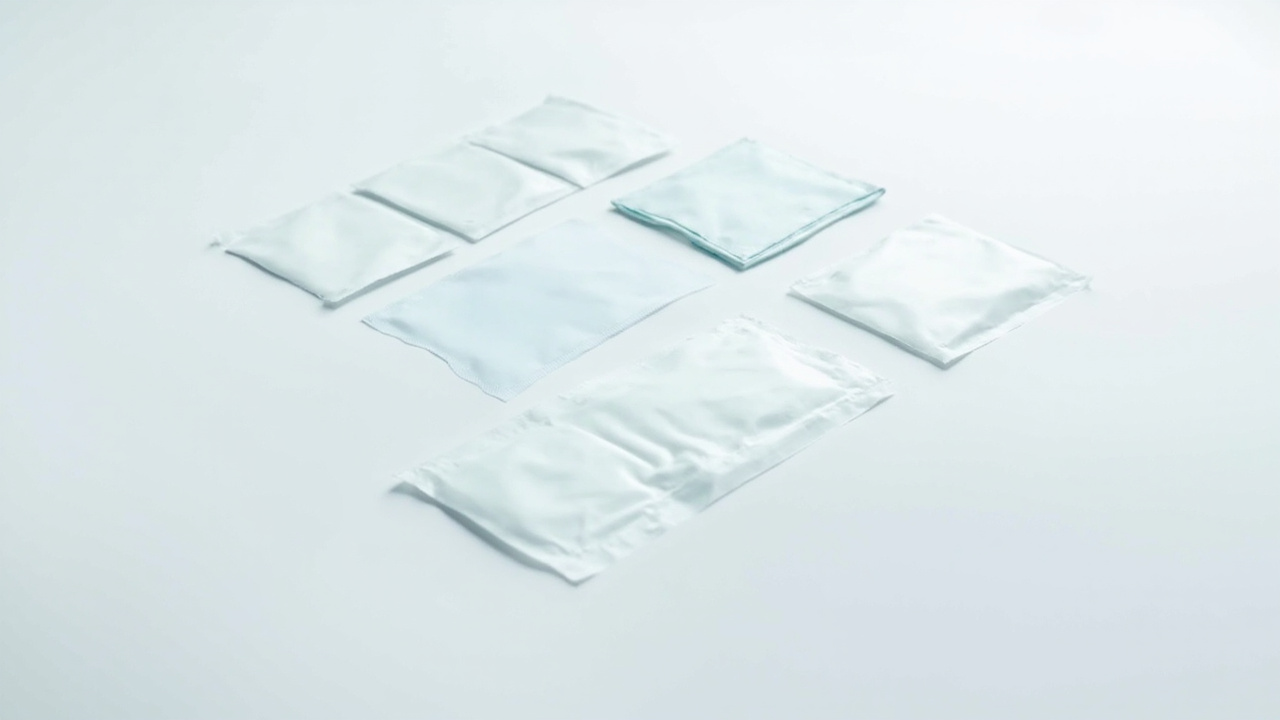
The global transdermal patch market was valued at approximately $7.5 billion in 2022 and is projected to exceed $11 billion by 2030, with cooling gel patches representing a rapidly growing segment driven by fever management, pain relief, and cosmetic applications. For healthcare brands seeking to enter this space, understanding the cooling gel patch manufacturing process—from initial concept to commercial production—is critical for success. This definitive guide walks through every stage of cooling gel patch OEM, providing the technical and regulatory insights needed to partner effectively with a manufacturer like Kongdy Health.
Understanding Cooling Gel Patch Technology and Market Demand
Cooling gel patches, also known as hydrogel patches, function through evaporative cooling and conductive heat transfer. The hydrogel matrix—composed of water, polymers, and active ingredients—absorbs body heat and releases it through evaporation, providing a sustained cooling effect for 6–12 hours. According to a 2023 market analysis by Grand View Research, the global fever patch segment alone accounted for over 480 million units shipped in 2022, with Asia-Pacific dominating production and consumption. This growth is fueled by increasing awareness of non-pharmacological fever management, particularly in pediatric care, where cooling patches reduce the need for antipyretic medications.
From a manufacturing perspective, cooling gel patches offer several advantages over traditional wet wipes or ice packs: they are non-drip, self-adhesive, and provide consistent temperature reduction. The hydrogel formulation must balance water activity, adhesion, and cooling duration while remaining biocompatible. For OEM partners, the key differentiator lies in the ability to customize patch size, shape, active ingredients (e.g., menthol, eucalyptus, or antipyretics), and packaging formats—from single-use sachets to multi-patch dispensers.
Phase 1: Concept Development and Formulation Design
The journey begins with a detailed product brief. OEM manufacturers like Kongdy Health collaborate with clients to define target indications (e.g., fever, headache, muscle pain), desired cooling duration, skin sensitivity requirements, and regulatory pathways. During this phase, a feasibility study assesses raw material availability, cost constraints, and manufacturing capabilities. For instance, a fever patch intended for infants requires a formulation with pH 5.5–6.5, hypoallergenic adhesives, and absence of active pharmaceutical ingredients (APIs) in many markets, whereas an athletic cooling patch may incorporate menthol for enhanced sensory cooling.
Formulation development involves selecting the hydrogel base—typically polyacrylate, polyvinyl alcohol (PVA), or natural polymers like gelatin—and optimizing the crosslinking density to control water release. A typical hydrogel formulation contains 60–85% purified water, 10–20% polymer, 5–10% humectants (glycerin, propylene glycol), and 1–5% active ingredients. Stability testing at 40°C/75% RH for 6 months ensures the patch maintains its cooling effect and microbiological integrity. According to a 2021 study in the International Journal of Pharmaceutics, patches with 70% water content provided optimal cooling for 8 hours without skin maceration.
Phase 2: Prototyping and Pilot Production
Once the formulation is approved, prototype patches are manufactured using lab-scale coating equipment. This stage validates the manufacturing process parameters: coating thickness (typically 0.5–2.0 mm), drying temperature (50–80°C), and lamination alignment. A numbered list of key pilot production steps includes:
- Hydrogel Preparation: Polymers are hydrated in purified water under vacuum to eliminate air bubbles, then mixed with humectants and active ingredients at controlled temperatures (25–40°C).
- Coating: The hydrogel is spread onto a release liner (silicone-coated PET) using a knife-over-roll or slot-die coater to achieve uniform thickness within ±0.05 mm tolerance.
- Drying: The coated web passes through a multi-zone oven to remove excess water, achieving the target water activity (0.90–0.95 Aw) for microbial stability.
- Lamination: A backing film (non-woven fabric or polyurethane) is applied to the hydrogel surface to provide structural support and prevent dehydration.
- Cutting and Sealing: Patches are die-cut into specified shapes (rectangular, oval, or contoured) and individually sealed into foil sachets using heat-seal equipment operating at 150–180°C.
Pilot batches (typically 500–2,000 units) undergo rigorous quality control: peel adhesion (ASTM D3330), cooling performance (thermocouple measurement on simulated skin), and microbiological testing per USP <61> and <62>. Any deviations trigger formulation adjustments. For example, if cooling duration is shorter than target, the polymer-to-water ratio may be increased to slow water evaporation.
Phase 3: Scale-Up and Process Validation
Transitioning from pilot to commercial production requires process validation under FDA and ISO 13485 guidelines. This involves three stages: Installation Qualification (IQ), Operational Qualification (OQ), and Performance Qualification (PQ). For cooling gel patch manufacturing, critical process parameters include coating speed (2–10 m/min), drying zone temperatures, and humidity control (below 40% RH to prevent premature gelation). A bullet-point list of scale-up considerations includes:
- Equipment Capacity: Industrial coaters handle web widths up to 1.2 m, producing 10,000–50,000 patches per hour depending on patch size.
- Yield Optimization: During scale-up, yield typically drops from 95% (pilot) to 85–90% initially, then stabilizes above 92% after process optimization.
- Raw Material Consistency: Hydrogel polymers from different suppliers may vary in molecular weight, affecting viscosity and cooling performance; qualification of alternative suppliers is essential.
- Environmental Controls: Cleanroom classification (ISO Class 8 or better) is required to minimize microbial contamination; air handling systems must maintain positive pressure and HEPA filtration.
- Packaging Integrity: Foil sachets must meet moisture vapor transmission rates (MVTR) below 0.5 g/m²/day to prevent patch dehydration over shelf life (typically 2–3 years).
Process validation batches (three consecutive lots at commercial scale) must demonstrate consistent quality. Acceptance criteria include adhesion strength between 0.5–2.0 N/cm, cooling temperature drop of 2–5°C from baseline, and microbial counts below 100 CFU/g. Kongdy Health, with its FDA-registered and ISO 13485:2016 certified facilities, ensures all validation data is documented and auditable.
Phase 4: Regulatory Compliance and Quality Assurance
Cooling gel patches are classified as medical devices (Class I or II depending on claims) in most jurisdictions. In the US, they require FDA 510(k) clearance if making therapeutic claims (e.g., fever reduction); otherwise, they may be marketed as over-the-counter (OTC) drug products if containing antipyretic APIs. The EU requires CE marking under the Medical Device Regulation (MDR) 2017/745, which demands a comprehensive technical file including clinical evaluation (MEDDEV 2.7/1 Rev.4). For fever patches without APIs, a Class I self-declaration is sufficient, but manufacturers must still comply with ISO 13485 and GMP (Good Manufacturing Practices) per 21 CFR Part 820.
Quality assurance extends throughout production: in-process checks for coating weight (gravimetric), moisture content (Karl Fischer titration), and seal strength (burst test). Finished product testing includes sterility (if labeled as sterile), endotoxin levels (<0.5 EU/mL for pediatric patches), and biocompatibility (ISO 10993-5 for cytotoxicity, ISO 10993-10 for skin irritation). A 2022 industry report noted that 12% of cooling patch recalls were due to packaging defects, underscoring the importance of robust quality systems. Partnering with an OEM that maintains full traceability from raw material lot to finished batch is non-negotiable for brand protection.
Phase 5: Logistics, Packaging, and Market Launch
Once production is validated, the focus shifts to packaging design and supply chain logistics. Cooling gel patches are sensitive to temperature and humidity; thus, storage conditions (15–30°C, <60% RH) must be maintained throughout the distribution chain. Primary packaging—typically aluminum foil sachets with a tear notch—provides a barrier against moisture and light. Secondary packaging (cartons or display boxes) should comply with local labeling requirements, including indications, ingredients, and storage instructions. For global distribution, manufacturers like Kongdy Health offer customized packaging with multilingual artwork and barcodes (GS1-128).
Market launch strategies often include sampling programs for healthcare professionals, especially pediatricians and pharmacists, who recommend fever patches as first-line fever management. According to a 2023 survey by the American Academy of Pediatrics, 68% of pediatricians reported recommending cooling patches to parents for fever relief. OEM partners can leverage this by providing clinical data sheets and marketing collateral. With a lead time of 12–16 weeks from concept to first commercial batch, effective project management ensures that brands meet seasonal demand peaks, such as flu season (October–March in the Northern Hemisphere).
Frequently Asked Questions
Q1: What is the typical minimum order quantity (MOQ) for cooling gel patch OEM?
MOQs vary by manufacturer and patch complexity. For standard rectangular fever patches, MOQs typically range from 10,000 to 50,000 units per SKU. Custom shapes or active ingredient formulations may require higher MOQs (50,000–100,000 units) due to tooling and setup costs. Kongdy Health offers flexible MOQs for startups and established brands alike, with dedicated production lines that can accommodate small batches for pilot testing before scale-up. It’s important to discuss MOQ early in the concept phase to align with your budget and market entry plan.
Q2: How long does the cooling gel patch OEM process take from concept to delivery?
The full timeline typically spans 12–20 weeks, depending on formulation complexity and regulatory requirements. Concept development and formulation take 2–4 weeks; prototyping and pilot production require 3–5 weeks; scale-up and validation take 4–6 weeks; and packaging, quality release, and shipping add 3–5 weeks. Regulatory submissions (FDA 510(k) or CE marking) can extend the timeline by 8–12 weeks if therapeutic claims are made. A well-structured project plan with clear milestones helps ensure timely delivery, especially for seasonal product launches.
Q3: What certifications should I look for in a cooling gel patch OEM manufacturer?
Look for manufacturers with ISO 13485:2016 certification (medical device quality management), FDA registration (establishment number and device listing), and GMP compliance (21 CFR Part 820). Additional certifications like CE marking (MDR), ISO 9001, and cGMP for dietary supplements (if applicable) are valuable. A manufacturer that conducts in-house biocompatibility testing (ISO 10993) and stability studies demonstrates commitment to quality. Kongdy Health holds all these certifications and regularly undergoes audits by regulatory agencies and clients, ensuring that your product meets global standards.
Ready to bring your cooling gel patch concept to life? Partner with Kongdy Health, your trusted OEM/ODM manufacturer since 1989. With FDA-registered, ISO 13485:2016 and GMP-certified facilities, we offer end-to-end support from formulation to global distribution. Contact our OEM team today to start your project.