
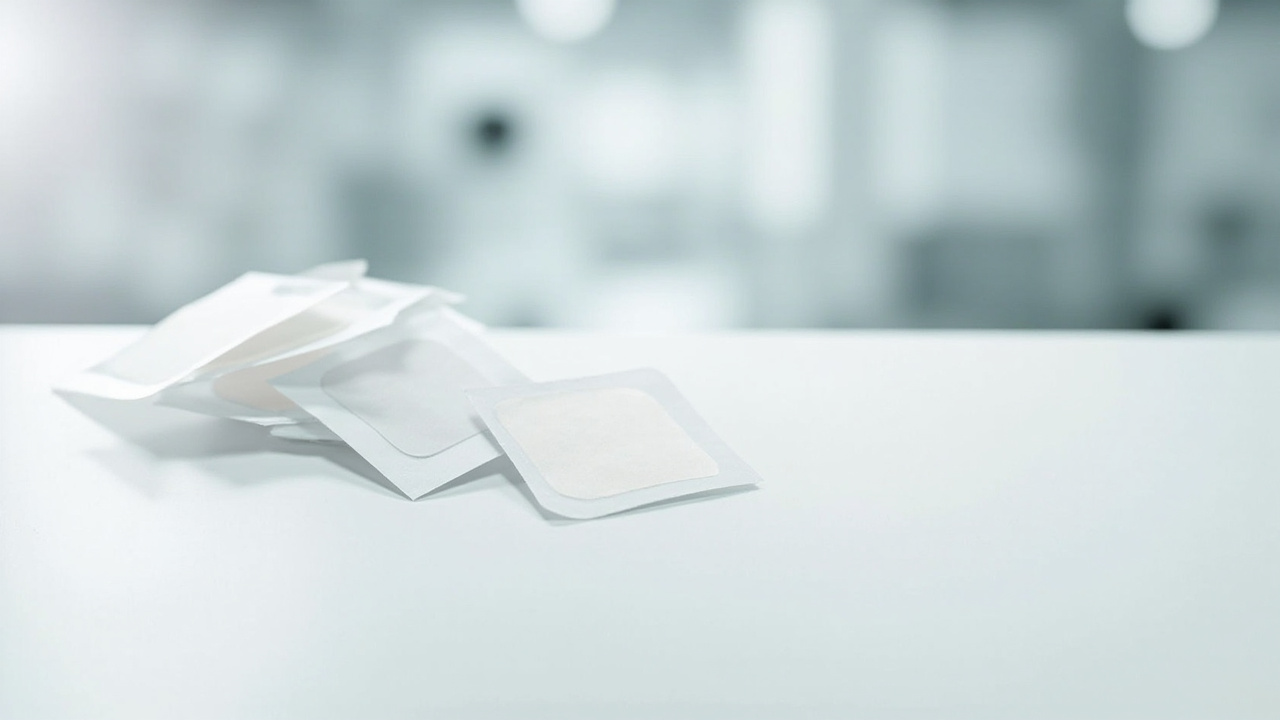
As a brand owner or procurement specialist in the pain relief market, selecting the right warming technology for your transdermal patch line is a critical decision. Air-activated heat patches and capsicum-based plasters dominate the market, each offering distinct advantages. This guide, brought to you by Kongdy Health, a leading OEM/ODM manufacturer since 1989, will help you navigate the choices. With over 120 countries served and certifications including FDA, ISO 13485, and GMP, we understand the nuances that impact product success. Whether you’re seeking an air activated heat patch OEM partner or a capsicum plaster manufacturer, this comparison will inform your strategy.
Key Takeaways
- How Air-Activated Heat Patches Work
- How Capsicum Patches Work
- Comparative Analysis: Air-Activated vs Capsicum
- Manufacturing and Regulatory Considerations
- Market Trends and Consumer Insights
- Choosing the Right Technology for Your Brand
Key Takeaways
- Air-activated patches provide consistent, controllable heat for 8-12 hours, ideal for chronic pain and sports recovery, but require airtight packaging.
- Capsicum patches offer targeted, long-lasting relief via capsaicin-induced vasodilation, often at lower cost, but may cause skin irritation and require careful formulation.
- Market trends show growing demand for both technologies, with the global pain relief patch market projected to reach $8.6 billion by 2027 (Grand View Research, 2020).
- Regulatory compliance (FDA, ISO 13485, GMP, CE) is non-negotiable; OEM partners must provide documentation and testing.
- Choosing the right technology depends on target demographic, desired duration, cost, and marketing claims.
- Kongdy Health offers turnkey OEM/ODM services for both patch types, ensuring quality and speed-to-market.
With the key takeaways in mind, let’s delve into the mechanics, benefits, and manufacturing considerations of each technology. This will equip you to make an informed decision for your brand.
How Air-Activated Heat Patches Work
Air-activated heat patches rely on a simple yet effective exothermic reaction. Inside the patch, iron powder, activated carbon, salt, and water are combined. When the patch is exposed to air, oxygen triggers the oxidation of iron, producing heat. The rate of reaction is controlled by the permeability of the outer pouch, which regulates oxygen flow. This technology is widely used in products like ThermaCare and other branded heat wraps.
The heat output typically ranges from 40°C to 50°C (104°F to 122°F) and can last from 8 to 12 hours. The temperature curve is relatively stable, with a gradual warm-up and cool-down. This makes air-activated patches ideal for continuous, low-level heat therapy, which is recommended for relieving stiffness, muscle aches, and menstrual cramps. According to a 2019 study in the Journal of Pain Research, continuous low-level heat therapy significantly improved chronic low back pain compared to acetaminophen.
From a manufacturing perspective, air-activated patches require airtight packaging to prevent premature activation. Each patch is sealed in a foil pouch, often with nitrogen flushing. The production process involves mixing the iron powder with other ingredients, compressing into a pad, and assembling with adhesive layers. Quality control is critical to ensure consistent heat output and duration. OEM partners must have expertise in powder handling and sealing technologies to avoid defects.
How Capsicum Patches Work
Capsicum patches, also known as capsaicin plasters, utilize the active compound capsaicin, derived from chili peppers. Capsaicin works by binding to TRPV1 receptors on sensory neurons, initially causing a burning sensation, but subsequently depleting substance P, a neurotransmitter involved in pain signaling. This results in desensitization and pain relief. The effect is not thermal but rather neurochemical, though it induces a sensation of warmth due to increased blood flow.
Capsicum patches are typically used for localized pain relief, such as arthritis, muscle strains, and neuropathic pain. They are available in various strengths, from 0.025% to 0.1% capsaicin. The patches are usually applied for 30 minutes to 1 hour, and relief can last for several hours. Unlike air-activated patches, they do not require air activation, simplifying packaging and storage. However, they can cause skin irritation, and proper formulation with soothing agents like menthol or aloe vera is essential.
Manufacturing capsicum patches involves dissolving capsaicin in a suitable solvent, mixing with adhesives, and coating onto a backing film. The challenge lies in achieving uniform distribution and stable adhesion. Regulatory bodies like the FDA have specific monographs for capsaicin topical products, and compliance with ISO 13485 ensures quality management. As a capsicum plaster manufacturer, Kongdy Health employs precision coating and testing to meet these standards.
Comparative Analysis: Air-Activated vs Capsicum
When choosing between these technologies, consider the following factors:
- Heat Generation: Air-activated patches produce actual heat (40-50°C), while capsicum patches create a warming sensation through vasodilation without significant temperature increase.
- Duration: Air-activated patches last 8-12 hours; capsicum patches provide relief for 4-6 hours after application, though the patch itself may be worn longer.
- Onset of Action: Air-activated patches take 15-30 minutes to warm up; capsicum patches may cause immediate burning, followed by relief within 30 minutes.
- Skin Sensitivity: Capsicum patches have a higher risk of irritation, especially in sensitive individuals; air-activated patches are generally well-tolerated but can cause burns if misused.
- Cost: Capsicum patches are often cheaper to produce due to simpler materials; air-activated patches require iron powder and complex packaging.
- Regulatory Pathway: Both may be classified as medical devices or drugs depending on claims; in the US, air-activated patches are often Class I devices, while capsicum patches may be OTC drugs.
- Consumer Preference: Some users prefer the gentle, consistent warmth of air-activated patches; others prefer the targeted, long-lasting effect of capsicum.
Market data indicates that the global pain relief patches market was valued at $5.6 billion in 2019 and is expected to grow at a CAGR of 6.2% from 2020 to 2027 (Grand View Research). North America and Europe are mature markets, while Asia-Pacific shows rapid growth due to increasing awareness and disposable income. For OEMs, this means opportunities in both segments, but understanding regional preferences is key. For instance, in Japan, air-activated patches are extremely popular, while in some European countries, capsicum patches are favored for arthritis.
Manufacturing and Regulatory Considerations
Producing either type of patch requires adherence to stringent quality standards. ISO 13485 is the international standard for medical devices, and GMP ensures consistent production. In the US, the FDA regulates pain relief patches; air-activated patches are generally Class I exempt, but capsicum patches with drug claims require an NDA or OTC monograph compliance. In Europe, CE marking is required under the Medical Device Regulation (MDR).
For air-activated patches, key manufacturing steps include:
- Raw Material Sourcing: Iron powder, activated carbon, salt, and water must meet purity standards. Suppliers should be audited for consistency.
- Mixing and Blending: Precise ratios are critical to control heat output. Automated mixing ensures uniformity.
- Pad Formation: The mixture is compressed into a pad and sandwiched between layers.
- Packaging: Each patch is sealed in an airtight foil pouch, often with nitrogen flush to prevent oxidation.
- Quality Testing: Samples are tested for heat profile, duration, and seal integrity.
For capsicum patches, the process involves:
- Active Ingredient Preparation: Capsaicin is dissolved in a solvent and mixed with adhesives.
- Coating: The mixture is coated onto a backing film at a precise thickness.
- Drying: Solvents are evaporated in controlled ovens.
- Lamination: A release liner is applied.
- Cutting and Packaging: Patches are cut to size and sealed in pouches.
Both processes require rigorous quality control. Kongdy Health, with its ISO 13485 and GMP certifications, ensures that every batch meets specifications. We also provide regulatory support for FDA and CE submissions, helping you navigate the complexities.
Market Trends and Consumer Insights
The pain relief patch market is driven by an aging population, increasing incidence of chronic pain, and a shift towards non-invasive treatments. According to the CDC, approximately 20.4% of US adults experience chronic pain (2019). This creates a vast demand for effective, convenient solutions. Air-activated patches are particularly popular among athletes and active individuals for muscle soreness, while capsicum patches are favored by older adults for arthritis.
In terms of innovation, manufacturers are exploring hybrid patches that combine both technologies, or adding menthol for a cooling sensation. There is also a trend towards natural and organic ingredients, which benefits capsicum patches. However, air-activated patches are gaining traction in emerging markets where cost-effectiveness and long-lasting heat are valued.
For OEMs, differentiation is key. Offering customizable sizes, shapes, and heat profiles can help brands stand out. Additionally, eco-friendly packaging is increasingly important. Kongdy Health can help you develop sustainable options without compromising quality.
Choosing the Right Technology for Your Brand
To make the best choice, consider your target market, product positioning, and budget. If you aim to serve athletes or individuals with chronic pain who need long-lasting heat, air-activated patches are ideal. If you target arthritis sufferers or those seeking targeted relief at a lower price point, capsicum patches may be more suitable.
Also, evaluate your supply chain capabilities. Air-activated patches require airtight packaging, which adds cost but ensures stability. Capsicum patches have simpler packaging but require careful handling of the active ingredient. Both require a reliable OEM partner with expertise.
Finally, think about regulatory strategy. If you plan to market in the US, determine whether your product will be a device or drug. This affects labeling, claims, and testing. Kongdy Health can guide you through this process, leveraging our experience with FDA, ISO 13485, and CE.
Frequently Asked Questions
Q1: What is the typical duration of heat for air-activated patches?
Air-activated heat patches typically provide continuous heat for 8 to 12 hours, depending on the formulation and environmental conditions. The heat output usually ranges between 40°C and 50°C, with a gradual warm-up period of 15-30 minutes. This duration makes them suitable for all-day relief, but they should not be used while sleeping to avoid burns. OEMs can customize the duration by adjusting the iron powder ratio and pouch permeability.
Q2: Are capsicum patches safe for sensitive skin?
Capsicum patches can cause skin irritation, especially in individuals with sensitive skin. However, manufacturers can mitigate this by incorporating soothing agents like aloe vera or menthol, and by using hypoallergenic adhesives. It’s important to conduct patch tests and follow FDA guidelines for capsaicin concentration. As a capsicum plaster manufacturer, Kongdy Health offers formulation support to minimize irritation while maintaining efficacy.
Q3: How do regulatory requirements differ between air-activated and capsicum patches?
In the US, air-activated patches are often classified as Class I medical devices, exempt from premarket notification, while capsicum patches may be regulated as OTC drugs if they make drug claims. In Europe, both require CE marking under MDR. Compliance with ISO 13485 and GMP is essential for both. OEM partners must provide documentation for regulatory submissions, and Kongdy Health assists clients with FDA and CE filings.
Sources
- Grand View Research: Pain Relief Patches Market Size Report, 2020
- CDC: Prevalence of Chronic Pain and High-Impact Chronic Pain Among Adults, 2019
- FDA: Classify Your Medical Device
- ISO 13485: Medical Devices Quality Management
Ready to launch your warming patch line? Partner with Kongdy Health for end-to-end OEM/ODM services. With decades of experience and global certifications, we ensure your product meets the highest standards.