
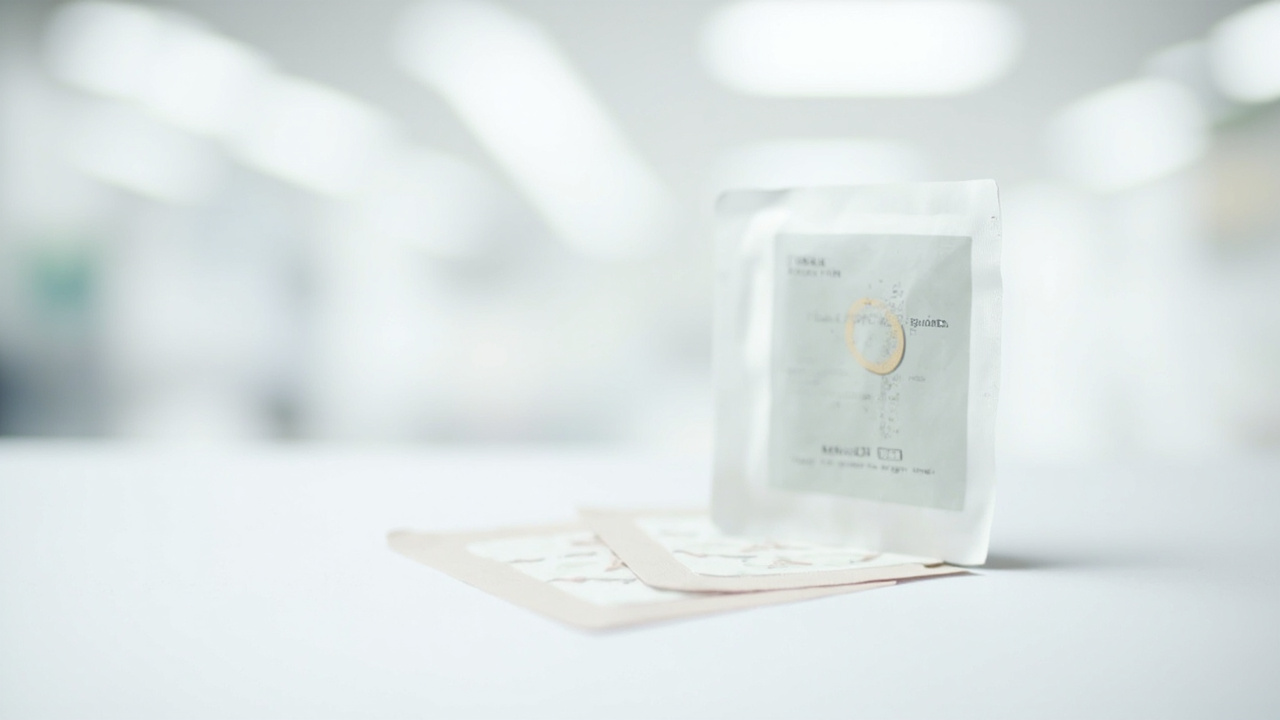
The global sleep aids market is projected to reach $101.9 billion by 2028, with transdermal patches emerging as a preferred delivery system due to their controlled release and avoidance of first-pass metabolism. For brands looking to enter this lucrative space, a custom sleep patch offers a unique opportunity to differentiate. Whether you’re exploring melatonin patch private label options or a multi-ingredient sleep wellness OEM product, understanding formulation science, regulatory requirements, and manufacturing best practices is critical. This guide provides the expert-level knowledge you need to bring a safe, effective, and market-ready sleep patch to consumers.
Why Transdermal Patches for Sleep?
Transdermal drug delivery offers distinct advantages over oral supplements. Patches provide a steady, controlled release of active ingredients over 6–8 hours, mimicking the body’s natural sleep-wake cycle. This reduces the risk of next-day drowsiness often associated with oral melatonin. According to a 2023 market analysis by Grand View Research, the transdermal patch market is growing at 6.5% CAGR, driven by demand for non-invasive, convenient wellness solutions. For sleep specifically, patches eliminate the need to swallow pills, making them ideal for children, elderly, or those with swallowing difficulties. Additionally, transdermal delivery bypasses the gastrointestinal tract and liver, increasing bioavailability and reducing side effects like stomach upset. This scientific edge is why leading brands are pivoting to custom sleep patch formulations as a premium product line.
Key Ingredients for a Custom Sleep Patch
Formulating an effective sleep patch requires selecting ingredients with proven efficacy and appropriate physicochemical properties for transdermal delivery. The most common active is melatonin, a hormone that regulates circadian rhythms. However, a robust sleep wellness OEM product often includes complementary agents:
- Melatonin: Typically dosed at 1–10 mg per patch. Its low molecular weight (232 g/mol) and moderate lipophilicity make it ideal for skin permeation. A 2022 study in Nature and Science of Sleep confirmed that transdermal melatonin improves sleep onset and quality without the peak-and-trough plasma levels of oral forms.
- L-Theanine: An amino acid found in green tea that promotes relaxation without sedation. It enhances alpha brain waves, reducing anxiety and improving sleep quality. Its small size and water solubility require specialized formulation techniques like ion-pairing to ensure adequate skin penetration.
- Magnesium: Often added as magnesium chloride or glycinate to support muscle relaxation and GABA receptor activity. Due to its ionic nature, it is typically delivered via a separate layer or as a salt complex to maintain stability.
- Valerian Root Extract: A traditional herbal sedative. Its active compounds (valerenic acid) are volatile and require stabilization during manufacturing to prevent degradation.
- Chamomile Oil: Provides aromatherapeutic benefits but is challenging to incorporate in a patch matrix due to evaporation. Microencapsulation is often used.
Each ingredient must be tested for compatibility with the adhesive matrix and backing film. For example, acidic ingredients can degrade the adhesive, while oils may cause delamination. An experienced OEM partner like Kongdy Health conducts rigorous stability studies to ensure the final product maintains potency throughout its shelf life.
Formulation Challenges and Solutions
Developing a custom sleep patch involves overcoming several technical hurdles. First, achieving a consistent release profile is paramount. Unlike oral tablets that dissolve quickly, patches must release active ingredients at a predetermined rate. This is controlled by the drug-in-adhesive (DIA) matrix, where the drug is dissolved or dispersed in the adhesive. The choice of adhesive—silicone, acrylic, or polyisobutylene—directly impacts release kinetics and skin adhesion. For instance, silicone adhesives are highly permeable but may cause skin irritation in sensitive users; acrylics offer better adhesion but can slow drug release. Second, solubility is a common issue. Many sleep ingredients are poorly soluble in the adhesive, leading to crystallization over time. To prevent this, formulators use co-solvents, surfactants, or convert the drug to an amorphous state using hot-melt extrusion. Third, skin permeation must be optimized. The stratum corneum is a formidable barrier; penetration enhancers like oleic acid, ethanol, or terpenes (e.g., limonene) are often added to increase flux without causing irritation. Finally, stability testing under ICH conditions (25°C/60%RH and 40°C/75%RH) is required to ensure the patch remains effective for 2-3 years. Kongdy Health’s R&D team uses accelerated stability chambers and HPLC analysis to validate each batch.
Regulatory Compliance and Certifications
Navigating regulatory frameworks is essential for any melatonin patch private label venture. In the United States, sleep patches are typically regulated as dietary supplements (if they contain melatonin) or cosmetics (if they contain only herbal ingredients). However, the FDA’s 2022 guidance on melatonin-containing products emphasizes good manufacturing practices (GMP) and labeling accuracy. For a custom sleep patch, you must ensure the product meets 21 CFR Part 111 (Current Good Manufacturing Practice for Dietary Supplements). Internationally, ISO 13485 certification is required for medical device patches, while CE marking is needed for European markets. Kongdy Health holds both FDA registration and ISO 13485 certification, ensuring that every patch is manufactured under strict quality controls. Key compliance steps include:
- Ingredient Sourcing: All raw materials must be tested for identity, purity, and potency. Certificates of analysis (COAs) should be obtained from suppliers.
- Formulation Validation: Stability studies, microbial limits testing, and heavy metal analysis are mandatory. For melatonin, the USP monograph provides specifications for assay and dissolution.
- Labeling and Claims: Avoid drug claims like “treats insomnia.” Instead, use structure-function claims such as “supports restful sleep.” Include a disclaimer: “These statements have not been evaluated by the FDA.”
- Registration: In the US, dietary supplements must be registered with the FDA via a New Dietary Ingredient (NDI) notification if the ingredient is new. For existing ingredients like melatonin, no pre-market approval is needed, but adverse event reporting is required.
- Packaging and Labeling: Child-resistant packaging is recommended. Labels must include a Supplement Facts panel, net weight, expiration date, and manufacturer contact information.
Partnering with a certified OEM ensures all these steps are handled professionally, reducing your time to market and legal risks.
Private Label vs. Custom Formulation: Which Is Right for You?
When entering the sleep patch market, brands face a choice between melatonin patch private label (using an existing formula) and a fully custom sleep patch (unique formulation). Private labeling is faster and more cost-effective, with typical minimum order quantities (MOQs) of 1,000–5,000 patches. It allows you to test the market with a proven product, often including standard melatonin strengths (3 mg or 5 mg). However, your brand will compete on price and packaging alone. Custom formulation, on the other hand, requires a higher MOQ (10,000+ patches) and longer development time (4–8 months). Yet it offers exclusivity, differentiation, and the ability to target specific niches—such as a melatonin-free patch for children or a high-dose version for chronic poor sleepers. According to a 2023 survey by Nutrition Business Journal, 68% of supplement brands that launched custom products saw a 30% increase in revenue within the first year. For most serious brands, investing in a custom sleep patch is the path to building a lasting brand. Kongdy Health offers both options, with flexible MOQs and rapid prototyping to help you decide.
Manufacturing Process: From Concept to Finished Patch
Understanding the manufacturing process helps you appreciate the quality behind a custom sleep patch. The process begins with formulation development: ingredients are blended with adhesive and excipients to form a homogeneous mixture. This mixture is then coated onto a release liner using a solvent casting or hot-melt coating method. Solvent casting involves dissolving the adhesive and drug in a solvent, spreading it thin, and evaporating the solvent. Hot-melt coating uses heat to melt the adhesive, which is then applied without solvents—preferred for heat-sensitive ingredients like melatonin. After coating, the laminate is dried and laminated with a backing film (e.g., polyethylene or polyester). Next, the laminate is die-cut into individual patches, which are then pouched in airtight, light-resistant foil pouches. Quality control tests include: thickness measurement, adhesion strength, drug content uniformity, release profile (using USP Apparatus 5), and microbial limits. Kongdy Health employs in-line NIR spectroscopy for real-time monitoring of drug content during coating, ensuring every patch meets specifications. Finally, finished products are stored in climate-controlled warehouses until shipment.
Market Trends and Consumer Insights
The sleep wellness OEM market is evolving rapidly. A 2024 report by Mintel highlights that 45% of consumers prefer non-pill formats for sleep aids, with patches and gummies leading the trend. Additionally, 62% of buyers are willing to pay a premium for products with clean labels—no artificial colors, preservatives, or allergens. Sustainability is also gaining traction: biodegradable backing films and recyclable pouches are becoming differentiators. Another trend is combination products: patches that include both melatonin and CBD (where legal) or adaptogens like ashwagandha. However, these require careful formulation to avoid interactions. For brands targeting the growing demographic of tech workers and shift workers, a daytime “reset” patch with low-dose melatonin and caffeine is emerging. Kongdy Health stays ahead by continuously researching new delivery technologies, such as microneedle patches for faster absorption and smart patches with sensors for personalized dosing. By aligning your product with these trends, you can capture a larger share of the $30 billion sleep economy.
Frequently Asked Questions
Q1: What is the typical development timeline for a custom sleep patch?
The timeline from concept to finished product usually ranges from 4 to 8 months. This includes formulation development (4–6 weeks), stability testing (3–6 months), pilot production (2 weeks), scale-up and validation (4 weeks), and regulatory documentation (2–4 weeks). Accelerated timelines are possible if you use existing formulations with minor modifications. Kongdy Health can provide a detailed project plan during the initial consultation.
Q2: Can I include multiple active ingredients in one patch?
Yes, but careful formulation is required to ensure compatibility and stability. For example, melatonin and L-theanine can be co-formulated, but magnesium may require a separate layer to avoid chemical interactions. The total drug load should not exceed the adhesive’s capacity, typically 10-20% by weight. Our R&D team uses design of experiments (DoE) to optimize multi-ingredient patches and can create prototype batches for evaluation.
Q3: What certifications does Kongdy Health hold for OEM production?
Kongdy Health is FDA registered and ISO 13485:2016 certified, ensuring compliance with medical device quality management standards. Additionally, we follow GMP guidelines for dietary supplements and have CE marking for products sold in the European Economic Area. Our facilities are regularly audited by third-party organizations, and we provide full documentation to support your own regulatory filings.