
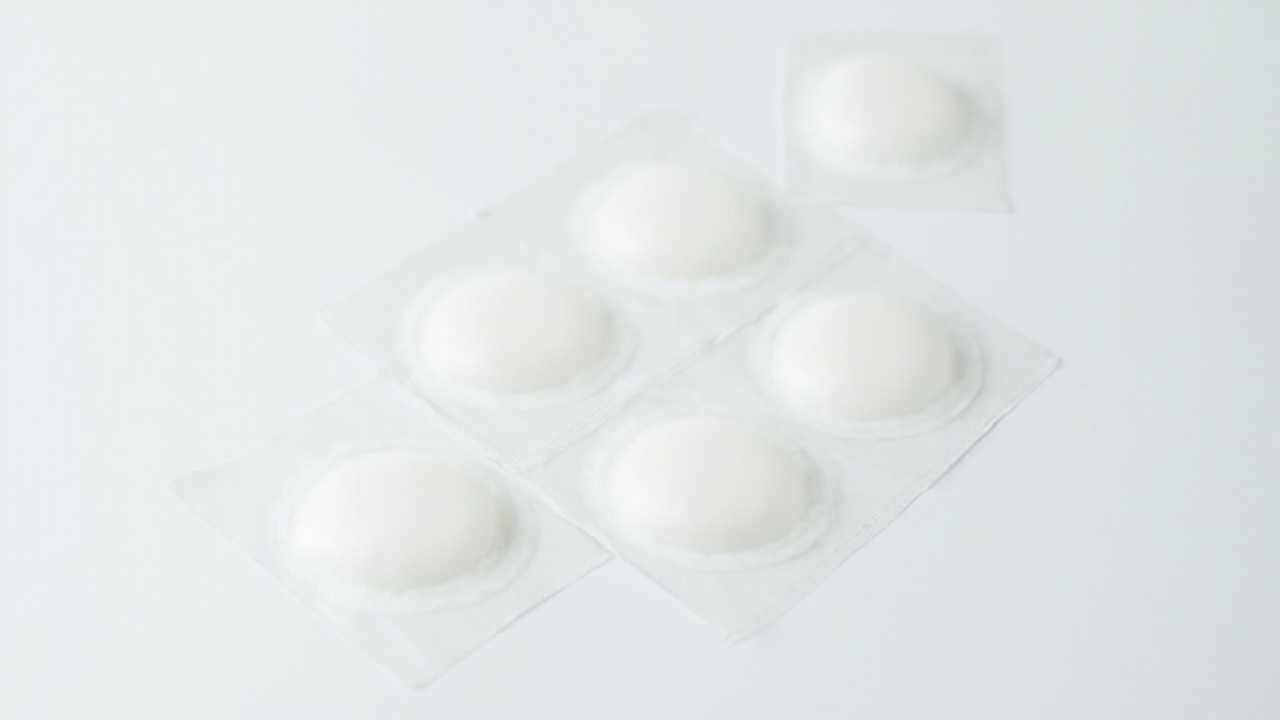
Topical analgesic patch formulation sits at the intersection of two competing demands: the patch must stick to skin reliably for hours or days, and it must release active pharmaceutical ingredients (APIs) at a controlled, predictable rate. Push adhesion too high and you risk skin irritation, residue, and poor patient compliance; push drug release too fast and you sacrifice duration of relief while inviting systemic exposure and safety concerns. For B2B buyers sourcing pain relief patches through OEM/ODM channels, understanding this balance is not academic — it directly determines product performance, regulatory acceptance, and brand reputation. At Kongdy Health, a transdermal patch manufacturer operating since 1989 and serving 120+ countries under FDA, ISO 13485, and GMP certifications, we have seen this balance decide whether a product succeeds in the market or stalls at the regulatory review stage.
Key Takeaways
- The Fundamental Trade-Off: Why Adhesion and Drug Release Compete
- Polymer Matrix Selection: The Primary Formulation Lever
- Controlled Drug Release: Mechanisms and Permeation Enhancement
- Adhesion Performance: Testing, Targets, and Skin Variability
- A Step-by-Step Framework for Formulation Development
- Regulatory and Quality Considerations for OEM Buyers
Key Takeaways
- Adhesion and drug release are interdependent variables — optimizing one in isolation almost always degrades the other, so formulation must be engineered as a system.
- Polymer matrix selection (acrylic, silicone, polyisobutylene, or hybrid) is the single largest lever controlling both tack and API diffusion rate.
- Regulatory bodies including the FDA and EU authorities require in vitro release testing (IVRT) plus adhesion performance data (peel, tack, shear) as part of a complete technical file.
- The global transdermal patch market was valued at roughly USD 7–8 billion in 2023 and continues to expand at a mid-single-digit CAGR, with pain management among the largest segments (Grand View Research, 2023).
- Experienced OEM partners validate formulations against ISO 13485 and GMP systems before scale-up, reducing late-stage reformulation risk and launch delays.
This guide walks through the science, the testing frameworks, and the practical decision points that B2B buyers need when commissioning an analgesic patch formulation. Whether you are developing a menthol-based counterirritant patch, a lidocaine delivery system, or a diclofenac matrix patch, the principles below apply — and the trade-offs are consistent.
The Fundamental Trade-Off: Why Adhesion and Drug Release Compete
Every transdermal analgesic patch is essentially a pressure-sensitive adhesive (PSA) system loaded with one or more active ingredients. The adhesive must form a bond with the stratum corneum at body temperature, resist shear forces from movement, and yet release cleanly at removal. The drug, meanwhile, must partition out of the adhesive matrix, diffuse through the skin barrier, and reach therapeutic concentrations in underlying tissue. These two functions draw on the same polymer chemistry, which is why they compete.
Consider what happens when you increase the tack of an acrylic adhesive by lowering its glass transition temperature or adding tackifiers. The polymer chains become more mobile, which improves wetting and initial grab — but that same mobility accelerates API diffusion through the matrix. The result can be a burst release profile: a fast initial dose followed by a rapid decline in delivery. Conversely, a highly crosslinked adhesive that resists shear and holds for 72 hours may restrict drug mobility so severely that therapeutic flux is never achieved. Formulators therefore treat adhesion and release as a coupled optimization problem, not two separate specifications.
Industry data illustrates the stakes. Studies on transdermal drug delivery consistently show that skin permeation is the rate-limiting step for most APIs, with only a fraction of the loaded dose crossing the stratum corneum — often cited in the range of 10–20% for many marketed systems over the wear period. That means the adhesive matrix must be designed to hold a sufficient drug reservoir while still permitting controlled partitioning. Getting this wrong is expensive: reformulation after clinical or bioequivalence testing can add six to twelve months and significant cost to a development timeline, a risk that ISO 13485-compliant development processes are specifically designed to mitigate through staged design controls.
Polymer Matrix Selection: The Primary Formulation Lever
The choice of polymer backbone is the most consequential decision in analgesic patch formulation. Four families dominate commercial pain relief patches, each with distinct adhesion and release characteristics.
- Acrylic adhesives: Excellent skin compatibility, tunable tack via copolymer composition, and good drug solubility for many small molecules. Widely used in lidocaine and diclofenac systems. Drug release can be modulated through hydroxyl and carboxyl functional groups that hydrogen-bond with APIs.
- Silicone adhesives: Chemically inert, low irritation potential, and highly permeable to lipophilic drugs. Often selected for sensitive-skin products and for APIs that degrade in acidic acrylic environments. Adhesion is generally lower, requiring careful backing selection.
- Polyisobutylene (PIB): Low-cost, excellent tack and cohesive strength, but limited drug-loading capacity and poor tolerance for polar APIs. Common in menthol and camphor counterirritant patches.
- Hybrid and multi-layer systems: Combine a drug reservoir layer with a separate adhesive layer, decoupling release from adhesion. These systems cost more to manufacture but offer the widest formulation window and are increasingly favored for premium analgesic products.
Beyond the polymer, formulators adjust plasticizers, crosslinkers, penetration enhancers (such as oleic acid, isopropyl myristate, or terpenes), and antioxidants. Each additive shifts both adhesion and release, so a design-of-experiments (DoE) approach is standard practice among experienced manufacturers. At Kongdy Health, formulation development follows a structured DoE methodology under GMP conditions, allowing our OEM clients to map the adhesion-release design space before committing to pilot-scale coating.
Controlled Drug Release: Mechanisms and Permeation Enhancement
Analgesic patches generally fall into two release architectures: matrix (monolithic) systems, where drug is dispersed throughout the adhesive, and reservoir systems, where drug is contained behind a rate-controlling membrane. Matrix systems dominate the pain relief category because they are simpler to manufacture and less prone to dose dumping if the patch is damaged. Their release kinetics follow Higuchi-type square-root-of-time behavior in ideal cases, meaning flux declines gradually over the wear period — acceptable for many analgesics but sometimes insufficient for steady 24- or 72-hour delivery.
To flatten the release curve, formulators use several strategies. Supersaturation of drug in the matrix creates a high thermodynamic driving force for consistent partitioning. Penetration enhancers temporarily disrupt stratum corneum lipids, increasing flux without altering the adhesive. Eutectic mixtures can improve drug solubility in the matrix. And rate-controlling membranes in reservoir designs provide near zero-order release when precise dosing is critical.
Regulators scrutinize release performance closely. The FDA and EMA expect in vitro release testing (IVRT) using validated diffusion-cell methods, and for generic or hybrid applications, bioequivalence may require in vivo pharmacokinetic studies in addition to adhesion and irritation/sensitization data. Products marketed in the EU must carry CE marking where applicable and demonstrate conformity with ISO 10993 biocompatibility standards. A formulation that performs beautifully in a beaker but fails IVRT reproducibility will not clear review — which is why release testing should be built into development from day one, not bolted on at the end.
Adhesion Performance: Testing, Targets, and Skin Variability
Adhesion is typically characterized by three tests: peel adhesion (force required to remove the patch at a controlled angle), probe tack (initial stickiness), and shear strength (resistance to sustained load). Industry reference methods include ASTM D3330 for peel and ASTM D2979 for probe tack, with results reported against internal specifications tied to the intended wear duration. A 24-hour patch and a 72-hour patch have very different shear requirements, and a patch intended for hairy or sweaty skin sites needs a different adhesion profile than one applied to the lower back.
Skin variability is the hidden variable. Hydration, sebum levels, body site, age, and ambient humidity all affect adhesion. Formulators address this by testing on multiple skin types and under controlled temperature/humidity conditions, and by selecting backing films with appropriate flexibility and breathability. Occlusive backings improve drug flux by hydrating the stratum corneum but can increase maceration and irritation risk — another adhesion-release trade-off. ISO 13485 design control requires that these variables be documented and validated, and GMP manufacturing ensures batch-to-batch consistency in coating weight, which directly affects both tack and release.
Cold-flow and residue are common field complaints. A patch that leaves adhesive residue damages brand perception even if drug delivery was flawless. Formulators mitigate residue through crosslinking density adjustments and by selecting adhesives with favorable cohesive strength. For OEM buyers, the lesson is to specify adhesion acceptance criteria in the product requirements document and to require lot-release testing data from the manufacturer.
A Step-by-Step Framework for Formulation Development
Bringing an analgesic patch from concept to validated production follows a predictable sequence. The following framework reflects the development pathway used in ISO 13485-certified facilities and can serve as a checklist for B2B buyers evaluating an OEM partner.
- Define the target product profile (TPP): Specify indication, wear duration, API and dose, skin site, patient population, and regulatory market (FDA, CE, or both).
- Select the delivery architecture: Choose matrix versus reservoir based on required release kinetics and cost targets.
- Screen polymers and excipients: Run DoE studies on adhesive candidates, plasticizers, and enhancers, measuring tack, peel, shear, and in vitro flux in parallel.
- Optimize the coupled system: Iterate formulation until adhesion and release specifications are simultaneously met across the design space, not just at a single point.
- Conduct stability and compatibility studies: Evaluate API stability, adhesive aging, and packaging interactions under ICH conditions.
- Perform biocompatibility and safety testing: Irritation, sensitization, and cytotoxicity per ISO 10993 as required for the target market.
- Validate analytical and manufacturing methods: Establish IVRT reproducibility, coating weight control, and lot-release specifications under GMP.
- Scale up and file: Transfer to production, complete process validation, and assemble the regulatory dossier for FDA, CE, or other authorities.
Each step generates data that feeds the next, and skipping steps — particularly the coupled optimization in step four — is the most common cause of late-stage failure. Experienced OEM partners compress this timeline through existing formulation libraries and validated platform technologies, which is why selecting a manufacturer with deep category experience matters as much as price.
Regulatory and Quality Considerations for OEM Buyers
Regulatory strategy should be locked before formulation begins, because market requirements shape the technical file. In the United States, topical analgesic patches may be regulated as OTC monograph drugs (for example, menthol or camphor counterirritants), as ANDA or NDA products, or as medical devices depending on claims and mechanism. In the European Union, many patches fall under the Medical Device Regulation (MDR) and require CE marking supported by clinical evaluation and ISO 13485-certified quality systems. GMP compliance is non-negotiable for drug-containing patches in most jurisdictions.
Market context reinforces the opportunity. Grand View Research estimated the global transdermal patch market at approximately USD 7.5 billion in 2023, with pain management representing one of the largest application segments and forecast growth in the mid-single digits through 2030. MarketsandMarkets has similarly projected continued expansion driven by aging populations, chronic pain prevalence, and preference for non-oral delivery. For brands entering this space, the barrier is not demand but execution — and execution depends on a manufacturing partner with validated systems.
When evaluating an OEM partner, request evidence of ISO 13485 certification, GMP compliance for the specific product class, FDA registration where applicable, and a track record of successful regulatory submissions in your target markets. Ask for lot-release data demonstrating both adhesion and release performance, and confirm that stability and biocompatibility testing are performed in accredited laboratories. These checks protect your timeline and your brand.
Partnering with Kongdy Health for Analgesic Patch Manufacturing
Balancing adhesion and drug release is a formulation science problem, but delivering it at commercial scale is a manufacturing and quality systems problem. Kongdy Health has manufactured transdermal patches since 1989, serving clients in more than 120 countries with FDA, ISO 13485, and GMP-certified operations. Our OEM/ODM services cover formulation development, DoE-driven optimization, stability and biocompatibility testing coordination, regulatory documentation support, and validated high-volume coating and converting.
For B2B buyers, that means a partner who can take a target product profile and return a formulation that meets both adhesion and release specifications — with the documentation to prove it to regulators. If you are developing a new analgesic patch or reformulating an existing product to improve wear performance, explore our OEM/ODM services to discuss your project with our formulation team. Early engagement typically reduces development risk and shortens the path to market.
Frequently Asked Questions
What is the biggest cause of adhesion failure in analgesic patches?
The most common cause is an imbalance between tack and cohesive strength, often introduced when formulators increase drug loading or add penetration enhancers that plasticize the adhesive. High enhancer concentrations can soften the polymer matrix, improving flux but reducing shear resistance, so the patch lifts at edges during movement or sweating. A second frequent cause is inadequate backing selection — a backing that is too stiff or non-breathable can cause edge lift under humidity. Both issues are preventable through DoE-based formulation and multi-condition adhesion testing during development.
How do I know if my patch releases drug at the right rate?
Release rate is verified through in vitro release testing (IVRT) using validated diffusion cells, typically run at multiple time points across the intended wear duration to generate a release profile. For regulated markets, IVRT must be reproducible and supported by method validation, and in some cases in vivo bioequivalence studies are also required. Buyers should request IVRT data from their OEM partner for each lot or at defined intervals, along with stability data showing the release profile holds over shelf life. A credible manufacturer will provide these as part of the technical file.
Which certifications should an analgesic patch manufacturer hold?
At minimum, a manufacturer of drug-containing analgesic patches should hold ISO 13485 certification for medical devices and demonstrate GMP compliance for pharmaceutical manufacturing, depending on how the product is classified in your target market. FDA registration and inspection history matter for U.S. products, while CE marking support and MDR conformity are essential for the EU. ISO 10993 biocompatibility testing capability or partnerships with accredited labs are also important. Kongdy Health maintains FDA, ISO 13485, and GMP certifications and has supported clients across 120+ countries with market-specific regulatory documentation.
Sources
- Grand View Research — Transdermal Patch Market Analysis
- MarketsandMarkets — Transdermal Patch Market Report
- U.S. FDA — Transdermal and Topical Drug Delivery Systems
- ISO — ISO 13485:2016 Medical Devices Quality Management
Related reading
Comparing suppliers? Send us your specification.
Tell us the product, quantity and target market. You will get pricing, MOQ and lead time within 12 hours — no obligation, NDA available.
MOQ 10,000 pcs · Samples 7–10 days · Factory since 1989 · FDA · ISO 13485 · CE · GMP · 120+ countries
Send Us Your Inquiry
Tell us your requirements — we usually respond with a preliminary quotation and sampling plan within 12 hours.
7 thoughts on “Analgesic Patch Formulation: Balancing Adhesion and Drug Release”
Comments are closed.