
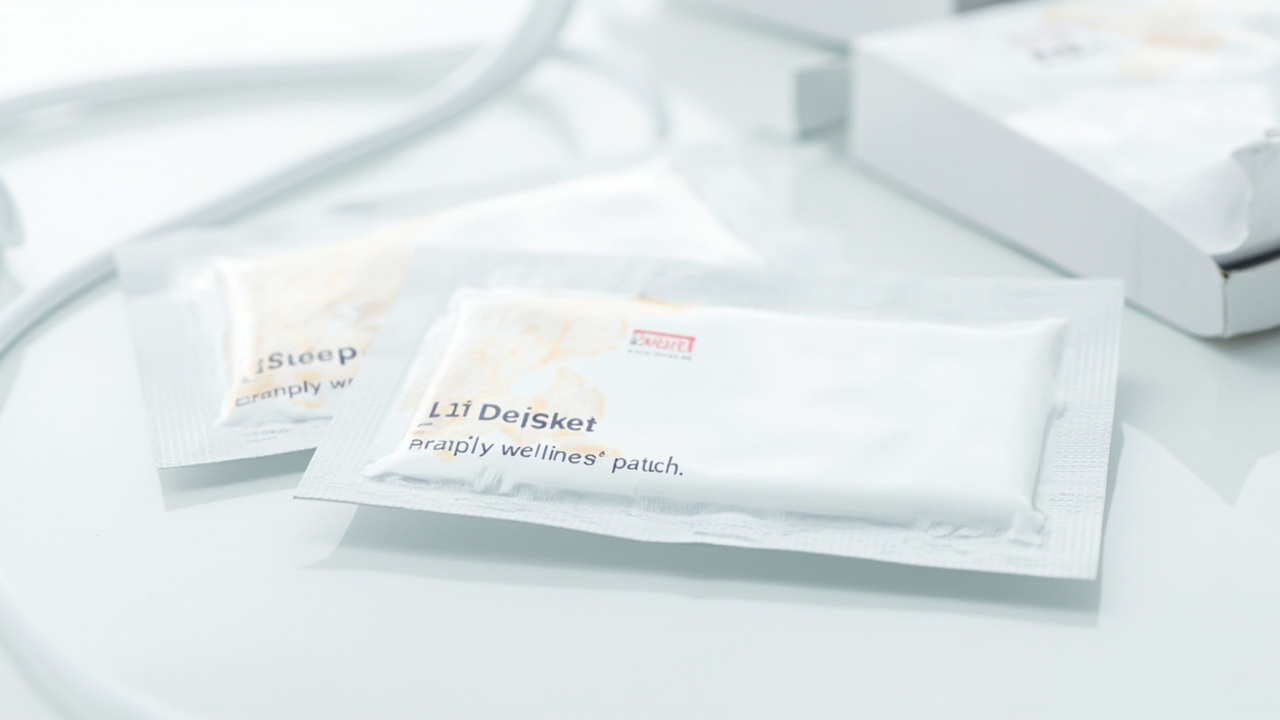
The global transdermal patch market is projected to exceed $9 billion by the early 2030s, and a growing share of that demand is coming from a segment that barely existed a decade ago: hormone-free wellness patches. For brand owners, distributors, and private-label entrepreneurs, a well-constructed hormone free patch line represents one of the most accessible entry points into the topical wellness category — no prescription pathway, no hormonal actives, and a consumer base that is actively seeking non-ingestible alternatives. But building a wellness patch portfolio is not simply a matter of picking five flavors and printing labels. The brands that win are the ones that treat patch line strategy as a portfolio discipline: segmented by need state, sequenced by margin and manufacturing complexity, and de-risked through regulatory foresight. This guide lays out that discipline in detail, drawing on market data, manufacturing realities, and the OEM experience of Kongdy Health, which has produced transdermal patches since 1989 across more than 120 countries.
Key Takeaways
- Why the Hormone-Free Segment Is Outpacing the Broader Patch Market
- Defining the Hormone-Free Patch Line: What Belongs and What Doesn’t
- Portfolio Architecture: Segmenting Your Patch Line by Need State
- Building the Line Step by Step: A Launch Sequence for Brand Owners
- Regulatory and Quality Considerations That Shape Portfolio Decisions
- Pricing, Margin, and Channel Strategy for a Wellness Patch Portfolio
Key Takeaways
- Hormone-free is a positioning advantage, not a limitation. It opens the door to mass retail, e-commerce, and international distribution without the prescription or hormonal-active scrutiny that constrains Rx-adjacent patches.
- Portfolio architecture beats product count. A focused 6–10 SKU line organized around 3–4 need states (sleep, energy, calm, recovery) outperforms a scattered catalog of 30 undifferentiated patches.
- Market data supports the category. Sleep aids, stress management, and topical wellness are among the fastest-growing consumer health segments, and patch formats are capturing share from capsules and gummies.
- Regulatory classification drives cost and timeline. Most hormone-free wellness patches launch as cosmetics or general wellness products, but claims language and country-by-country rules determine whether you need FDA, CE, or other registrations.
- Manufacturing partner selection is a strategic decision. ISO 13485, GMP, and documented change control protect your brand when you scale from 10,000 to 10 million units.
- Sequence your launches. Start with the lowest-complexity, highest-margin SKUs, prove sell-through, then expand into multi-active and extended-wear formats.
Why the Hormone-Free Segment Is Outpacing the Broader Patch Market
The transdermal patch category has historically been dominated by pharmaceutical products — nicotine replacement, hormonal contraception, pain management, and hormone replacement therapy. That is changing. Consumer demand for “clean label” and non-hormonal wellness solutions has accelerated, particularly among women aged 35–60 who are navigating perimenopause and menopause but prefer to avoid hormonal intervention, and among younger consumers who simply want convenient, low-commitment formats. Industry analyses of the consumer health market through 2023–2024 consistently show sleep support, stress and mood, and energy as top-three self-care priorities, and patch formats are being positioned as the “set-and-forget” alternative to daily supplementation.
Several structural forces are driving this. First, pill fatigue is real: consumer research repeatedly finds that a meaningful share of supplement users abandon regimens within 60–90 days, and adherence is a core selling point for patches. Second, the format itself carries a premium perception — a patch feels clinical, intentional, and modern, which supports higher price points and better retail margins. Third, the regulatory pathway for hormone-free wellness patches is generally lighter than for hormonal or drug products, which lowers the barrier to entry for emerging brands. According to Grand View Research’s assessments of the transdermal patch market (2023), the category is expanding at a compound annual growth rate in the mid-to-high single digits, with consumer wellness applications among the fastest-growing subsegments. MarketsandMarkets’ analyses of the broader transdermal drug delivery market (2023) similarly point to expanding applications beyond traditional pharmaceuticals.
The practical implication for brand owners is straightforward: the hormone-free segment is where new entrants can compete without competing against pharmaceutical giants. The competitive set is fragmented, brand loyalty is still forming, and shelf space in wellness retail is expanding. That window will not stay open indefinitely, which is why portfolio strategy — not just product selection — matters now.
Defining the Hormone-Free Patch Line: What Belongs and What Doesn’t
Before designing a wellness patch portfolio, you need a clear definitional boundary. A hormone-free wellness patch is a topical adhesive delivery system that contains no hormonal active pharmaceutical ingredients (APIs) — no estradiol, progesterone, testosterone, levonorgestrel, or synthetic hormone analogs. Instead, the patch delivers botanical extracts, vitamins, minerals, amino acids, or other non-hormonal actives through the skin for wellness-oriented benefits such as sleep support, relaxation, energy, recovery, or skin conditioning.
This boundary matters for three reasons. Regulatory: in most markets, hormone-free wellness patches can be positioned as cosmetics or general wellness products rather than drugs, provided claims stay within permitted bounds. Manufacturing: non-hormonal actives typically involve fewer containment and cross-contamination controls than hormonal APIs, which can simplify production and reduce cost. And brand: “hormone-free” is a powerful, legible claim for consumers who are actively avoiding hormonal products — particularly in the menopause-adjacent and sleep categories.
Equally important is what does not belong. Patches making drug-like claims (treating insomnia, curing anxiety, lowering blood pressure) cross into regulated drug territory in the U.S. and many other jurisdictions, regardless of whether the active is hormonal. A disciplined portfolio defines its claims architecture up front — “supports restful sleep,” “promotes a sense of calm,” “helps you unwind” — and holds every SKU to it. This is where ISO 13485-aligned quality systems and GMP manufacturing discipline become commercial assets, not just compliance checkboxes: they give you the documentation trail to defend your claims and your product if a regulator or retailer asks questions.
Portfolio Architecture: Segmenting Your Patch Line by Need State
The most common mistake in patch line strategy is building a catalog instead of a portfolio. A catalog is a list of products; a portfolio is a structured set of products with defined roles, price tiers, and launch sequencing. The most effective architecture for hormone-free wellness patches organizes SKUs around need states, then layers format and price variants on top.
Four need states form a reliable foundation. Sleep and wind-down is the anchor: it has the largest addressable audience, the strongest repeat-purchase behavior, and the clearest consumer motivation. Calm and stress support is the natural adjacent SKU, often sharing ingredients and manufacturing lines with sleep. Energy and focus balances the portfolio with a daytime occasion and captures a different shopper. Recovery and body care — muscle comfort, skin conditioning, hydration — broadens the line beyond ingestible-substitution plays and opens adjacent retail channels such as fitness and beauty. A well-built portfolio typically launches with 6–10 SKUs across these need states, with 2–3 SKUs per need state at different price or format tiers.
Within each need state, layer format decisions: wear time (8-hour overnight vs. 24-hour), patch size and adhesive type, active delivery profile (single-active vs. multi-active), and packaging format (single sachet, multi-count box, subscription-ready). These variants let you serve multiple retail channels — mass, pharmacy, beauty, e-commerce, and subscription — without fragmenting your manufacturing base. The goal is maximum market coverage from minimum SKU complexity.
Building the Line Step by Step: A Launch Sequence for Brand Owners
Once the architecture is set, execution follows a disciplined sequence. The following steps reflect how experienced OEM partners structure a hormone-free launch, from concept to shelf:
- Define the brand’s need-state priority and claims architecture. Decide which need state anchors the brand, and write the permitted claims for every SKU before any formulation work begins. This prevents costly reformulation and relabeling later.
- Map regulatory classification by target market. Confirm whether each SKU will be positioned as a cosmetic, a general wellness product, or a medical device in each country you plan to sell. In the U.S., this means aligning with FDA guidance on cosmetics and general wellness; in the EU, CE marking and cosmetic regulation apply depending on classification.
- Select actives and adhesive systems with your OEM partner. Match botanical or nutrient actives to compatible adhesive matrices, and confirm stability, skin compatibility, and release profiles through pilot batches.
- Run pilot batches and stability testing. Validate shelf life, adhesion under temperature and humidity stress, and skin sensitization before committing to commercial tooling.
- Lock packaging and channel strategy. Design primary and secondary packaging for your priority channels — sachets for trial, multi-count boxes for retail, subscription-friendly formats for DTC.
- Complete documentation and certifications. Ensure your manufacturing partner holds ISO 13485, GMP, and relevant regional certifications, and that batch records, certificates of analysis, and change-control procedures are in place.
- Launch the anchor SKU, then expand. Prove sell-through on the highest-margin, lowest-complexity SKU before adding adjacent need states and multi-active formats.
- Scale with demand data. Use reorder velocity and channel mix to decide which SKUs earn expanded distribution and which get rationalized.
This sequence is deliberately front-loaded with regulatory and formulation decisions because those are the two areas where rework is most expensive. A brand that locks claims and classification before formulation avoids the classic trap of developing a product it cannot legally market as intended.
Regulatory and Quality Considerations That Shape Portfolio Decisions
Regulatory classification is not a back-office detail — it is a portfolio design variable. In the United States, the FDA distinguishes between cosmetics, general wellness products, and drugs based on intended use and claims. A hormone-free patch marketed to “support relaxation” generally falls into the general wellness or cosmetic space, while a patch claiming to treat insomnia would be regulated as a drug. In the European Union, cosmetic products fall under Regulation (EC) No 1223/2009, while products with medical intended use require CE marking under the Medical Device Regulation. Other markets — Japan, Brazil, the Gulf states — have their own classification schemes, and a portfolio intended for global distribution must be designed with those differences in mind from day one.
Quality systems are the second pillar. ISO 13485 provides the framework for medical device quality management, and GMP governs manufacturing practice for pharmaceutical and wellness products alike. For brand owners, the practical question is not whether your OEM partner holds these certifications — it is whether their systems produce documentation you can rely on: batch records, certificates of analysis, stability data, and documented change control. When a retailer audits your brand or a regulator requests information, that documentation is your defense. Kongdy Health’s certification stack — FDA registration, ISO 13485, GMP, and CE alignment — exists precisely to give brand owners that foundation across 120+ markets.
There is also a commercial dimension. Retailers increasingly require supplier documentation before listing wellness products, and e-commerce platforms are tightening claims enforcement. A portfolio built on a certified manufacturing base moves through buyer onboarding faster and faces fewer delisting risks. In a category where speed to shelf matters, that is a competitive advantage.
Pricing, Margin, and Channel Strategy for a Wellness Patch Portfolio
Hormone-free wellness patches support attractive margins because the format carries a premium perception while unit manufacturing costs remain moderate at scale. A typical portfolio structures three price tiers: an entry tier for trial and subscription acquisition, a core tier for retail shelf, and a premium tier for multi-active or extended-wear formats. This tiering lets a brand compete in mass retail without eroding its premium positioning in DTC or specialty channels.
Channel strategy should follow the portfolio, not the reverse. Mass and pharmacy retail reward a narrow, well-merchandised core line with strong packaging and clear claims. E-commerce rewards breadth and bundling — multi-packs, need-state kits, and subscription programs. Beauty and fitness channels reward format innovation and premium positioning. A well-designed wellness patch portfolio can serve all three with a shared manufacturing base, adjusting only packaging and bundle configuration by channel.
Finally, plan for lifecycle management. Patches have defined shelf lives, and portfolio economics depend on inventory turns. Rationalize slow-moving SKUs annually, refresh packaging on a two-to-three-year cycle, and keep one or two innovation SKUs in development to test new need states without disrupting the core line. This rhythm keeps the portfolio healthy and prevents the catalog sprawl that erodes margin.
Frequently Asked Questions
What makes a patch “hormone-free,” and why does it matter for my brand?
A hormone-free patch contains no hormonal active pharmaceutical ingredients — no estradiol, progesterone, testosterone, or synthetic hormone analogs — and instead delivers botanical extracts, vitamins, minerals, or other non-hormonal actives. It matters commercially because “hormone-free” is a clear, legible claim for consumers who are actively avoiding hormonal products, particularly in sleep, stress, and menopause-adjacent categories. It also generally simplifies regulatory classification, since most hormone-free wellness patches can be positioned as cosmetics or general wellness products rather than drugs, provided claims stay within permitted bounds. That combination of consumer appeal and lighter regulatory burden is why the segment is attracting so many new brands.
How many SKUs should a new hormone-free patch line launch with?
Most successful launches begin with 6–10 SKUs organized around three to four need states, such as sleep, calm, energy, and recovery. Launching with a focused line rather than a broad catalog reduces manufacturing complexity, simplifies retailer onboarding, and makes it easier to read sell-through data. A common approach is to anchor the line with two to three sleep SKUs, then add adjacent need states once the anchor proves demand. Portfolio breadth can expand after the first reorder cycle, when you have real velocity data to guide which SKUs deserve expanded distribution and which should be rationalized.
What certifications should I look for in an OEM transdermal patch manufacturer?
At minimum, look for ISO 13485 quality management certification, GMP-compliant manufacturing, and FDA registration where applicable to your target market. If you plan to sell in the European Union, confirm CE alignment and familiarity with cosmetic and medical device regulation. Beyond certificates, ask about documentation practices: batch records, certificates of analysis, stability testing, and documented change control. These systems determine whether you can defend your claims and your product during retailer audits or regulatory inquiries. A manufacturer operating since 1989 across 120+ countries, such as Kongdy Health, typically brings this full documentation stack to the partnership.
Sources
- Grand View Research — Transdermal Patch Market Analysis
- MarketsandMarkets — Transdermal Drug Delivery Market Report
- U.S. Food and Drug Administration — Cosmetics Laws and Regulations
- ISO — ISO 13485:2016 Medical Devices Quality Management
Ready to build a hormone-free patch line that scales? Partner with Kongdy Health — a transdermal patch OEM/ODM manufacturer operating since 1989, serving 120+ countries with FDA, ISO 13485, GMP, and CE-aligned manufacturing.
Related reading
Comparing suppliers? Send us your specification.
Tell us the product, quantity and target market. You will get pricing, MOQ and lead time within 12 hours — no obligation, NDA available.
MOQ 10,000 pcs · Samples 7–10 days · Factory since 1989 · FDA · ISO 13485 · CE · GMP · 120+ countries
Send Us Your Inquiry
Tell us your requirements — we usually respond with a preliminary quotation and sampling plan within 12 hours.
1 thought on “Hormone-Free Patch Line: A Wellness Patch Portfolio Strategy”
Comments are closed.