
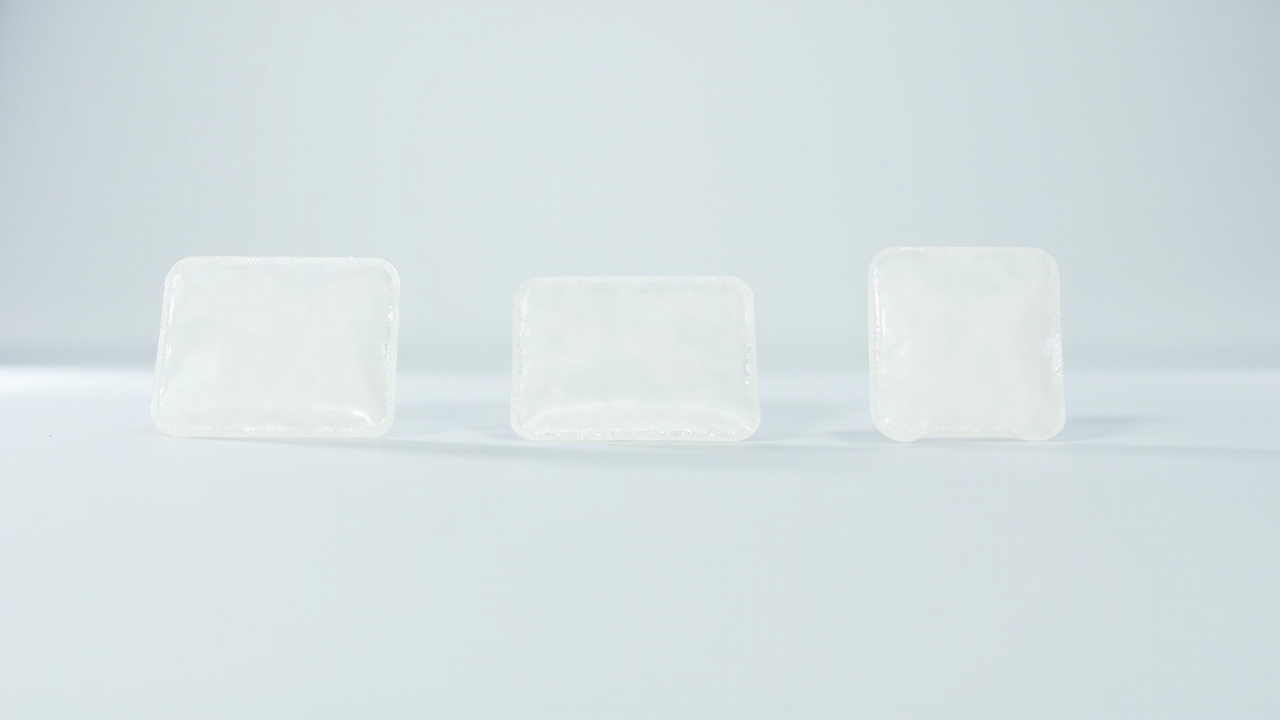
In transdermal patch manufacturing, the difference between a successful product and a costly recall often comes down to a fraction of a millimeter. Patch die cutting tolerance—the allowable deviation in the dimensions of a die-cut patch—is a critical specification that impacts drug delivery, patient safety, and regulatory compliance. For OEM buyers, understanding why ±0.5mm matters is essential for selecting a reliable manufacturing partner. This article explores the technical, regulatory, and economic reasons behind this tight tolerance, with data-driven insights from industry standards and market trends.
Key Takeaways
- What Is Patch Die Cutting Tolerance?
- The Critical Role of Tolerance in Drug Delivery and Patient Safety
- Industry Standards and Regulatory Requirements
- How Die-Cutting Technology Achieves ±0.5mm Tolerance
- The Economic Impact of Tolerance: Waste, Yield, and Cost
- Choosing an OEM Partner with Proven Tolerance Control
Key Takeaways
- ±0.5mm tolerance ensures consistent drug dosage and adhesion, directly affecting patient safety and therapeutic efficacy.
- Tighter tolerances reduce waste, improve production yield, and lower overall manufacturing costs.
- Regulatory bodies like the FDA and ISO 13485 mandate strict dimensional control for transdermal patches.
- Advanced die-cutting technologies, such as rotary and laser systems, achieve ±0.5mm reliably at high speeds.
- Partnering with an experienced OEM like Kongdy Health ensures compliance and competitive advantage.
As the global transdermal patch market continues to expand—projected to reach $8.7 billion by 2027 (Grand View Research, 2022)—manufacturers face increasing pressure to deliver high-quality products at scale. Die cutting tolerance is not just a technical detail; it’s a strategic differentiator. In this comprehensive guide, we’ll dive deep into the science, standards, and best practices of patch die cutting tolerance, helping you make informed decisions for your next OEM project.
What Is Patch Die Cutting Tolerance?
Patch die cutting tolerance refers to the permissible variation in the dimensions of a transdermal patch after it has been cut from a larger web using a die. In essence, it defines how much the actual cut can deviate from the intended size. For transdermal patches, the industry standard tolerance is often ±0.5mm, meaning the final patch can be up to 0.5mm larger or smaller than the specified dimension. This might seem insignificant, but in the world of pharmaceutical manufacturing, it’s a critical control point.
The die-cutting process involves a precision tool (the die) that stamps or cuts the patch shape from a multi-layer laminate. This laminate typically includes a backing film, a drug-containing adhesive matrix, and a release liner. Each layer has its own thickness and material properties, and the die must cut through some or all layers cleanly without damaging the drug matrix or causing delamination. Achieving ±0.5mm tolerance requires tight control over die design, cutting pressure, web tension, and registration systems.
Why is this tolerance so tight? Because transdermal patches are drug delivery systems. The amount of drug delivered is proportional to the surface area of the patch. If the patch is too small, the patient receives a subtherapeutic dose; if too large, they risk overdose and adverse effects. Moreover, inconsistent patch sizes can lead to adhesion failures, leakage, and aesthetic defects that undermine patient confidence. Thus, ±0.5mm is not arbitrary—it’s a carefully derived specification that balances manufacturing feasibility with clinical safety.
The Critical Role of Tolerance in Drug Delivery and Patient Safety
Transdermal patches are designed to deliver a precise dose of medication over an extended period, often ranging from 24 hours to 7 days. The drug release rate is a function of the patch’s surface area, the adhesive properties, and the permeation enhancers in the matrix. If the die-cutting tolerance is too loose, the surface area can vary significantly, leading to inconsistent drug delivery. For example, a 10% variation in patch area could result in a 10% variation in dose—a difference that could be clinically significant for narrow therapeutic index drugs like fentanyl or nitroglycerin.
Consider a patch with a nominal area of 20 cm². A ±0.5mm tolerance on a 5cm x 4cm patch translates to a dimensional variation of about 1% in each direction, resulting in an area variation of roughly 2%. This is generally acceptable for most drugs. However, if the tolerance were ±2mm, the area variation could exceed 8%, potentially causing dosing errors. Regulatory agencies like the FDA require that transdermal patches meet strict content uniformity and dissolution specifications, which are directly influenced by die-cutting precision.
Furthermore, patient safety extends beyond dosage. Poorly cut patches may have ragged edges, which can irritate the skin or cause the patch to lift prematurely. Adhesion failure not only reduces drug delivery but also poses a risk of accidental ingestion or exposure to others, especially with potent drugs. Therefore, ±0.5mm tolerance is a safeguard against both therapeutic and physical hazards. In clinical studies, patches with dimensional defects have been associated with higher rates of skin irritation and non-adherence, underscoring the importance of precision manufacturing.
Industry Standards and Regulatory Requirements
The transdermal patch industry is heavily regulated to ensure product quality and patient safety. Key standards include ISO 13485 for medical device quality management systems, FDA 21 CFR Part 820 for current Good Manufacturing Practices (cGMP), and European CE marking under the Medical Device Regulation (MDR). These frameworks mandate rigorous process validation, including die-cutting operations. For instance, ISO 13485 requires manufacturers to establish and maintain procedures for monitoring and measuring product characteristics, including dimensions.
The FDA’s guidance on transdermal systems emphasizes the need for control of critical manufacturing parameters. While the agency does not explicitly state a ±0.5mm tolerance, it expects manufacturers to justify their specifications based on product performance and safety. In practice, ±0.5mm has become an industry benchmark because it reliably ensures compliance with content uniformity tests. Similarly, the European Pharmacopoeia provides guidelines for transdermal patches, including uniformity of mass and dimensions.
Audits by regulatory bodies often scrutinize die-cutting processes. A deviation from validated tolerances can result in warning letters, product recalls, or import bans. For example, in 2019, a major transdermal patch manufacturer received an FDA warning letter for failing to validate its die-cutting process, leading to dimensional inconsistencies. This highlights the legal and financial risks of neglecting tolerance control. OEM buyers must therefore partner with manufacturers who not only claim ±0.5mm capability but also have documented validation and traceability systems in place.
How Die-Cutting Technology Achieves ±0.5mm Tolerance
Achieving ±0.5mm tolerance at production speeds requires advanced die-cutting technology and precise process control. There are several types of die-cutting systems used in transdermal patch manufacturing, each with its own advantages and limitations. The choice of technology depends on factors such as production volume, patch complexity, and material characteristics.
- Rotary Die Cutting: This is the most common method for high-volume patch production. A cylindrical die rolls over the web, cutting patches continuously. Rotary dies can achieve ±0.5mm tolerance with proper tension control and registration. They are ideal for simple shapes and high-speed runs.
- Flatbed Die Cutting: Used for lower volumes or complex shapes, flatbed presses cut patches in a stamping motion. While slower, they offer excellent precision and are often used for clinical trial materials.
- Laser Die Cutting: Laser systems use a focused beam to cut patches without physical contact. They eliminate tool wear and can achieve very tight tolerances (±0.1mm), but they are slower and may cause thermal damage to heat-sensitive drugs.
- Plotter Cutting: A computer-controlled blade cuts patches from digital files. This method is suitable for prototyping and small batches, with tolerances around ±0.2mm.
Regardless of the technology, several process parameters must be controlled to maintain ±0.5mm tolerance. These include web tension, die pressure, cutting speed, temperature, and registration accuracy. For instance, excessive web tension can stretch the material, causing dimensional errors. Similarly, worn dies can produce ragged cuts and inconsistent sizes. Therefore, manufacturers must implement statistical process control (SPC) to monitor these parameters in real time and make adjustments as needed.
In addition, the design of the die itself is crucial. Dies are typically made from hardened steel or carbide and are precision-machined to the desired patch dimensions. The die’s cutting edge must be sharp and free of nicks. For rotary dies, the cylinder must be perfectly balanced to avoid vibration. Kongdy Health, with over 36 years of experience, utilizes state-of-the-art rotary and laser die-cutting systems, coupled with automated vision inspection, to ensure every patch meets ±0.5mm tolerance. Our ISO 13485-certified processes guarantee consistency from batch to batch.
The Economic Impact of Tolerance: Waste, Yield, and Cost
Die-cutting tolerance has a direct impact on manufacturing economics. Tighter tolerances reduce waste and improve yield, but they also require more sophisticated equipment and tighter process control, which can increase upfront costs. However, the long-term savings often outweigh the initial investment. Let’s examine the economics.
When tolerance is loose, a higher percentage of patches fall outside the acceptable size range and must be rejected. For example, if the tolerance is ±1mm instead of ±0.5mm, the reject rate might increase from 2% to 5%. On a production run of 1 million patches, that’s an additional 30,000 wasted patches. At a cost of $0.50 per patch, that’s $15,000 in lost product. Over a year, the losses can be substantial. Moreover, loose tolerances can lead to downstream issues such as packaging errors and customer complaints, further eroding profitability.
Conversely, investing in precision die-cutting can improve yield and reduce waste. A study by the Association for Manufacturing Technology (AMT, 2021) found that manufacturers who implemented tight tolerance control in medical device converting reduced scrap by up to 30%. For transdermal patches, where active pharmaceutical ingredients (APIs) are expensive, minimizing waste is even more critical. The cost of APIs can account for 30-50% of the total patch cost, so every wasted patch represents a significant loss.
Furthermore, consistent patch dimensions enable automated packaging and labeling, reducing labor costs and errors. They also facilitate compliance with regulatory requirements, avoiding costly recalls and legal fees. In a competitive market, the ability to deliver high-quality patches at a low cost is a key differentiator. Therefore, ±0.5mm tolerance is not just a quality metric—it’s a profitability driver.
Choosing an OEM Partner with Proven Tolerance Control
For pharmaceutical companies and startups alike, selecting the right OEM partner for transdermal patch manufacturing is a strategic decision. The partner’s ability to maintain ±0.5mm tolerance consistently is a strong indicator of their overall quality system. Here are key factors to consider when evaluating potential partners:
- Certifications and Compliance: Look for ISO 13485, FDA registration, GMP compliance, and CE marking. These certifications demonstrate a commitment to quality and regulatory adherence.
- Equipment and Technology: Inquire about the die-cutting systems they use. Do they have rotary, laser, or flatbed capabilities? Can they handle your specific patch design and volume?
- Process Validation: Ask for evidence of process validation, including installation qualification (IQ), operational qualification (OQ), and performance qualification (PQ). This ensures their processes are robust and reproducible.
- Quality Control: Do they use automated vision inspection systems? How do they monitor tolerance in real time? What is their reject rate?
- Experience and Track Record: How long have they been in business? Do they have experience with your type of drug or patch? Request references and case studies.
- Scalability: Can they scale from clinical trial batches to commercial production without compromising tolerance?
- Communication and Support: Are they responsive? Do they provide technical support and documentation for regulatory submissions?
Kongdy Health has been a trusted OEM partner since 1989, serving over 120 countries. Our state-of-the-art facilities in China are equipped with advanced die-cutting technology and staffed by experienced engineers. We maintain ±0.5mm tolerance across all our transdermal patch products, backed by rigorous quality control and regulatory compliance. Whether you need pain relief patches, nicotine patches, or custom formulations, we deliver precision and reliability. Learn more about our OEM/ODM services and how we can support your next project.
Frequently Asked Questions
Q1: Why is ±0.5mm the standard tolerance for transdermal patches?
±0.5mm has emerged as the industry standard because it balances manufacturing feasibility with clinical safety. It ensures that the patch surface area—and thus the drug dose—remains within acceptable limits for most medications. Tighter tolerances are possible but often unnecessary and more costly, while looser tolerances risk dosing errors and regulatory non-compliance. Regulatory agencies expect manufacturers to justify their tolerance based on product performance, and ±0.5mm is widely accepted as a safe and practical specification.
Q2: How does die-cutting tolerance affect drug delivery?
Die-cutting tolerance directly affects the surface area of the patch, which determines the drug release rate. A larger patch delivers more drug, while a smaller patch delivers less. If the tolerance is too loose, the variation in dose can be clinically significant, especially for drugs with a narrow therapeutic index. Additionally, inconsistent patch dimensions can lead to adhesion problems, which further impact drug delivery. Therefore, maintaining ±0.5mm tolerance is critical for ensuring consistent and safe drug delivery.
Q3: What should I look for in an OEM partner to ensure tolerance compliance?
When selecting an OEM partner, look for certifications such as ISO 13485, FDA registration, and GMP compliance. Inquire about their die-cutting technology and process validation procedures. Ask for data on their reject rates and tolerance control. Experience in your specific therapeutic area is also valuable. Finally, ensure they have a robust quality management system and can provide documentation for regulatory submissions. Kongdy Health meets all these criteria and has a proven track record of delivering high-quality transdermal patches with ±0.5mm tolerance.
Sources
- Grand View Research – Transdermal Patch Market Size Report, 2022
- FDA – Guidance Documents for Transdermal Systems
- ISO 13485:2016 – Medical Devices Quality Management Systems
- MarketsandMarkets – Transdermal Patch Market Global Forecast, 2022