
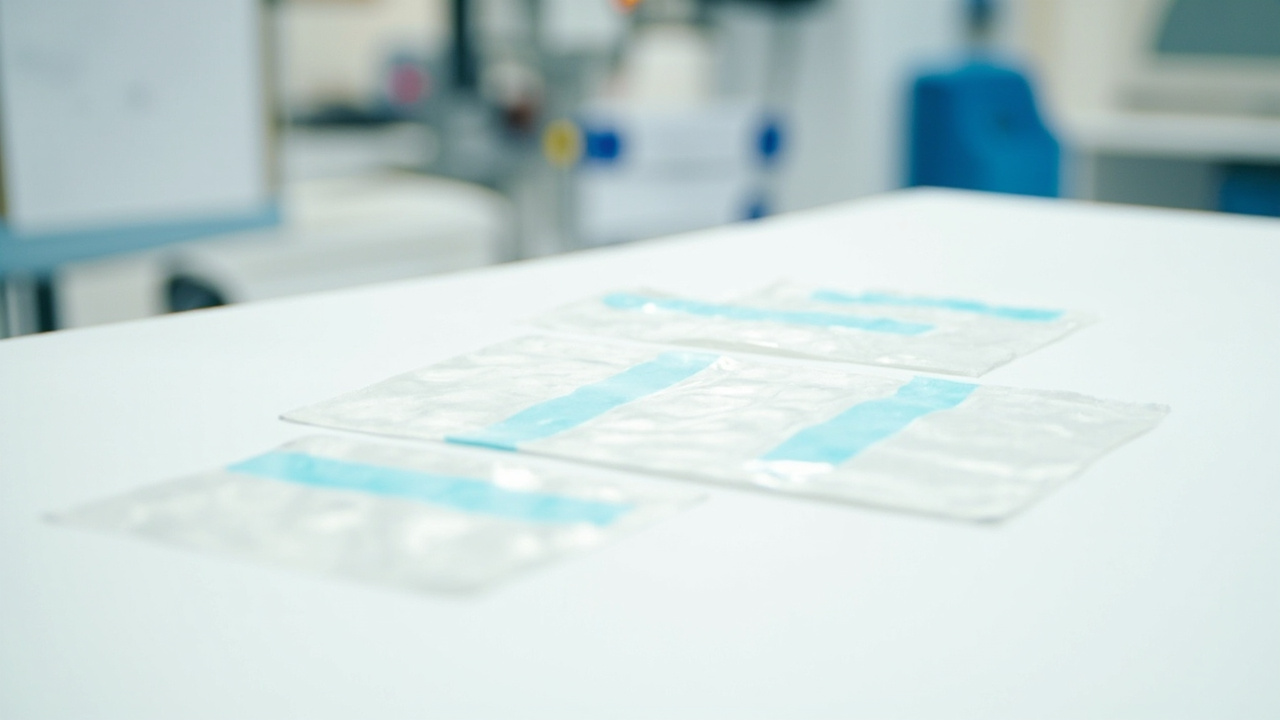
Selecting the right packaging materials for transdermal patches is critical to product stability, patient safety, and regulatory compliance. As a leading OEM/ODM manufacturer with over three decades of experience, Kongdy Health understands that patch foil packaging, barrier film patch, and pouch material selection can make or break your product’s shelf life and market success. This comprehensive guide dives deep into the technical and regulatory considerations for choosing optimal packaging solutions.
Key Takeaways
- Why Packaging is Crucial for Transdermal Patches
- Understanding Barrier Properties: Moisture, Oxygen, and Light
- Foil Packaging: The Gold Standard for Protection
- Barrier Films: Alternatives to Foil
- Pouch Material Selection: Key Factors
- How to Choose the Right Packaging: A Step-by-Step Guide
Key Takeaways
- Packaging must provide an absolute barrier against moisture, oxygen, light, and volatile actives to maintain patch efficacy.
- Material selection depends on drug formulation, desired shelf life, and regulatory requirements (FDA, ISO 13485, GMP).
- Common barrier structures include foil laminates, metallized films, and high-barrier polymer films; each offers distinct advantages.
- Pouch design (e.g., peelable, child-resistant) and sealing integrity are as important as the barrier material itself.
- Accelerated stability studies (AST) and real-time data are essential to validate packaging performance.
- Partnering with an experienced OEM like Kongdy Health ensures optimized, compliant packaging from concept to commercialization.
Why Packaging is Crucial for Transdermal Patches
Transdermal patches are sophisticated drug delivery systems that require protection from environmental factors throughout their shelf life. Unlike conventional tablets, patches often contain volatile actives, adhesives, and permeation enhancers that can interact with moisture, oxygen, or light, leading to degradation, loss of adhesion, or reduced drug delivery. According to a 2022 study published in the Journal of Pharmaceutical Sciences, improper packaging can accelerate drug degradation by up to 70% within six months, highlighting the need for robust barrier solutions.
Moreover, regulatory agencies such as the FDA and EMA mandate stringent packaging requirements to ensure product quality and patient safety. The global transdermal patch market, valued at approximately $7.5 billion in 2022 (Grand View Research), is projected to grow at a CAGR of 6.5% through 2030, driven by increasing demand for convenient drug delivery. This growth intensifies the need for reliable packaging that meets both performance and sustainability goals.
In this guide, we will explore the key materials—foils, barrier films, and pouches—and provide a framework for selecting the optimal combination for your patch product. We’ll also discuss testing protocols, regulatory standards, and how Kongdy Health can support your packaging journey.
Understanding Barrier Properties: Moisture, Oxygen, and Light
The primary function of patch packaging is to create a barrier against environmental threats. Moisture vapor transmission rate (MVTR) and oxygen transmission rate (OTR) are critical metrics. For example, aluminum foil laminates can achieve MVTR as low as 0.01 g/m²/day and OTR near zero, making them the gold standard for moisture-sensitive drugs. In contrast, metallized films typically have MVTR of 0.1–0.5 g/m²/day, suitable for less demanding applications.
Light protection is equally important, especially for photosensitive actives like nitroglycerin or hormones. Packaging must block UV and visible light to prevent photodegradation. Opaque foils or films with light-blocking additives are commonly used. Additionally, some drugs are sensitive to oxygen; high-barrier films with oxygen scavengers or foil layers can mitigate oxidation.
When selecting materials, consider the specific sensitivity of your formulation. For highly moisture-sensitive drugs, a foil-based pouch is often necessary. For moderately sensitive products, a high-barrier film may suffice, offering cost and sustainability benefits. Always validate through stability studies.
Foil Packaging: The Gold Standard for Protection
Aluminum foil is ubiquitous in pharmaceutical packaging due to its exceptional barrier properties, flexibility, and cost-effectiveness. Foil laminates typically consist of multiple layers: an outer polyester layer for strength and printability, a foil core for barrier, and an inner sealant layer (e.g., polyethylene) for heat-sealability. The foil thickness usually ranges from 6 to 25 microns, with thicker foils providing better puncture resistance.
Foil packaging is available in various forms: blister packs, strip packs, and pouches. For transdermal patches, pouches are common because they accommodate the patch size and allow for easy opening. Foil pouches can be customized with tear notches, child-resistant features, and resealable zippers. However, foil is not without drawbacks: it is opaque, which prevents visual inspection of the patch, and it can be prone to creasing, leading to pinholes that compromise the barrier.
To ensure integrity, foil pouches must be tested for seal strength, pinholes, and permeability. According to a 2021 industry report by Smithers, the global pharmaceutical foil packaging market is expected to reach $5.2 billion by 2026, growing at 4.8% annually, driven by biologics and sensitive drugs. When choosing foil, consider alloy type (e.g., 8011, 1235) and surface treatment for adhesion and printability.
Barrier Films: Alternatives to Foil
Barrier films offer a lighter, more flexible, and often more sustainable alternative to foil. They are typically multi-layer structures combining polymers such as PET, EVOH, and PVDC to achieve high barrier properties. EVOH (ethylene vinyl alcohol) is known for its excellent oxygen barrier, while PVDC provides moisture barrier. Metallized films (e.g., metallized PET) deposit a thin layer of aluminum onto a polymer substrate, offering moderate barrier at lower cost.
When selecting a barrier film, evaluate its MVTR, OTR, and light transmission. For example, a film with MVTR <0.5 g/m²/day and OTR <1 cc/m²/day is considered high barrier. These films are suitable for patches with moderate sensitivity. They also allow for greater design flexibility, including transparency for patch visibility and easier printing.
However, barrier films may not match foil’s absolute barrier, especially for highly sensitive drugs. They are also more susceptible to flex cracking, which can create pathways for moisture. Therefore, rigorous testing is essential. The choice between foil and barrier film often comes down to a trade-off between protection, cost, and marketing considerations.
Pouch Material Selection: Key Factors
Selecting the right pouch material involves a systematic evaluation of multiple factors. Below is a detailed bullet list of considerations:
- Drug sensitivity: Identify moisture, oxygen, and light sensitivity of the active ingredient and excipients.
- Required shelf life: Longer shelf life demands higher barrier properties.
- Compatibility: Ensure the pouch material does not interact with the patch adhesive or drug (e.g., leaching, absorption).
- Mechanical strength: Resistance to puncture, tearing, and flexing during handling and transport.
- Sealing performance: Ability to form strong, hermetic seals via heat, ultrasonic, or adhesive methods.
- Regulatory compliance: Materials must meet FDA, EU, and other relevant standards for pharmaceutical packaging.
- Cost and sustainability: Balance performance with budget and environmental goals (e.g., recyclability).
- Patient usability: Easy opening, child resistance, and clear instructions.
Additionally, consider the pouch format: flat pouches, stand-up pouches, or sachets. Flat pouches are most common for patches due to their simplicity and cost. Stand-up pouches offer branding opportunities but may require more material. The sealing method also matters: heat sealing is standard, but ultrasonic sealing can be faster and more precise.
How to Choose the Right Packaging: A Step-by-Step Guide
To simplify the selection process, follow this numbered list of steps:
- Define requirements: Document drug sensitivity, target shelf life, regulatory needs, and budget.
- Shortlist materials: Based on requirements, identify candidate foil or barrier film structures.
- Conduct compatibility studies: Test patch-pouch interaction under accelerated conditions.
- Perform stability testing: Use ICH guidelines (e.g., 40°C/75% RH for 6 months) to assess barrier performance.
- Evaluate sealing integrity: Test seal strength, burst pressure, and pinholes.
- Assess manufacturability: Ensure the material runs efficiently on your packaging line.
- Consider patient needs: Validate ease of opening and child resistance.
- Finalize and validate: Select the optimal material and complete formal validation (e.g., per ISO 11607).
This structured approach minimizes risks and ensures a robust packaging solution. Partnering with a knowledgeable supplier can accelerate this process.
Regulatory and Quality Standards
Pharmaceutical packaging must comply with stringent regulations. In the U.S., the FDA requires packaging systems to be validated and meet cGMP requirements (21 CFR Parts 210 and 211). Internationally, ISO 13485:2016 specifies quality management for medical devices, including packaging. The EU’s Medical Device Regulation (MDR) and CE marking impose additional requirements for patch products.Key standards include:
- ISO 11607-1/-2: Packaging for terminally sterilized medical devices.
- USP <661>: Plastic components and systems.
- ICH Q1A: Stability testing.
- ASTM F1249: MVTR testing.
- ASTM D3985: OTR testing.
Compliance ensures patient safety and facilitates market access. Kongdy Health’s facilities are ISO 13485 and GMP certified, and we support clients in meeting FDA and CE requirements.
Testing and Validation: Ensuring Performance
Testing is non-negotiable. Accelerated stability studies (AST) at elevated temperature and humidity can predict shelf life. For example, a 2020 study in Pharmaceutical Development and Technology found that AST correlated well with real-time data for foil-packaged patches. Real-time studies, while lengthy, are required for regulatory submission.
Specific tests for packaging include:
- MVTR and OTR: Per ASTM F1249 and D3985.
- Seal strength: ASTM F88.
- Pinhole detection: Dye penetration or electrical testing.
- Burst testing: ASTM F1140.
- Peel strength: ASTM F904.
Validation should also include transport simulation (e.g., ASTM D4169) to ensure packaging withstands distribution. Document all results in a formal validation report.
Sustainability Considerations
With growing environmental awareness, sustainable packaging is a priority. Foil is recyclable but energy-intensive to produce. Barrier films can be designed for recyclability (e.g., mono-material PE or PP). However, sustainable options must still meet barrier requirements. A 2023 report by McKinsey noted that 60% of consumers are willing to pay more for sustainable packaging, but in pharma, patient safety remains paramount.
Options include:
- Recyclable mono-material films.
- Bio-based polymers (e.g., PLA).
- Reduced material thickness.
- Reusable or refillable designs.
Balance sustainability with performance and regulatory acceptance. Kongdy Health can help navigate these trade-offs.
Partnering with Kongdy Health for OEM/ODM Packaging Solutions
Choosing the right packaging is complex. Kongdy Health, with over 30 years of experience and 120+ global clients, offers end-to-end OEM/ODM services. Our ISO 13485 and GMP certifications ensure the highest quality. We provide:
- Custom material selection and formulation.
- Stability and compatibility testing.
- Regulatory support for FDA, CE, and other markets.
- Scalable manufacturing.
Visit our OEM/ODM services page to learn how we can bring your patch product to market with confidence.
Frequently Asked Questions
Q1: What is the difference between foil and barrier film for patch packaging?
Foil, typically aluminum, provides an absolute barrier against moisture, oxygen, and light, making it ideal for highly sensitive drugs. Barrier films are multi-layer polymer structures that offer high but not absolute barrier properties; they are more flexible, lighter, and can be transparent. The choice depends on drug sensitivity, shelf life, and cost. Foil is generally more expensive but offers superior protection.
Q2: How do I determine the required MVTR for my patch packaging?
Determine MVTR based on the drug’s sensitivity to moisture and the desired shelf life. Conduct accelerated stability studies at high humidity (e.g., 75% RH) to see if the patch degrades. If degradation occurs, you need a lower MVTR. Common targets are <0.5 g/m²/day for moisture-sensitive drugs. Always validate with real-time data.
Q3: What regulatory standards apply to transdermal patch packaging?
Key standards include FDA 21 CFR Parts 210/211 (cGMP), ISO 13485 (quality management), ISO 11607 (sterile packaging), and ICH Q1A (stability). In the EU, MDR and CE marking apply. Compliance ensures safety and market access. Work with a certified manufacturer like Kongdy Health to navigate these requirements.
Sources
- Grand View Research – Transdermal Patch Market Size Report, 2023
- FDA – Guidance Documents on Packaging
- ISO 13485:2016 – Medical devices — Quality management systems
- WHO – Quality Assurance of Medicines