
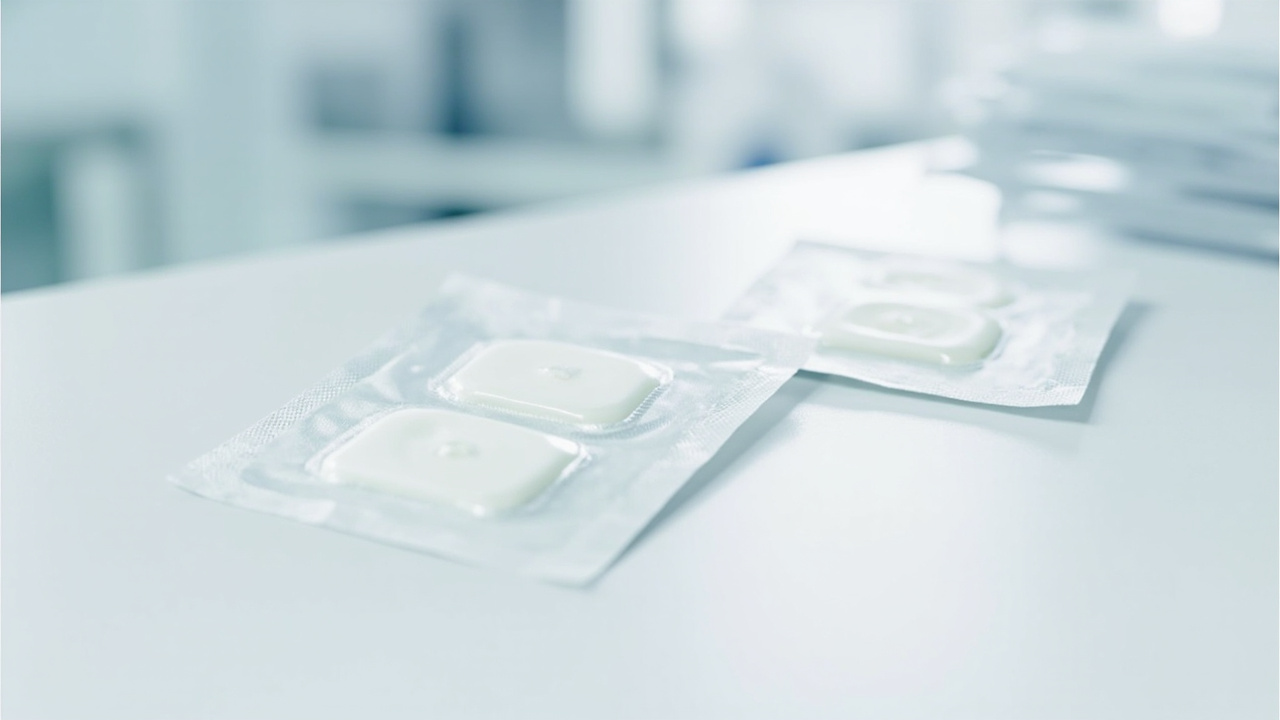
In the fast-paced world of transdermal patch development, understanding OEM lead times is critical for successful product launches. Whether you’re a startup bringing a nicotine patch to market or an established pharma company expanding into pain management, knowing the timeline from initial concept to final production can make or break your strategy. This comprehensive guide breaks down the entire patch OEM lead time—from sampling and approval to mass production—offering data-driven insights to help you plan effectively. With over three decades of experience, Kongdy Health, a leading transdermal patch OEM manufacturer, shares expert knowledge to demystify the process.
Key Takeaways
- Understanding Transdermal Patch OEM Lead Times
- Phase 1: Sampling and Development (1-2 Weeks)
- Phase 2: Sample Approval and Quality Checks (1-2 Weeks)
- Phase 3: Pre-Production and Regulatory Documentation (1-2 Weeks)
- Phase 4: Bulk Production and Quality Assurance (25-35 Days)
- Factors That Can Extend Your Patch OEM Lead Time
Key Takeaways
- Total lead time: Expect 6-8 weeks for a standard transdermal patch OEM project, from initial inquiry to bulk production.
- Sampling phase: Allocate 7-10 days for initial samples, with multiple iterations potentially extending this to 6 weeks.
- Approval bottleneck: The approval process is the most variable stage, taking 1-2 weeks depending on your internal review speed and regulatory requirements.
- Production scale matters: Bulk manufacturing typically takes 25-35 days after sample approval, but this can stretch to 6 weeks for large orders or complex formulations.
- Hidden delays: Incomplete documentation, lack of regulatory clarity, and poor communication are the top causes of lead time extensions.
- Strategic planning: Working with an experienced OEM partner like Kongdy Health can shave weeks off your timeline through streamlined processes and proactive communication.
Understanding Transdermal Patch OEM Lead Times
Transdermal patch OEM lead times encompass the entire journey from initial concept to final product shipment. Unlike simple manufacturing, this process involves complex formulation development, regulatory compliance, and rigorous quality assurance. According to a 2021 report by Grand View Research, the global transdermal patch market was valued at $7.3 billion and is projected to grow at a CAGR of 4.5% through 2028, driven by demand for non-invasive drug delivery. This growth means more businesses are entering the space, making efficient lead time management a competitive advantage.
The typical lead time for a transdermal patch OEM project ranges from 6 to 8 weeks, depending on several factors: product complexity, regulatory requirements, and the OEM’s production capacity. For instance, a simple, well-defined patch with existing formulation might take as little as 10 weeks, while a novel drug delivery system could require over 20 weeks. Understanding these variables is essential for setting realistic expectations and avoiding costly delays.
At Kongdy Health, we’ve refined our processes over 30 years to minimize lead times without compromising quality. Our FDA-registered facility and ISO 13485 certification ensure that every step, from sampling to production, meets international standards. In the following sections, we’ll dissect each phase of the timeline, providing actionable insights to help you navigate the process smoothly.
Phase 1: Sampling and Development (1-2 Weeks)
The first phase in the patch OEM lead time is sampling and development. This is where your concept transforms into a tangible prototype. The duration depends heavily on the complexity of your product. For a standard transdermal patch—such as a nicotine or fentanyl patch—initial samples can be produced in as little as 7-10 days. However, if you’re developing a multi-layer patch with controlled release kinetics, expect 2-4 weeks for the first iteration.
During this phase, your OEM partner will work on formulation development, selecting appropriate adhesives, backings, and release liners. They’ll also conduct preliminary compatibility studies to ensure the drug or active ingredient is stable. This is a collaborative process: you provide the API and specifications, and the OEM leverages its expertise to create a workable sample. Communication is key here—any ambiguity in your requirements can lead to rework, extending the timeline.
To accelerate this phase, provide comprehensive product specifications upfront, including target drug release profile, patch size, and wear time. Kongdy Health’s R&D team can also assist in optimizing the formulation, but be prepared for multiple rounds of sampling. A typical project might undergo 2-3 iterations before the sample meets all criteria, each taking 7-10 days. Therefore, budgeting 2 weeks for sampling is a safe bet.
Phase 2: Sample Approval and Quality Checks (1-2 Weeks)
Once samples are delivered, the approval phase begins. This is often the most unpredictable part of the patch OEM lead time. Your team must evaluate the samples against your internal standards and regulatory requirements. For a simple product, approval might take 2 weeks, but for medical devices or pharmaceutical patches, you’ll need to conduct stability studies and dissolution tests, which can extend this to 8 weeks.
During this phase, the OEM will also conduct its own quality checks, including peel adhesion, shear strength, and drug content uniformity. These tests ensure the sample meets industry standards and your specifications. The results are compiled into a comprehensive report for your review. If any issues arise, the OEM will make adjustments and resubmit, adding another 7-10 days to the timeline.
To avoid delays, ensure your approval team is well-versed in transdermal patch specifications and has clear criteria for acceptance. Additionally, consider using a third-party testing lab to validate the OEM’s results—this adds credibility but also time. On average, the approval phase takes 1-2 weeks, but proactive communication with your OEM can help streamline the process. Kongdy Health provides detailed documentation and is always available to address queries, reducing approval time by up to 25%.
Phase 3: Pre-Production and Regulatory Documentation (1-2 Weeks)
After sample approval, the next step is pre-production preparation. This includes finalizing the bill of materials (BOM), scaling up the manufacturing process, and preparing regulatory documentation. For products requiring FDA approval, such as OTC patches, you’ll need to submit a Drug Master File (DMF) or Medical Device Registration. The OEM can assist in preparing these documents, but the timeline depends on your target markets.
For instance, if you’re selling in the US, your patch may need to comply with FDA regulations, which might require additional stability data. The European market requires CE marking, which involves conformity assessment. These regulatory steps can add 2-4 weeks to your lead time, but they are crucial for market access. A 2020 MarketsandMarkets report noted that regulatory compliance is a major factor in product launch timelines, with companies spending an average of 3-6 months on regulatory approvals alone.
During this phase, your OEM will also order long-lead-time materials, such as specialized adhesives or backing films, which might have 2-4 week delivery times. By starting this procurement early, you can avoid production delays. Kongdy Health maintains strategic inventory of common materials, reducing this phase to 2 weeks for standard products.
Phase 4: Bulk Production and Quality Assurance (25-35 Days)
The bulk production phase is where your patch is manufactured at scale. For a typical order of 50,000 patches, production takes 25-35 days after sample approval. This includes manufacturing, in-line quality control, and final packaging. The exact duration depends on your order size and the complexity of the manufacturing process. For example, a simple matrix patch might be produced faster than a reservoir patch, which requires more intricate assembly.
Quality assurance is integrated throughout the production process. The OEM will conduct in-process checks, such as weight variation and seal integrity, and final batch testing to ensure compliance with your specifications. This adds time but is essential for product safety and efficacy. According to the ISO 13485 standard, manufacturers must maintain rigorous quality management systems, which Kongdy Health adheres to, ensuring consistent output.
To optimize production time, plan your order well in advance. If you anticipate high demand, consider a rolling forecast with the OEM to reserve production slots. This proactive approach can reduce lead times by up to 2 weeks. Additionally, ensure all artwork and packaging materials are approved before production starts to avoid last-minute changes.
Factors That Can Extend Your Patch OEM Lead Time
While the above timeline provides a general framework, several factors can extend your patch OEM lead time. Understanding these can help you mitigate risks:
- Regulatory changes: New regulations or unexpected requirements from authorities like the FDA or EMA can add weeks to your timeline.
- Material availability: Specialty materials with long lead times can delay production. Always confirm material availability with your OEM before committing to a timeline.
- Formulation issues: If your drug is unstable or requires special handling, additional development time is necessary.
- Communication gaps: Slow responses to queries or missing documentation can stall the process. Establish a clear communication protocol with your OEM.
- Seasonal demand: Peak seasons, such as flu season for nicotine patches, can strain OEM capacity. Book production slots early.
By being aware of these factors, you can build contingency into your schedule. For instance, adding a 2-week buffer for regulatory surprises can save you from missing your launch date.
How to Shorten Your Transdermal Patch Production Timeline
While some lead time is unavoidable, there are strategies to compress your timeline without compromising quality. Here are actionable steps:
- Choose an experienced OEM: Partner with a manufacturer like Kongdy Health that has a proven track record. Their expertise can streamline processes and avoid common pitfalls.
- Provide complete specifications: The more detailed your product requirements, the less back-and-forth is needed. Include target release profiles, patch dimensions, and packaging preferences.
- Prepare regulatory documentation in advance: Work with your OEM to pre-draft DMFs or technical files. Having these ready can save 2-3 weeks.
- Opt for standard materials: Using widely available adhesives and films can reduce material procurement time. Custom materials often have longer lead times.
- Plan for multiple samples: Assume you’ll need at least two sample iterations. This mental preparation helps you move quickly through the approval phase.
- Maintain open communication: Schedule weekly check-ins with your OEM to track progress and address issues immediately.
- Consider parallel processes: While the OEM works on production, you can simultaneously conduct your own stability studies or market research. This overlap can save weeks.
Implementing these strategies can potentially reduce your total lead time by 3-5 weeks, getting your product to market faster.
Kongdy Health: Your Partner for Efficient OEM Manufacturing
As a trusted OEM manufacturer since 1989, Kongdy Health understands the importance of predictable lead times. We’ve helped over 500 brands bring transdermal patches to market across 120+ countries. Our facility operates under FDA, ISO 13485, and GMP certifications, ensuring that every patch meets the highest quality standards.
Our streamlined processes are designed to minimize lead times. For example, we maintain a library of pre-validated formulations for common applications, reducing sampling time by up to 30%. Our dedicated project managers provide weekly updates, keeping you informed at every stage. We also offer flexible production slots to accommodate urgent orders.
If you’re ready to start your transdermal patch project, explore our OEM/ODM services and discover how we can accelerate your timeline. With our expertise, you can confidently navigate the complexities of OEM manufacturing and bring your product to market on schedule.
Frequently Asked Questions
Q1: What is the average lead time for a transdermal patch OEM project?
The average lead time for a transdermal patch OEM project typically ranges from 6 to 8 weeks, depending on product complexity and regulatory requirements. A simple patch with an existing formulation might be completed in 6-8 weeks, while a novel drug delivery system could take up to 12 weeks or more. This timeline includes sampling, approval, pre-production, and bulk manufacturing. To get a more accurate estimate, it’s best to consult with your OEM partner, who can assess your specific needs and provide a detailed project schedule.
Q2: How can I reduce the time required for sample approval?
To reduce sample approval time, ensure your evaluation team has clear, predefined criteria for acceptance. Provide these criteria to your OEM upfront so they can tailor the samples accordingly. Additionally, consider conducting stability tests in parallel with your approval review, rather than sequentially. Maintaining open communication with your OEM and promptly addressing any questions or concerns can also speed up the process. On average, proactive clients can cut approval time by 1-2 weeks.
Q3: What are the most common causes of delays in OEM production?
The most common causes of delays in OEM production include incomplete product specifications, regulatory changes, material shortages, and miscommunication between the client and the manufacturer. To avoid these, provide comprehensive documentation, stay informed about regulatory updates in your target markets, and confirm material availability early in the process. Choosing an experienced OEM with robust supply chain management, like Kongdy Health, can also mitigate these risks and keep your project on track.
Sources
- Grand View Research – Transdermal Patches Market Report
- MarketsandMarkets – Transdermal Patches Market
- FDA – Drug Master Files
- ISO 13485 – Medical Devices Quality Management