
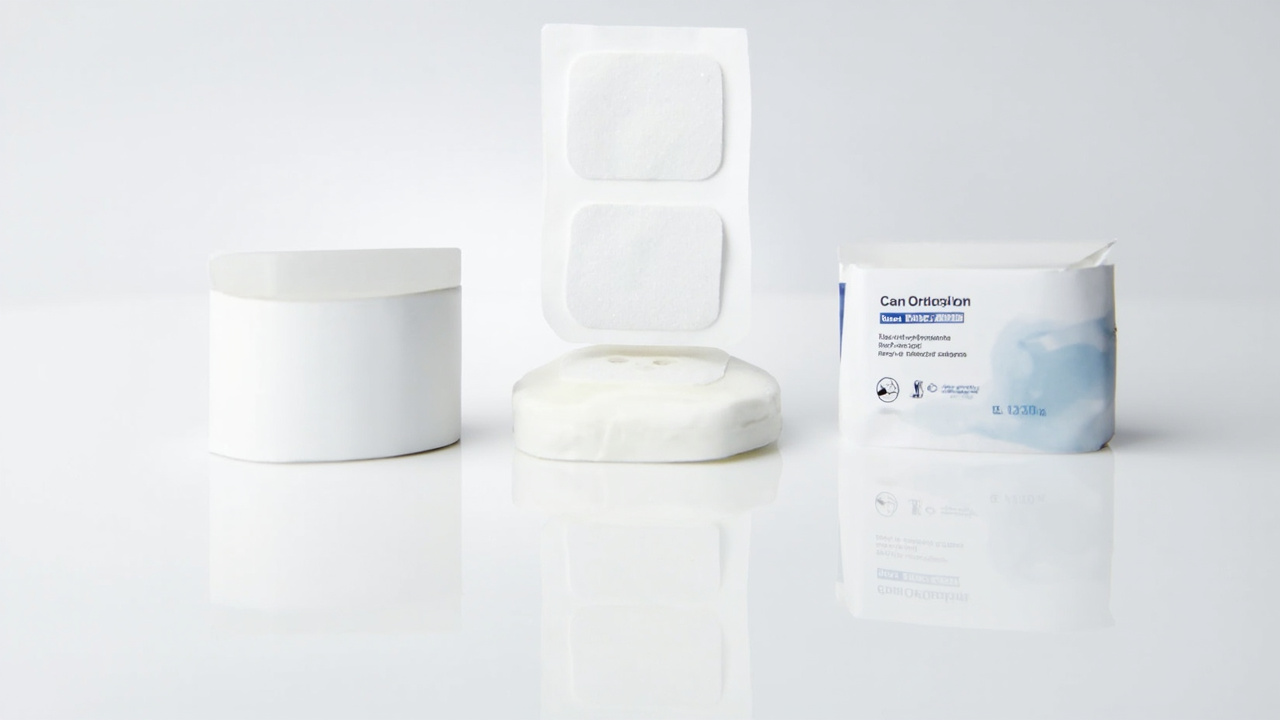
As the demand for natural wellness solutions skyrockets, turmeric curcumin patches have emerged as a promising delivery system for the anti-inflammatory and antioxidant benefits of curcumin. However, formulating an effective turmeric patch for OEM production is fraught with challenges—from curcumin’s poor solubility to stability issues and regulatory hurdles. This comprehensive guide dives deep into the technical and regulatory aspects that OEMs must master to create successful turmeric transdermal patches. Whether you’re a brand owner or a product developer, understanding these formulation intricacies is crucial for bringing a reliable and efficacious product to market.
Key Takeaways
- The Curcumin Molecule: Physicochemical Properties and Transdermal Challenges
- Formulation Strategies for Curcumin Transdermal Patches
- Stability and Shelf-Life Considerations
- Regulatory Landscape for Turmeric Patches
- Manufacturing Process and Quality Control
- Market Trends and Opportunities
Key Takeaways
- Curcumin’s poor water solubility and low bioavailability are the primary formulation hurdles, requiring advanced solubilization techniques like nanoemulsions or liposomes.
- Stability of curcumin in patch matrices is critical; oxidation and degradation can be mitigated through antioxidants, pH control, and protective packaging.
- Regulatory compliance (FDA, ISO 13485, GMP, CE) is non-negotiable for global market access, and OEMs must ensure their partners adhere to these standards.
- Choosing the right adhesive and backing materials is essential to achieve consistent release profiles and skin compatibility.
- Partnering with an experienced OEM like Kongdy Health can accelerate development and ensure a market-ready turmeric patch.
Turmeric, derived from the rhizome of Curcuma longa, has been used for centuries in Ayurvedic and traditional Chinese medicine. Its active compound, curcumin, is renowned for its anti-inflammatory, antioxidant, and analgesic properties. The global herbal supplement market is projected to reach $100 billion by 2028 (Grand View Research, 2022), with transdermal patches gaining traction as a convenient and sustained-release delivery format. However, formulating curcumin into a transdermal patch is not as simple as mixing it into an adhesive. The molecule’s inherent physicochemical properties pose significant challenges that require sophisticated formulation strategies.
The Curcumin Molecule: Physicochemical Properties and Transdermal Challenges
Curcumin (diferuloylmethane) is a lipophilic polyphenol with a molecular weight of 368.38 g/mol. While this molecular weight is within the ideal range for transdermal delivery (typically <500 Da), its poor aqueous solubility (<1 µg/mL) and extensive first-pass metabolism limit its oral bioavailability. For transdermal delivery, the stratum corneum—the outermost layer of the skin—acts as a formidable barrier. Curcumin's lipophilicity actually aids in partitioning into the stratum corneum, but its poor solubility in both water and oils makes it difficult to formulate into a stable patch matrix.
Moreover, curcumin is a potent chromophore, absorbing light in the visible range, which makes it prone to photodegradation. It also undergoes oxidation and hydrolysis under certain conditions, leading to loss of activity and color changes. These stability issues are exacerbated when curcumin is incorporated into a patch, where it is exposed to oxygen, moisture, and light over the product’s shelf life. Therefore, OEMs must consider not only the delivery mechanism but also the protection of the active ingredient throughout manufacturing, storage, and use.
To overcome these challenges, formulators often employ strategies such as complexation with cyclodextrins, encapsulation in liposomes or polymeric nanoparticles, or the use of permeation enhancers. Each approach has its own set of advantages and limitations, and the choice depends on the desired release profile, manufacturing scalability, and cost. For instance, cyclodextrin complexation can improve solubility and stability, but may reduce loading capacity. Nanoencapsulation can enhance skin permeation but adds complexity and cost to the manufacturing process.
Formulation Strategies for Curcumin Transdermal Patches
Developing a turmeric patch requires a systematic approach to formulation. The goal is to achieve a stable, efficacious patch with a consistent release profile over the intended wear time. Key components include the drug matrix, adhesive, backing film, and release liner. The matrix can be a pressure-sensitive adhesive (PSA) or a hydrogel, and the choice affects drug loading, release kinetics, and skin adhesion.
One common approach is to dissolve or disperse curcumin in a solvent along with the adhesive polymer, then coat and dry the mixture. However, curcumin’s limited solubility in typical coating solvents (e.g., ethyl acetate, hexane) necessitates the use of co-solvents or solubilizers. Alternatively, curcumin can be encapsulated in nanoparticles and then dispersed in the adhesive. This not only improves solubility but also provides a controlled release mechanism.
Permeation enhancers are often added to increase skin penetration. Common enhancers include terpenes, fatty acids, and surfactants. However, these can cause skin irritation, so their concentration must be optimized. Additionally, the adhesive must be compatible with the enhancer and curcumin to avoid phase separation or loss of tack. OEMs must conduct extensive compatibility studies to ensure the final product meets performance and safety standards.
Another critical factor is the loading dose. Curcumin’s potency is relatively low, meaning a high load may be required to achieve therapeutic effects. However, high loading can plasticize the adhesive, reducing its cohesive strength and leading to cold flow or residue on the skin. Therefore, a balance must be struck between drug loading and adhesive performance. Kongdy Health’s formulation scientists specialize in optimizing these parameters to deliver patches that meet client specifications.
Stability and Shelf-Life Considerations
Stability is a major concern for turmeric patches. Curcumin degrades via oxidation, hydrolysis, and photodegradation, leading to potency loss and color fading. To ensure a commercially viable product, OEMs must conduct accelerated stability studies (e.g., 40°C/75% RH for 6 months) and real-time studies to establish shelf life. Key strategies to enhance stability include:
- Adding antioxidants (e.g., vitamin E, BHT) to the formulation to inhibit oxidation.
- Using opaque or UV-blocking backing films and packaging to protect from light.
- Controlling pH and moisture content to minimize hydrolysis.
- Employing encapsulation to shield curcumin from environmental factors.
- Selecting adhesives with low reactivity and good compatibility.
Packaging also plays a vital role. Each patch should be individually sealed in a foil pouch with a desiccant if necessary. The pouch should provide a barrier against oxygen, moisture, and light. Even with these measures, curcumin’s inherent instability may limit shelf life to 18-24 months, which is acceptable for many markets but requires clear labeling and storage instructions.
Furthermore, the release liner must be easily removable without damaging the patch. Siliconized polyester films are commonly used, but their interaction with curcumin should be evaluated. Overall, stability testing is not just a regulatory requirement; it’s a critical step to ensure consumer safety and product efficacy.
Regulatory Landscape for Turmeric Patches
Regulatory requirements for transdermal patches vary by region. In the United States, the FDA regulates patches as either drugs or medical devices, depending on their intended use and claims. Turmeric patches making therapeutic claims (e.g., pain relief) are likely to be classified as drugs, requiring an NDA or ANDA. However, if marketed as cosmetics or dietary supplements, they may fall under different regulations. It’s crucial to consult with regulatory experts to determine the appropriate pathway.
In the European Union, patches are governed by the Medical Device Regulation (MDR) or the Medicinal Products Directive, depending on the claims. CE marking is required for medical devices. In other regions, such as Asia and Latin America, local regulations apply. Regardless of the market, adherence to Good Manufacturing Practices (GMP) and ISO 13485 is essential for quality management.
Kongdy Health operates under FDA registration, ISO 13485 certification, and GMP compliance, ensuring that our OEM patches meet the highest quality standards. We also assist clients in navigating regulatory submissions and documentation. For turmeric patches, it’s important to provide stability data, safety assessments, and labeling that complies with local laws. Claims should be substantiated and not misleading.
Manufacturing Process and Quality Control
Scaling up from lab to commercial production involves several steps: mixing, coating, drying, lamination, die-cutting, and packaging. Each step must be tightly controlled to ensure uniformity and quality. For turmeric patches, the mixing step is critical to achieve a homogeneous dispersion of curcumin. The coating weight and drying temperature must be optimized to avoid degradation and ensure consistent drug content.
Quality control tests include:
- Assay of curcumin content to ensure label claim.
- Uniformity of dosage units (e.g., content uniformity).
- Adhesion tests (peel strength, tack, shear).
- Release profile testing using Franz diffusion cells.
- Microbiological testing for sterility (if applicable).
- Stability testing as per ICH guidelines.
Additionally, in-process controls such as coating thickness and moisture content are monitored. A robust quality management system (QMS) is essential to detect and correct deviations. Kongdy Health’s manufacturing facilities are equipped with advanced coating and lamination equipment, and our QC labs perform comprehensive testing to ensure each batch meets specifications.
Market Trends and Opportunities
The market for transdermal patches is growing rapidly, driven by consumer preference for non-invasive, convenient delivery systems. The global transdermal patch market is expected to reach $8.5 billion by 2027, growing at a CAGR of 4.5% (MarketsandMarkets, 2022). Within this, botanical patches are a niche but fast-growing segment. Turmeric patches, in particular, are gaining popularity in the wellness and sports recovery markets.
Consumers are increasingly seeking natural alternatives for pain management and inflammation, and turmeric patches offer a targeted, sustained release. However, the market is also crowded, and differentiation is key. OEMs can help brands stand out by offering unique formulations, such as combinations with other actives (e.g., menthol, capsaicin) or advanced delivery technologies.
Another trend is the demand for clean-label and vegan-friendly products. Curcumin is naturally derived, but other excipients must also meet these criteria. OEMs should be prepared to source ingredients accordingly. Furthermore, sustainability is a growing concern; eco-friendly packaging and manufacturing processes can be a selling point.
Choosing the Right OEM Partner
Given the complexities of turmeric patch formulation, partnering with an experienced OEM is critical. A reliable OEM will have expertise in adhesive technology, encapsulation, and regulatory affairs. They should also have a proven track record in manufacturing transdermal patches and the ability to scale up production.
When evaluating potential partners, consider the following:
- Certifications: FDA, ISO 13485, GMP, CE.
- Experience: Years in business, client list, case studies.
- R&D capabilities: Formulation development, analytical testing.
- Manufacturing capacity: Coating lines, cleanrooms, packaging.
- Regulatory support: Assistance with registrations and documentation.
- Quality assurance: Robust QMS, batch records, traceability.
Kongdy Health has been a trusted OEM/ODM partner since 1989, serving over 120 countries. With state-of-the-art facilities and a team of experts, we can help you navigate the challenges of turmeric patch formulation and bring a successful product to market. Our services include formulation development, stability testing, regulatory consulting, and full-scale manufacturing. Learn more about our OEM/ODM services and how we can support your next project.
Frequently Asked Questions
Q1: What are the main challenges in formulating a turmeric curcumin patch?
The primary challenges include curcumin’s poor solubility, which makes it difficult to incorporate into adhesives, and its instability when exposed to light, oxygen, and moisture. Additionally, achieving consistent transdermal delivery requires overcoming the skin barrier and ensuring the adhesive is compatible with curcumin and any permeation enhancers. These factors necessitate advanced formulation techniques like encapsulation and the use of antioxidants.
Q2: How can OEMs ensure the stability of curcumin in transdermal patches?
OEMs can enhance stability by adding antioxidants, using opaque packaging, controlling moisture and pH, and employing encapsulation technologies. Accelerated stability studies are essential to predict shelf life and identify degradation pathways. Proper selection of adhesives and backing films also plays a role in protecting curcumin from environmental factors.
Q3: What regulatory pathways apply to turmeric patches in the US and EU?
In the US, turmeric patches making therapeutic claims are regulated as drugs by the FDA, requiring an NDA or ANDA. If marketed as cosmetics or supplements, different rules apply. In the EU, they may be classified as medical devices under MDR or as medicinal products, requiring CE marking or marketing authorization. It’s crucial to consult regulatory experts to determine the correct pathway for your product.