
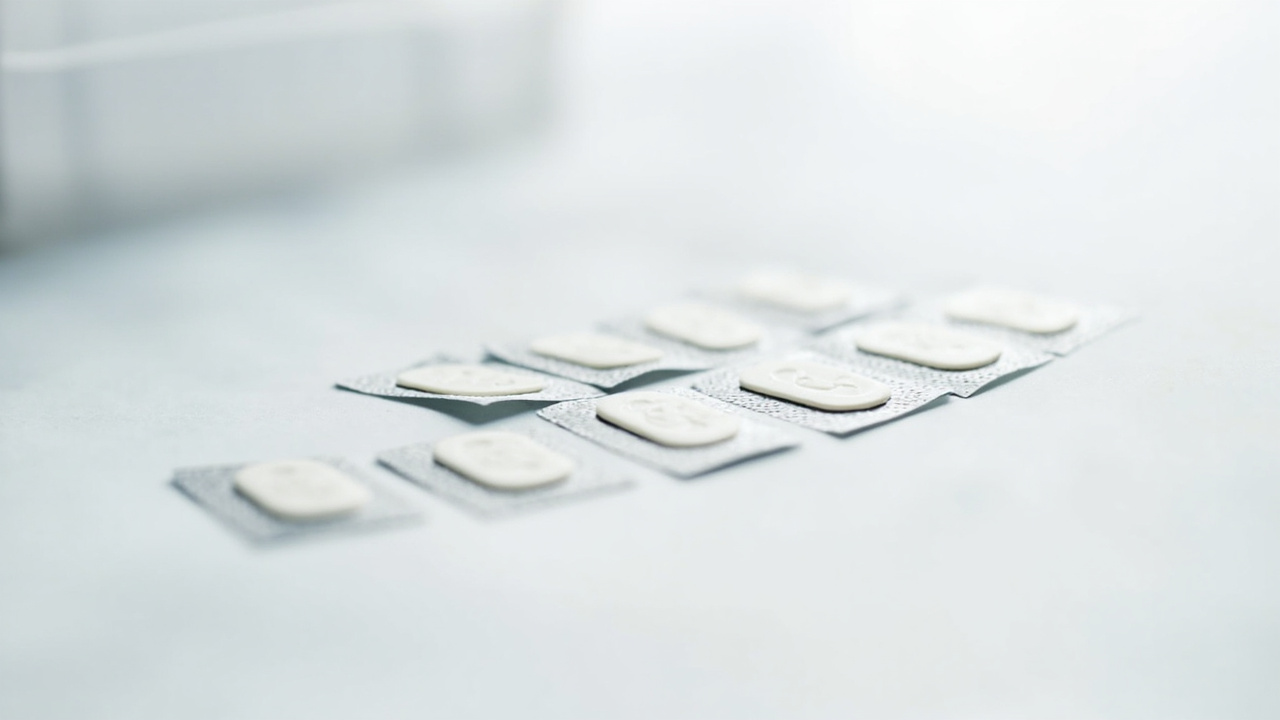
Launching a private label patch brand is one of the fastest ways to enter the booming transdermal patch market, projected to reach $12.6 billion by 2028 (Grand View Research). However, success hinges on selecting the right OEM partner and following a structured checklist. This guide provides a data-driven, step-by-step OEM checklist to help you navigate FDA/ISO 13485/GMP regulations, formulation decisions, and packaging strategies—ensuring your patch brand stands out in a competitive landscape. By following these steps, you can avoid costly mistakes and accelerate your time to market.
Key Takeaways
- 1. Validate Your Product Concept with Market Data
- 2. Verify OEM Certifications and Compliance Capabilities
- 3. Define Formulation and Material Specifications
- 4. Design Packaging That Communicates Trust and Compliance
- 5. Plan for Scalable Production and Lead Times
- 6. Establish Quality Control and Post-Launch Support
1. Validate Your Product Concept with Market Data
Before approaching any OEM, you must validate your product concept. According to a 2023 report by Transparency Market Research, the nicotine patch segment alone accounts for 35% of the transdermal market, while pain management patches (lidocaine, diclofenac) grow at 8.2% CAGR. Identify your niche: wellness patches (vitamins, caffeine), medical patches (hormones, motion sickness), or cosmetic patches (anti-aging, brightening). Your OEM partner should offer formulation expertise—Kongdy Health, for instance, provides over 200 proprietary formulations across multiple categories. Ensure your concept aligns with regulatory pathways: OTC patches require FDA 510(k) clearance, while cosmetic patches have fewer barriers. Collect at least three data points—market size, growth rate, and competitor pricing—to present to your OEM for feasibility assessment.
2. Verify OEM Certifications and Compliance Capabilities
Not all OEMs are created equal. Your partner must hold FDA registration, ISO 13485 (medical devices), and GMP (Good Manufacturing Practices) certifications. CE marking is essential for EU distribution. According to industry benchmarks, non-compliant manufacturers cause 40% of product launch delays (MedTech Europe, 2022). Kongdy Health operates a 50,000 sq ft GMP facility with ISO 13485:2016 certification, serving 120+ countries. Request their Device Master Record and audit reports. Ask about their regulatory affairs team—they should handle FDA 510(k) submissions, EU MDR compliance, and country-specific registrations (e.g., ANVISA for Brazil). A compliant OEM will also provide documentation for stability testing (ICH Q1A) and biocompatibility (ISO 10993).
3. Define Formulation and Material Specifications
The patch matrix—adhesive, backing, and release liner—determines drug delivery and user experience. Work with your OEM to select the right technology: reservoir vs. matrix vs. microneedle (the latter growing at 18% CAGR per MarketsandMarkets). For private label, matrix patches are cost-effective and easier to scale. Specify active ingredient concentration, release profile (immediate vs. sustained), and skin adhesion duration. Request a Certificate of Analysis (CoA) for raw materials. Kongdy Health offers custom formulation with 99% purity standards and can adjust pH, viscosity, and permeation enhancers. Always request accelerated stability studies (40°C/75% RH for 6 months) to predict shelf life. Include preservatives if water-based. Document all specifications in a Quality Agreement.
4. Design Packaging That Communicates Trust and Compliance
Packaging is your silent salesperson. For patches, child-resistant and senior-friendly (CRSF) packaging is mandatory for nicotine and certain drug patches per 16 CFR 1700. Use foil pouches to protect from moisture and UV. Include clear labeling with active ingredient, dosage, lot number, and expiration date. According to a 2023 Nielsen study, 67% of consumers trust brands that display certifications (FDA, GMP) on pack. Design your pouch and carton with your OEM’s support—Kongdy Health offers turnkey packaging design, from artwork to barcodes (GS1) and regulatory text. Request samples for stability testing under ICH conditions. Consider sustainability: biodegradable films and recyclable cartons appeal to eco-conscious buyers (45% of consumers prefer sustainable packaging per McKinsey).
5. Plan for Scalable Production and Lead Times
Your OEM must handle both pilot runs (for validation) and mass production (for launch). Typical lead times: 7-10 days for sampling, 25-35 days for production, and 6-8 weeks for regulatory filing. Kongdy Health’s automated lines produce 10 million patches monthly, with capacity to scale up 3x within 30 days. Ensure your OEM has a robust supply chain for backing films (polyester, polyurethane), adhesives (silicone, acrylic, hydrocolloid), and release liners (fluoropolymer-coated). Discuss minimum order quantities (MOQs)—Kongdy Health offers low MOQs for startups (5,000 patches per SKU). Request a production timeline with milestones: formulation lock, pilot batch, stability start, packaging design approval, and final batch release. Always include a 20% buffer for unexpected delays.
6. Establish Quality Control and Post-Launch Support
Quality control isn’t optional. Your OEM should perform in-process testing (weight, thickness, adhesion, content uniformity) and final release testing (assay, impurities, microbial limits). Kongdy Health uses HPLC, GC, and dissolution testers per USP <2>. Request a Certificate of Compliance with each shipment. Post-launch, your OEM should provide batch traceability, complaint handling (CAPA), and stability monitoring. For adverse events, they must have a 24-hour response protocol. According to FDA data, 30% of patch recalls are due to adhesion failures—prevent this with peel adhesion testing (ASTM D3330). Build a Quality Technical Agreement (QTA) that defines responsibilities for both parties. Finally, ask for ongoing formulation improvements—Kongdy Health offers continuous R&D to enhance bioavailability or reduce skin irritation.
- Validate your product concept with market data (size, growth, competition).
- Verify OEM certifications (FDA, ISO 13485, GMP, CE).
- Define formulation and material specs with your partner.
- Design compliant, child-resistant packaging with clear labeling.
- Plan for scalable production with realistic lead times and low MOQs.
- Establish quality control and post-launch support systems.
Frequently Asked Questions
Q1: What certifications should I look for in a private label patch OEM?
A: Ensure your OEM holds FDA registration, ISO 13485:2016 (medical devices), and GMP certification. For EU markets, CE marking under MDR is required. Ask for their Device Master Record and recent audit reports. Kongdy Health is fully compliant with these standards, serving 120+ countries.
Q2: How long does it take to launch a private label patch brand?
A: Typically 7-10 days for sampling, 25-35 days for production after sample approval, and 2-4 weeks for packaging design. Regulatory filing, if needed, can add 8-12 weeks. Kongdy Health can accelerate timelines with pre-approved formulations and fast-track regulatory support.
Q3: What is the minimum order quantity for private label patches?
A: MOQs vary by OEM. Kongdy Health offers low MOQs starting at 5,000 patches per SKU for startups, with flexible scaling options. Higher MOQs may apply for complex formulations or specialized packaging.
Ready to launch your private label patch brand? Partner with Kongdy Health, a trusted OEM/ODM manufacturer since 1989. Our FDA/ISO 13485/GMP-certified facility, 200+ formulations, and end-to-end support ensure your success. Contact us today to start your project.