
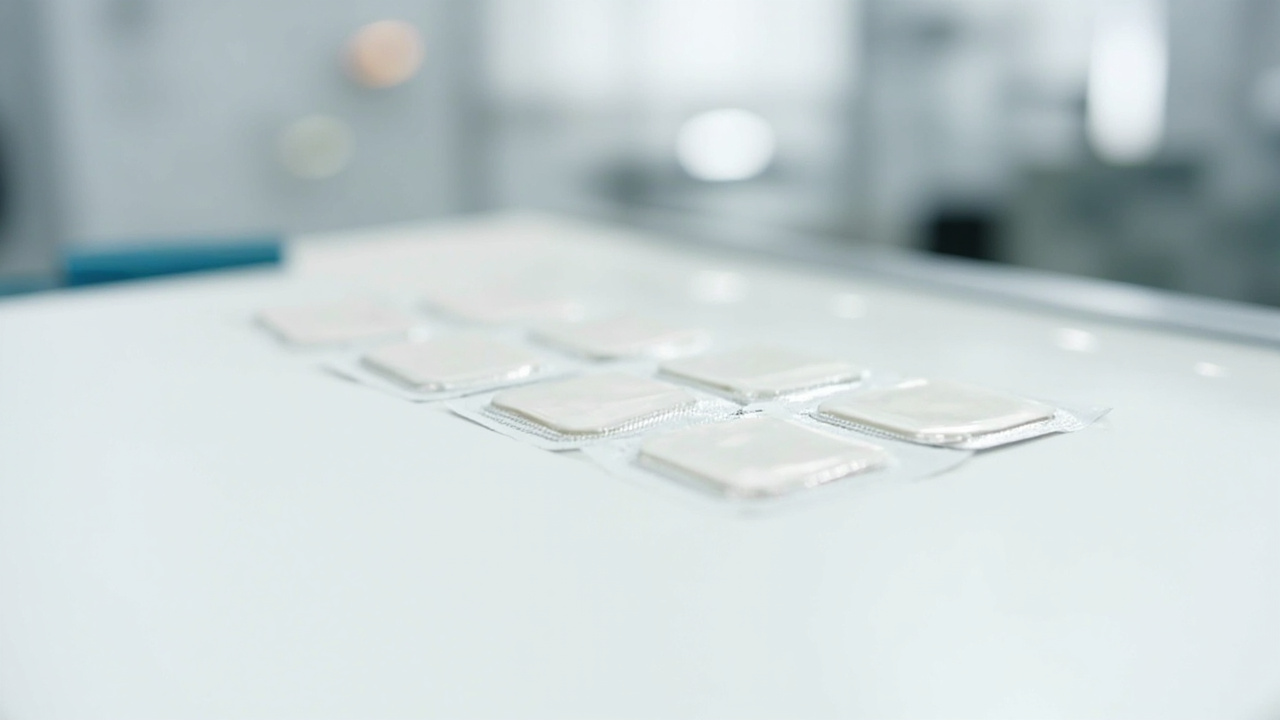
Navigating the FDA registration process for imported transdermal patches can be a complex, multi-step journey that requires meticulous attention to regulatory details. With the global transdermal patch market projected to reach $9.8 billion by 2027 (Grand View Research, 2023), the United States remains one of the most attractive markets for medical device manufacturers. However, entering this lucrative market demands strict adherence to FDA regulations, which are designed to ensure the safety and efficacy of medical devices. This comprehensive guide will walk you through every stage of FDA registration for imported transdermal patches, from determining device classification to post-market surveillance, while highlighting common pitfalls and best practices. Whether you are a startup or an established manufacturer, understanding these steps is critical to gaining and maintaining access to the US market.
Key Takeaways
- Understanding FDA Device Classification for Transdermal Patches
- Establishing a US Agent and Facility Registration
- Premarket Submission: 510(k) vs. PMA
- Quality System Regulation (QSR) and GMP Compliance
- Labeling and UDI Requirements
- Import Process and Customs Clearance
Understanding FDA Device Classification for Transdermal Patches
The first step in the FDA registration process is determining the correct classification for your transdermal patch. The FDA categorizes medical devices into three classes (I, II, and III) based on the level of risk they pose to patients. Transdermal patches generally fall into Class II, which includes devices that are subject to special controls to ensure safety and effectiveness. For example, nicotine replacement patches and hormone replacement patches are typically Class II devices, requiring Premarket Notification (510(k)) clearance. On the other hand, some novel transdermal delivery systems that employ new mechanisms or materials may be classified as Class III, requiring the more rigorous Premarket Approval (PMA) pathway.
To accurately classify your device, you must identify the appropriate Product Code and regulation number. The FDA’s Product Classification Database is an essential resource for this task. For instance, transdermal patches for local pain relief might have a different product code than those for systemic drug delivery. Misclassification can lead to significant delays and additional costs, so it is advisable to consult with regulatory experts or submit a Pre-Submission (Q-Sub) to the FDA for feedback. According to the FDA, as of 2023, over 90% of medical device registrations are for Class II devices, highlighting the importance of understanding this classification tier.
Once you have identified the classification, you must also consider whether your device requires a Premarket Notification (510(k)) or Premarket Approval (PMA). For Class II devices, a 510(k) submission is typically required, demonstrating that your device is substantially equivalent to a legally marketed predicate device. This process involves extensive testing and documentation, including biocompatibility, performance, and labeling requirements. In contrast, Class III devices, such as certain implantable transdermal systems, require a PMA, which is a more stringent review process that includes clinical trial data. Understanding these pathways is crucial for planning your submission timeline and budget.
Establishing a US Agent and Facility Registration
For foreign manufacturers, the FDA mandates the appointment of a US Agent who acts as a liaison between the manufacturer and the FDA. The US Agent must be a resident of the United States or have a physical presence there, and they are responsible for receiving FDA communications and facilitating inspections. This requirement is non-negotiable and must be completed before you can proceed with facility registration. The US Agent’s contact information must be included in your FDA registration, and they must be available during normal business hours. Failure to maintain a valid US Agent can result in the suspension of your device listing.
After appointing a US Agent, you must complete the facility registration through the FDA’s Unified Registration and Listing System (FURLS). This process involves submitting your establishment’s information, including the name, address, and contact details. The FDA registration fee is annual, and as of 2024, the standard fee for a small business is $9,280, while the standard fee for a non-small business is $9,280 as well, but small businesses may qualify for a reduced fee of $2,320 (FDA, 2024). It is essential to pay this fee to activate your registration. Additionally, you must list your transdermal patch device with the FDA, providing details such as the product code, device name, and labeling information. This listing must be updated annually, and any changes to your device or facility must be reported within 30 days.
Once your facility is registered and your device is listed, you will receive a registration number, which must be included on your device labels and in your import documentation. This number is critical for US Customs and Border Protection (CBP) to clear your products. Without it, your shipments may be detained or refused entry. It is also important to note that the FDA conducts random inspections of foreign facilities to ensure compliance with Good Manufacturing Practices (GMP) under 21 CFR Part 820. These inspections can be announced or unannounced, and passing them is essential for maintaining your registration.
Premarket Submission: 510(k) vs. PMA
For most transdermal patches, a 510(k) submission is the appropriate premarket pathway. The 510(k) process requires you to demonstrate that your device is substantially equivalent to a predicate device that is already legally marketed in the US. This involves conducting comparative testing, including performance, biocompatibility, and labeling assessments. The FDA has 90 days to review a traditional 510(k) submission, but the actual review time can be longer, often averaging around 177 days in 2023 (FDA, 2023). It is crucial to prepare a comprehensive submission that includes a detailed summary of your device, a comparison table, and all necessary test data.
In some cases, you may qualify for an abbreviated 510(k) if your device meets certain criteria, such as having a well-established predicate or using recognized consensus standards. This can significantly reduce the review time and cost. However, if your transdermal patch is novel, such as using a new drug-delivery mechanism or a new material, you may need to submit a De Novo request, which is a pathway for low-to-moderate risk devices that lack a predicate. The De Novo process involves a review of your device’s safety and efficacy, and if approved, it reclassifies your device into Class I or II, allowing you to market it without a predicate.
For Class III devices, a PMA is required. This is a more rigorous process that involves clinical trials and a comprehensive review of your manufacturing processes. The PMA review can take several years and requires substantial financial investment. As of 2024, the FDA’s PMA user fee for a small business is $422,400, while the standard fee is $844,800 (FDA, 2024). This pathway is typically reserved for high-risk devices, such as certain implantable transdermal systems that deliver large molecules. If your device falls into this category, it is imperative to plan for a long and detailed submission process, including multiple rounds of FDA feedback and potential advisory panel meetings.
Quality System Regulation (QSR) and GMP Compliance
Regardless of the premarket pathway, your manufacturing facility must comply with the FDA’s Quality System Regulation (QSR) under 21 CFR Part 820. This regulation outlines the requirements for design, manufacturing, packaging, labeling, and storage of medical devices. Compliance with QSR is mandatory for all medical device manufacturers, including those outside the US. The FDA expects you to have a comprehensive quality management system in place, which aligns with international standards such as ISO 13485. In fact, ISO 13485 certification is often considered a strong indicator of QSR compliance, and many manufacturers obtain this certification to facilitate FDA inspections.
Your quality system must include processes for design control, risk management, supplier management, and corrective and preventive actions (CAPA). For transdermal patches, specific attention must be paid to the manufacturing environment, as these devices are often sensitive to temperature, humidity, and contamination. The FDA will inspect your facility to ensure that you have validated your manufacturing processes and that you have procedures in place to handle non-conforming products. As of 2023, the FDA has increased its inspections of foreign facilities by 15% compared to the previous year, underscoring the importance of robust GMP compliance.
To prepare for a successful FDA inspection, it is advisable to conduct internal audits and mock inspections. You should also maintain meticulous records of your manufacturing processes, including batch records, validation reports, and employee training logs. The FDA expects to see a culture of quality throughout your organization, from top management to production staff. If you are an OEM manufacturer, you must ensure that your private-label partners also adhere to these standards, as the FDA holds the labeler (the company whose name appears on the device) responsible for compliance.
Labeling and UDI Requirements
Proper labeling is a critical component of FDA compliance for transdermal patches. Your device labels must include the name and place of business of the manufacturer, packer, or distributor, as well as the device’s intended use and any necessary warnings. For transdermal patches, specific labeling requirements may include instructions for use, storage conditions, and a statement that the product is a prescription device if it is not available over the counter. The FDA’s labeling regulations are detailed in 21 CFR Part 801, and any deviation can result in your device being considered misbranded.
In addition to general labeling, all medical devices must comply with the Unique Device Identification (UDI) rule. The UDI system requires that each device and its packaging bear a unique identifier that can be tracked throughout the distribution chain. For transdermal patches, this means assigning a UDI to each unit, which must be provided in a machine-readable format (e.g., barcode) and a plain text format. The UDI must be submitted to the FDA’s Global Unique Device Identification Database (GUDID), and this information must be updated as needed. As of 2023, the FDA has reported that over 80% of medical devices on the market have UDI data, and compliance is mandatory for all devices by 2022.
Your UDI must include a Device Identifier (DI) and a Production Identifier (PI), which may include lot number, serial number, expiration date, and manufacturing date. For transdermal patches, the expiration date is particularly important, as these products have a finite shelf life. The UDI system not only helps the FDA track devices in the event of a recall but also improves patient safety by reducing medication errors. To ensure compliance, you should integrate UDI generation into your manufacturing process and work with a UDI solution provider if necessary.
Import Process and Customs Clearance
Once your device is registered and approved, you must navigate the US import process. The FDA works with US Customs and Border Protection (CBP) to regulate the entry of medical devices. When your transdermal patches arrive at a US port, you must submit an entry filing that includes your FDA registration number, the device listing number, and a description of the products. This information is transmitted electronically through the Automated Commercial Environment (ACE) system. If the FDA has any concerns about your shipment, they may place it on hold and request additional documentation or testing.
To avoid delays, it is essential to ensure that your products are correctly labeled and that your documentation is complete. Common issues include missing UDI information, incorrect product codes, or labeling that does not meet FDA requirements. The FDA also conducts random examinations of imported devices to verify that they meet safety standards. According to the FDA, in 2023, approximately 15% of imported medical devices were subject to physical inspection, and about 5% were refused entry due to non-compliance (FDA, 2023). To minimize the risk of refusal, you should work with a customs broker who has experience with medical device imports.
It is also important to be aware of the FDA’s Prior Notice requirements. For imported devices, you must submit a Prior Notice to the FDA at least 4 hours before the arrival of the shipment. This notice must include information about the manufacturer, the device, and the shipping details. Failure to submit Prior Notice can result in your shipment being refused. Once your products clear customs, they can be distributed in the US market, but you must continue to comply with post-market surveillance requirements, including reporting adverse events and recalls.
Post-Market Surveillance and Adverse Event Reporting
After your transdermal patch is on the US market, you are required to monitor its performance and report any adverse events to the FDA. The Medical Device Reporting (MDR) regulation under 21 CFR Part 803 mandates that manufacturers report deaths and serious injuries to the FDA within 30 days, and certain malfunctions that could cause death or serious injury if they were to recur. This involves submitting an MDR report through the FDA’s Electronic Submission Gateway (ESG). Failure to report adverse events can result in significant penalties, including fines and product seizures.
In addition to MDR, you may be required to conduct post-market surveillance studies if the FDA determines that your device needs additional evaluation. These studies can be imposed as a condition of approval or clearance, and they are designed to gather real-world data on the device’s safety and effectiveness. For transdermal patches, this may involve monitoring skin irritation, adhesion failure, or other issues that may not be fully captured in premarket studies.
To manage your post-market obligations effectively, you should establish a robust post-market surveillance system that includes complaint handling, data analysis, and periodic reporting. This system should be integrated into your quality management system and aligned with ISO 13485 requirements. By proactively monitoring your device’s performance, you can identify potential issues early and take corrective action, thereby protecting patient safety and your company’s reputation.
Frequently Asked Questions
Q1: What is the difference between FDA registration and device listing?
FDA registration refers to the process of registering your manufacturing facility with the FDA, which is required for any establishment that manufactures, repackages, relabels, or imports medical devices. Device listing, on the other hand, is the process of listing each specific device that you manufacture or distribute with the FDA. Both processes are done through the FDA’s Unified Registration and Listing System (FURLS). Registration is facility-specific, while listing is device-specific. You must complete both to legally market your transdermal patch in the US, and both must be renewed annually.
Q2: How long does the FDA 510(k) review take for a transdermal patch?
The FDA’s target review time for a traditional 510(k) submission is 90 days from the date of acceptance. However, in practice, the average review time in 2023 was approximately 177 days, according to FDA data. This timeline can be extended if the FDA requests additional information or if you need to make amendments to your submission. To expedite the process, it is crucial to submit a complete and well-organized application, including all required test data and documentation. Working with regulatory consultants who have experience with transdermal patches can help you avoid common pitfalls and reduce review time.
Q3: Can I use ISO 13485 certification to demonstrate compliance with FDA QSR?
While ISO 13485 certification is not a substitute for FDA Quality System Regulation (QSR) compliance, it can significantly help in meeting FDA requirements. ISO 13485 is an international standard for quality management systems specific to medical devices, and its requirements are largely aligned with the FDA’s QSR. The FDA recognizes ISO 13485 as a harmonized standard, and many manufacturers use it as a foundation for their quality system. However, the FDA expects compliance with 21 CFR Part 820, which includes some additional requirements, such as specific record-keeping and complaint handling procedures. Therefore, you should not rely solely on ISO 13485 certification, but rather ensure that your quality system meets both standards.
Conclusion and Next Steps
Successfully navigating FDA registration for imported transdermal patches requires a thorough understanding of the regulatory landscape, meticulous preparation, and ongoing compliance commitment. By following the steps outlined in this guide—from device classification and facility registration to premarket submission and post-market surveillance—you can position your products for success in the US market. Remember that the FDA’s regulations are designed to protect public health, and non-compliance can have severe consequences, including product seizures and legal penalties.
For over 35 years, Kongdy Health has been a trusted OEM/ODM partner for transdermal patch brands worldwide. Our FDA-registered facility, ISO 13485 certification, and adherence to GMP standards ensure that your products meet the highest quality and compliance requirements. Whether you are a startup seeking to enter the US market or an established company looking to expand your product line, our experienced team can assist you with every step of the FDA registration process. Contact Kongdy Health today to learn how our end-to-end OEM services can accelerate your time-to-market and ensure regulatory success.