
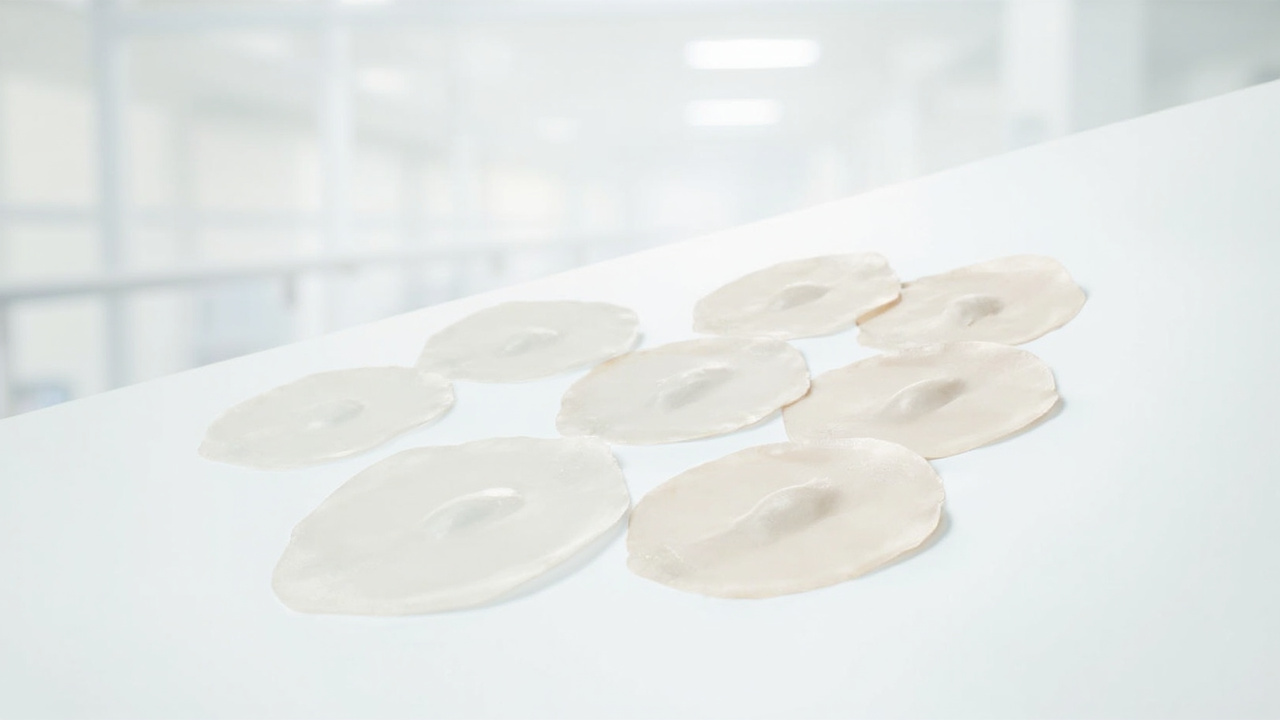
To legally market a detox patch in the EU, you must first determine whether your product is a cosmetic, a medical device, or a borderline product—because detox patch claims are only permitted if they comply with the applicable EU regulation (EC) No 1223/2009 for cosmetics or (EU) 2017/745 for medical devices. In practice, this means securing a Cosmetic Product Safety Report (CPSR) and Product Information File (PIF) for cosmetic patches (typical cost €2,000–€5,000, timeline 4–8 weeks) or a CE Declaration of Conformity under MDR for medical device claims (typical cost €15,000–€40,000, timeline 6–12 months). The single most common compliance failure is making therapeutic “detox” claims on a product registered as a cosmetic, which triggers rapid market withdrawal and fines.
Key Takeaways
- Understanding the EU Regulatory Framework for Detox Patches
- What Claims Are Permitted for Cosmetic Detox Patches?
- Medical Device Route: When Detox Claims Require CE Marking
- Labeling Requirements for Detox Patches in the EU
- Step-by-Step Compliance Process for OEM Buyers
- Costs, Timelines, and Common Pitfalls
Key Takeaways
- Detox claims implying a physiological effect (e.g., “removes heavy metals,” “cleanses the liver”) are medicinal claims and cannot be made for cosmetic patches; they require classification as a medical device or medicine.
- Cosmetic detox patches need a CPSR, PIF, and Responsible Person in the EU; budget €2,000–€5,000 and 4–8 weeks for compliance documentation.
- Medical device detox patches require CE marking under MDR (EU) 2017/745, involving notified body involvement (if Class IIa or higher), clinical evaluation, and post-market surveillance—costs typically €15,000–€40,000 and 6–12 months.
- Labeling must include the Responsible Person’s name and address, batch number, PAO or best-before date, and a full ingredient list using INCI names; missing elements are a top recall trigger.
- Non-compliance risks include product withdrawal, fines up to 5% of annual turnover in some member states, and reputational damage—making pre-submission regulatory review essential.
Understanding the EU Regulatory Framework for Detox Patches
The EU does not have a single “detox patch” category; instead, products are classified by their intended use and claims. Under Regulation (EC) No 1223/2009, a cosmetic is any substance or mixture intended to be placed in contact with external parts of the body for the purpose of cleaning, perfuming, changing appearance, protecting, or correcting body odors. A patch that claims to “detoxify” by removing toxins through the skin typically falls outside this definition because it implies a physiological action beyond cosmetic function—thus regulators may classify it as a medical device under Regulation (EU) 2017/745 (MDR) or even as a medicinal product under Directive 2001/83/EC. The European Commission’s borderline guidance (updated 2023) emphasizes that claims such as “eliminates toxins,” “improves liver function,” or “boosts metabolism” are strong indicators of a medicinal or device classification.
For B2B buyers, this classification determines every downstream requirement: the conformity assessment route, labeling content, and market access costs. A 2022 survey by Cosmetics Europe found that 28% of cosmetic products inspected in the EU had labeling non-conformities, with claims issues being the second most common category. Moreover, the EU’s Medical Device Coordination Group (MDCG) issued guidance in 2021 (MDCG 2021-24) clarifying that products making detox claims via transdermal absorption are generally considered medical devices if they act on the body’s detoxification processes. Therefore, before finalizing packaging artwork, OEM buyers must lock in the regulatory status with their manufacturer.
What Claims Are Permitted for Cosmetic Detox Patches?
If your patch is classified as a cosmetic, claims must be limited to cleansing, purifying, or refreshing the skin’s appearance. The EU’s Common Criteria for cosmetic claims (Commission Regulation (EU) No 655/2013) require claims to be truthful, substantiated, and not misleading. Permitted examples include “helps purify the skin,” “refreshes tired feet,” or “absorbs excess moisture.” However, even these claims must be supported by adequate evidence—typically in-vitro or consumer perception studies—and the evidence must be available to authorities upon request. The EU’s Technical Document on Cosmetic Claims (2023) lists “detox” as a claim that is acceptable only if it refers to a cosmetic effect (e.g., “detoxifying look”) and not to a physiological detoxification.
In contrast, claims like “removes heavy metals,” “cleanses the lymphatic system,” or “eliminates toxins from the body” are considered medicinal and are prohibited for cosmetics. A 2023 report from the European Advertising Standards Alliance (EASA) noted that 41% of cross-border cosmetic claim complaints involved “detox” or “purifying” language that implied therapeutic benefits. For OEM buyers, this means packaging copy must be carefully vetted: use phrases like “purifying blend” rather than “detoxifies,” and avoid any implication of systemic action. Kongdy Health’s regulatory team routinely reviews client artwork against these criteria to prevent costly reprints.
Medical Device Route: When Detox Claims Require CE Marking
If your detox patch makes claims that go beyond cosmetic function—such as “supports the body’s natural detoxification” or “helps remove impurities”—it may be classified as a medical device under the MDR. This triggers a far more rigorous pathway: classification (typically Class I or IIa), conformity assessment (self-declaration for Class I, notified body for IIa and above), clinical evaluation, and post-market surveillance. The MDR’s Article 2(1) defines a medical device as any instrument intended for human use for the purpose of diagnosis, prevention, monitoring, treatment, or alleviation of disease. Detox claims that imply prevention or treatment of a condition (e.g., “reduces toxin buildup linked to fatigue”) fall squarely into this definition.
Costs for CE marking under MDR are substantial: a 2023 survey by Team-NB (the association of notified bodies) reported average fees for Class IIa device certification at €18,000–€35,000, with timelines of 6–12 months due to notified body backlogs. Additionally, manufacturers must maintain a technical file including clinical evaluation report (CER), risk management file (ISO 14971), and post-market clinical follow-up plan. For detox patches, clinical evidence is often limited, making the device route challenging unless the manufacturer has robust clinical data. Kongdy Health, with ISO 13485 certification since 2005, assists clients in preparing technical documentation and navigating notified body interactions.
Labeling Requirements for Detox Patches in the EU
Labeling compliance is non-negotiable for both cosmetic and medical device detox patches. For cosmetics, Article 19 of Regulation (EC) No 1223/2009 mandates: the name and address of the Responsible Person, nominal content, date of minimum durability (or PAO), batch number, ingredient list (INCI), and warnings for safe use. For medical devices, Annex I of the MDR requires the CE mark, manufacturer’s name and address, device description, batch/serial number, and instructions for use. A 2022 EU Safety Gate report revealed that 23% of recalled cosmetic products lacked a Responsible Person address—a critical omission that can lead to immediate withdrawal.
Additionally, language requirements vary by member state: labels must be in the official language(s) of the country of sale. For a multi-country launch, this means creating market-specific artwork, which can add €1,500–€3,000 per language in translation and design verification. Below is a compliance checklist for EU detox patch labeling:
| Requirement | Issued by | Timeline | Indicative cost | Risk if missing |
|---|---|---|---|---|
| Cosmetic Product Safety Report (CPSR) | Qualified safety assessor | 4–8 weeks | €2,000–€5,000 | Product cannot be placed on market; withdrawal |
| Product Information File (PIF) | Responsible Person | 1–2 weeks (assembly) | €500–€1,500 | Non-compliance with Article 11; fines |
| CE Declaration of Conformity (MDR) | Manufacturer (self-declaration for Class I) or Notified Body | 6–12 months (IIa) | €15,000–€40,000 | Product cannot bear CE mark; market access denied |
| ISO 13485 certificate (scope covering patch) | Accredited certification body | 3–6 months initial audit | €8,000–€20,000 | Notified body will not accept application |
| Responsible Person appointment (EU) | Manufacturer or importer | 1–2 weeks | €1,000–€3,000 annually | Labeling non-compliance; recall |
| Batch number and PAO/best-before date | Manufacturer | At production | Included in production cost | Traceability failure; recall |
| INCI ingredient list | Manufacturer | At formulation | Included in R&D | Labeling non-compliance; fines |
Step-by-Step Compliance Process for OEM Buyers
Navigating EU detox patch compliance requires a structured approach. Based on Kongdy Health’s experience with 120+ countries, the following numbered steps outline the typical pathway for a new OEM product:
- Determine product classification: Engage a regulatory consultant to assess claims against EU borderline criteria. Cost: €1,000–€2,500; timeline: 2–4 weeks. Outcome: written classification opinion.
- Appoint an EU Responsible Person: For cosmetics, this is mandatory; for medical devices, an authorized representative is required if the manufacturer is outside the EU. Cost: €1,000–€3,000/year; timeline: 2 weeks.
- Compile technical documentation: For cosmetics, prepare PIF and CPSR; for devices, prepare technical file with risk management (ISO 14971) and clinical evaluation. Cost: €3,000–€10,000 (cosmetics) or €10,000–€25,000 (devices); timeline: 4–12 weeks.
- Conduct safety and efficacy testing: Cosmetic patches require stability and compatibility testing (€1,500–€4,000); device patches may require biocompatibility (ISO 10993) and clinical studies (€20,000+). Timeline: 4–16 weeks.
- Design compliant labeling: Create artwork with all mandatory elements in required languages. Cost: €500–€2,000 per language; timeline: 2–4 weeks.
- Notify and register: For cosmetics, submit notification via CPNP (free, but administrative time); for devices, obtain CE certificate from notified body (if applicable). Timeline: 1 week (CPNP) or 6–12 months (notified body).
- Implement post-market surveillance: Establish systems for adverse event reporting and periodic safety updates. Cost: €2,000–€5,000/year; timeline: ongoing.
Each step involves specific documents: for example, the CPSR must be signed by a qualified safety assessor, and the PIF must include product description, manufacturing method, and safety data. Kongdy Health provides turnkey support for steps 1–5, leveraging our ISO 13485 and GMP-compliant facilities to streamline documentation.
Costs, Timelines, and Common Pitfalls
Budgeting for EU compliance is critical for B2B buyers. Based on 2023–2024 industry data, the total cost to launch a compliant cosmetic detox patch ranges from €8,000 to €15,000 (including CPSR, PIF, Responsible Person, and labeling), with a timeline of 3–6 months. For a medical device detox patch, costs escalate to €30,000–€60,000 and 9–18 months. These figures exclude product development and manufacturing. A common pitfall is underestimating the time required for notified body reviews: average MDR certification timelines increased from 6 to 12 months between 2020 and 2023 due to capacity constraints (Team-NB 2023).
Another frequent error is using unsubstantiated claims. The EU’s Common Criteria require that claims be supported by “adequate and verifiable evidence.” For detox patches, this often means consumer perception studies (minimum 50 participants) or in-vitro assays. Skipping this step can result in claims being challenged by national authorities; in 2022, the French DGCCRF reported 15% of cosmetic claim checks led to corrective actions. Finally, ignoring language requirements can halt sales: Germany, France, and Spain each require full labeling in their official language, and non-compliance can trigger fines up to €50,000 per product.
How Kongdy Health Supports EU Compliance
As an OEM/ODM manufacturer with FDA, ISO 13485, and GMP certifications, Kongdy Health has been supporting brands in regulated markets since 1989. Our in-house regulatory team assists with classification, documentation, and labeling review to ensure your detox patch meets EU requirements. We maintain a library of pre-approved claim language and can facilitate testing through accredited third-party labs. For buyers seeking a reliable partner, our OEM/ODM services include full regulatory support, from CPSR coordination to CE technical file preparation. With 120+ country experience, we help you avoid costly delays and launch with confidence.
Frequently Asked Questions
Q1: Can I use the word “detox” on a cosmetic patch label in the EU?
Yes, but only if the claim is clearly cosmetic in nature—for example, “detoxifying look” or “purifying scent.” The EU’s Common Criteria (Regulation (EU) No 655/2013) prohibit claims that imply physiological detoxification, such as “removes toxins.” The term must be qualified to avoid misleading consumers. National authorities like the UK’s ASA and France’s DGCCRF have taken enforcement action against unqualified “detox” claims on cosmetics. We recommend substantiating any detox-related claim with consumer perception data and keeping wording aligned with cosmetic benefits.
Q2: What is the difference between a cosmetic and a medical device detox patch in terms of labeling?
Cosmetic labeling must include the Responsible Person’s name and address, batch number, PAO or best-before date, and INCI ingredient list, per Article 19 of Regulation (EC) No 1223/2009. Medical device labeling under MDR Annex I requires the CE mark, manufacturer’s name and address, device description, batch/serial number, and instructions for use. Additionally, medical device labels must include any warnings and contraindications identified in the risk management process. The key difference is that medical devices must bear the CE mark and undergo conformity assessment, while cosmetics self-certify via the CPSR and PIF.
Q3: How long does it take to get CE marking for a detox patch under MDR?
For a Class IIa detox patch, the CE marking process typically takes 6–12 months from application to certificate issuance, according to 2023 Team-NB data. This includes technical file review, clinical evaluation assessment, and notified body audit. Class I devices (non-sterile, non-measuring) can be self-certified in 2–4 months, but many detox patches fall into Class IIa due to their mode of action. Delays often occur due to incomplete clinical evidence or notified body backlogs. Early engagement with a notified body and robust technical documentation can reduce timelines.
Sources
- EUR-Lex: Regulation (EC) No 1223/2009 on cosmetic products
- EUR-Lex: Regulation (EU) 2017/745 on medical devices (MDR)
- ISO 13485:2016 Medical devices — Quality management systems
- WHO: Medical devices fact sheet