In the rapidly growing transdermal patch market—projected to reach $12.7 billion by 2030 (Grand View Research, 2023)—OEM pain relief patches have become a cornerstone for brands seeking to enter or expand in the pain management sector. Whether you’re a startup looking to launch your first product or an established healthcare company aiming to diversify, understanding the intricacies of OEM manufacturing is critical. This comprehensive guide answers the top 10 questions about OEM pain relief patch manufacturing, providing data-driven insights to help you make informed decisions. From custom lidocaine patches to regulatory hurdles, we cover it all.
1. What Exactly Is OEM Pain Relief Patch Manufacturing?
OEM (Original Equipment Manufacturer) pain relief patch manufacturing involves a specialized company producing patches according to a client’s specifications. The client provides the product concept, formulation, or design, and the manufacturer handles everything from development to production. This model allows brands to leverage the manufacturer’s expertise, facilities, and certifications without investing in their own production infrastructure.
For instance, a pharmaceutical company might want a custom lidocaine patch with a specific drug release profile, adhesive type, and packaging. An OEM manufacturer like Kongdy Health, with over 30 years of experience, can develop and produce that patch under the client’s brand name. The client benefits from the manufacturer’s FDA-registered facilities, ISO 13485 quality management systems, and GMP-compliant processes. This partnership accelerates time-to-market and reduces capital expenditure, making it an attractive option for both small and large enterprises.
2. What Are the Key Components of a Transdermal Pain Patch?
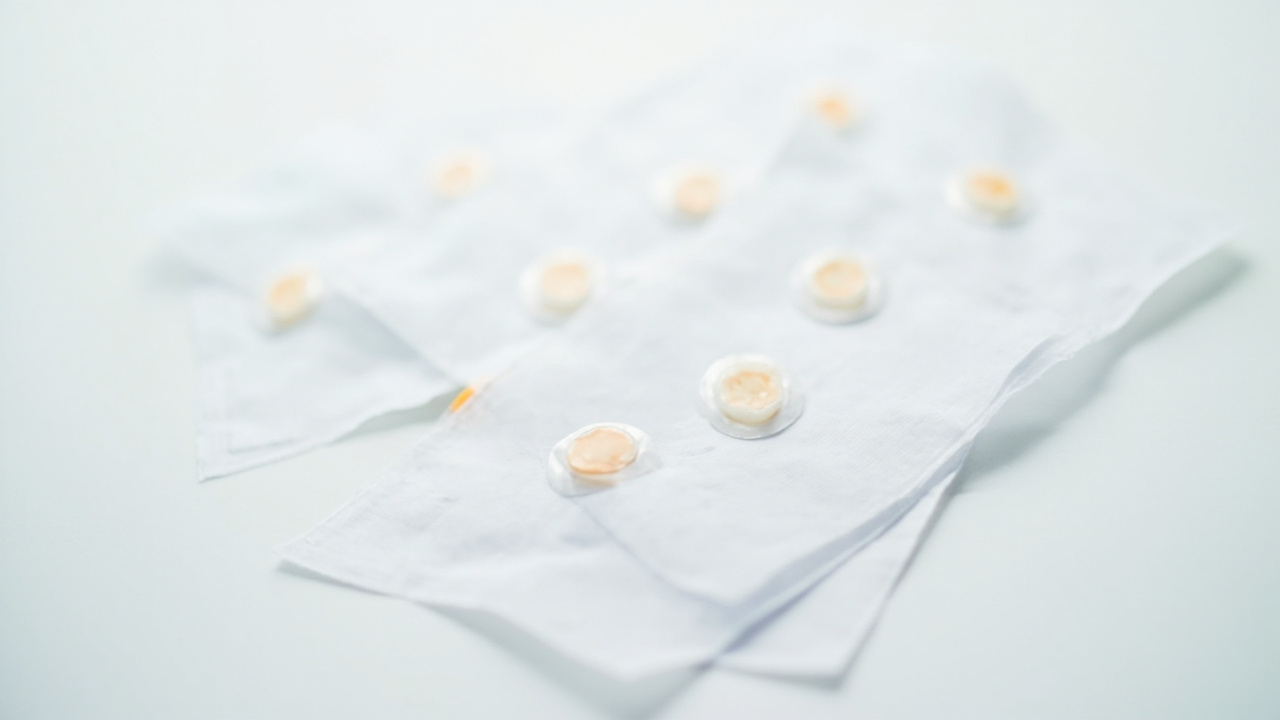
A transdermal pain patch typically consists of several layers: the backing layer, the drug reservoir or matrix, the adhesive layer, and the release liner. The backing layer protects the patch and controls drug release; common materials include polyester, polyethylene, and polyurethane. The drug reservoir holds the active ingredient (e.g., lidocaine, menthol, capsaicin) and may be a matrix system where the drug is dispersed in the adhesive. The adhesive ensures the patch sticks to the skin, while the release liner is removed before application.
Each component must be carefully selected based on the drug’s properties, desired release rate, and skin compatibility. For example, lidocaine patches often use a hydrogel or silicone adhesive to enhance drug delivery and minimize irritation. According to a 2022 study in the Journal of Pharmaceutical Sciences, the choice of adhesive can affect drug permeation by up to 40%. Therefore, OEM manufacturers conduct rigorous testing to optimize each layer for efficacy and safety.
3. What Regulatory Standards Apply to Pain Patch Manufacturing?
Pain relief patches are medical devices or drugs, depending on their classification. In the United States, the FDA regulates them under 21 CFR Part 820 (Quality System Regulation) and often requires 510(k) clearance or NDA approval. Internationally, ISO 13485 is the benchmark for quality management systems, while GMP (Good Manufacturing Practices) ensures consistent production quality. The CE mark is required for the European market, indicating compliance with EU medical device regulations (MDR).
OEM manufacturers must maintain these certifications to assure clients of product safety and efficacy. For example, Kongdy Health holds FDA registration, ISO 13485:2016 certification, and GMP compliance, enabling it to export to over 120 countries. A 2023 industry report by MarketsandMarkets noted that 78% of healthcare brands consider regulatory compliance the top factor when selecting an OEM partner. Thus, verifying a manufacturer’s certifications is crucial before engaging.
4. How Long Does the OEM Development Process Take?
The timeline for developing an OEM pain relief patch varies based on complexity. On average, from concept to commercial production, it takes 6 to 18 months. The process includes:
- Feasibility Study (4-8 weeks): Evaluating formulation, drug stability, and manufacturing feasibility.
- Formulation Development (8-16 weeks): Creating prototypes with different drug concentrations and release profiles.
- Stability Testing (12-24 weeks): Accelerated and real-time stability studies per ICH guidelines.
- Scale-Up and Validation (8-12 weeks): Transferring the process to production-scale equipment and validating three batches.
- Regulatory Submission (12-24 weeks): Preparing and filing necessary documents with health authorities.
For a standard lidocaine patch, the total timeline can be around 12 months. However, expedited programs exist for clients with existing formulations. The key is to partner with an experienced manufacturer that offers project management and transparent communication to keep milestones on track.
5. What Are the Cost Factors in OEM Patch Manufacturing?
Costs in OEM patch manufacturing are influenced by several variables:
- Formulation Complexity: Multi-drug patches or specialized release profiles increase R&D costs.
- Raw Materials: Active pharmaceutical ingredients (APIs) and medical-grade adhesives vary in price. Lidocaine, for example, costs approximately $50-100 per kg (2023 bulk price).
- Manufacturing Scale: Larger batch sizes reduce per-unit costs. Minimum order quantities (MOQs) often range from 10,000 to 100,000 units.
- Packaging and Labeling: Custom packaging, including child-resistant pouches, adds expense.
- Regulatory Fees: FDA 510(k) submission fees are around $5,000-$20,000 (small business fees available).
- Testing: Stability, microbiological, and performance testing can cost $10,000-$50,000 depending on scope.
On average, the total development cost for a new patch can range from $100,000 to $500,000. However, working with a full-service OEM like Kongdy Health can reduce costs through integrated services and economies of scale. A 2021 survey by Pharmaceutical Technology found that 65% of companies reported cost savings of 20-30% when using an OEM provider.
6. How Do I Choose the Right OEM Partner?
Selecting an OEM manufacturer for pain relief patches requires careful evaluation. Key criteria include:
- Certifications: Ensure the manufacturer holds FDA registration, ISO 13485, and GMP compliance. Check for CE marking if targeting Europe.
- Experience: Look for a track record in transdermal patches, preferably with similar drug types (e.g., lidocaine, diclofenac).
- Technical Capabilities: Assess their R&D team, equipment (e.g., coating, laminating, die-cutting), and testing labs.
- Quality Systems: Ask about their quality control processes, batch release procedures, and deviation handling.
- Supply Chain: Evaluate their sourcing of raw materials and ability to handle fluctuations in demand.
- Communication: A partner with a dedicated project manager ensures smooth collaboration.
Kongdy Health, for instance, has been manufacturing transdermal patches since 1989, with a state-of-the-art facility in China that produces over 50 million patches annually. Their team of 50+ R&D scientists and engineers can handle complex formulations and provide regulatory support. Visiting the manufacturing site or requesting a virtual audit is recommended before finalizing a partnership.
7. Can I Customize the Patch Design and Packaging?
Absolutely. OEM manufacturing is all about customization. Clients can specify the patch size, shape (e.g., rectangle, oval, or custom die-cut), color, and adhesive type. For example, some brands prefer a transparent patch for aesthetic reasons, while others opt for a flesh-colored patch for discretion. The drug release profile can be tailored to provide immediate relief or sustained action over 12-24 hours.
Packaging is equally customizable. Options include individual pouches, multi-packs, or unit-dose blisters. Branding elements like logos, colors, and product information can be printed on the pouch or included in the carton. Kongdy Health offers turnkey packaging solutions, from design to production, ensuring that the final product aligns with the client’s brand identity. Moreover, they can incorporate child-resistant and senior-friendly features to meet regulatory requirements.
8. What Quality Control Measures Are in Place?
Quality control (QC) in pain patch manufacturing is rigorous to ensure safety, efficacy, and consistency. Key QC tests include:
- Drug Content Uniformity: Verifying that each patch contains the specified amount of active ingredient.
- In Vitro Release Testing: Measuring the drug release rate using USP apparatus (e.g., paddle over disk).
- Adhesion Testing: Assessing peel strength, tack, and shear adhesion to ensure the patch stays on the skin.
- Microbiological Testing: Checking for microbial limits and sterility if required.
- Stability Testing: Long-term and accelerated studies to determine shelf life.
Manufacturers follow ISO 13485 guidelines for quality management, which includes document control, CAPA (Corrective and Preventive Action), and internal audits. For instance, Kongdy Health performs in-process and finished product testing in their GMP-compliant labs, with results reviewed by a qualified person before batch release. They also conduct stability studies per ICH Q1A(R2) to support a 24-36 month shelf life.
9. What Are the Common Challenges in OEM Patch Manufacturing?
Despite the benefits, OEM patch manufacturing comes with challenges. One major issue is drug stability: some APIs degrade when exposed to heat, light, or moisture during production. For example, lidocaine is relatively stable, but other drugs like capsaicin require careful handling. Another challenge is achieving consistent drug release across batches, which can be affected by variations in raw materials or process parameters.
Regulatory hurdles are also common. Different countries have varying requirements; for instance, the FDA requires bioequivalence studies for generic patches, while the EU may require clinical data for novel formulations. Additionally, supply chain disruptions can impact raw material availability, as seen in 2020-2022. To mitigate these risks, it’s essential to work with an OEM that has robust risk management and contingency plans. Kongdy Health, for example, maintains a multi-source supply chain and conducts regular audits of suppliers.
10. How Can I Get Started with an OEM Project?
Starting an OEM pain relief patch project involves several steps. First, define your product requirements: target indication, drug, dosage, release profile, and target market. Then, research potential OEM partners, request quotes, and evaluate their capabilities. Once you select a partner, sign a confidentiality agreement (NDA) and a quality agreement. The manufacturer will then conduct a feasibility study and provide a development proposal with timelines and costs.
During development, regular communication is key. Most OEMs provide project updates and sample batches for testing. After successful development and validation, the manufacturer will produce commercial batches and handle packaging and labeling. Finally, they can assist with regulatory submissions for your target markets. For a seamless experience, choose a partner that offers end-to-end services, from formulation to global logistics.
Frequently Asked Questions
Q1: What is the minimum order quantity (MOQ) for OEM pain relief patches?
The MOQ varies by manufacturer and product complexity. For standard patches, MOQs typically range from 10,000 to 50,000 units per batch. However, some OEMs offer lower MOQs for pilot batches or for clients who require smaller runs for market testing. For example, Kongdy Health can accommodate MOQs as low as 5,000 units for initial orders, scaling up as demand grows. It’s important to discuss MOQ early in the negotiation to align with your budget and inventory strategy.
Q2: How do I ensure my custom lidocaine patch is compliant with FDA regulations?
To ensure FDA compliance, your OEM partner must operate in FDA-registered facilities and follow current Good Manufacturing Practices (cGMP). The patch may require a 510(k) premarket notification if it is substantially equivalent to a predicate device, or a New Drug Application (NDA) if it contains a new active ingredient. Your manufacturer should provide the necessary data for submission, including stability, biocompatibility, and performance testing. Additionally, they should offer regulatory consulting to help you navigate the process. Always verify that the manufacturer has experience with similar FDA submissions.
Q3: Can I use my own formulation for OEM manufacturing?
Yes, many OEM manufacturers accept client-supplied formulations. However, they will need to evaluate the formulation for manufacturability and stability. The manufacturer may suggest modifications to improve process efficiency or product performance. For instance, if your formulation uses a solvent that is not compatible with their equipment, they might recommend an alternative. It’s best to share your formulation under a confidentiality agreement and work collaboratively to optimize it for large-scale production.
Ready to bring your custom pain relief patch to market? Partner with Kongdy Health, a trusted OEM manufacturer with over three decades of expertise. From initial concept to regulatory approval, we provide end-to-end support to ensure your product succeeds. Contact us today to schedule a consultation.