
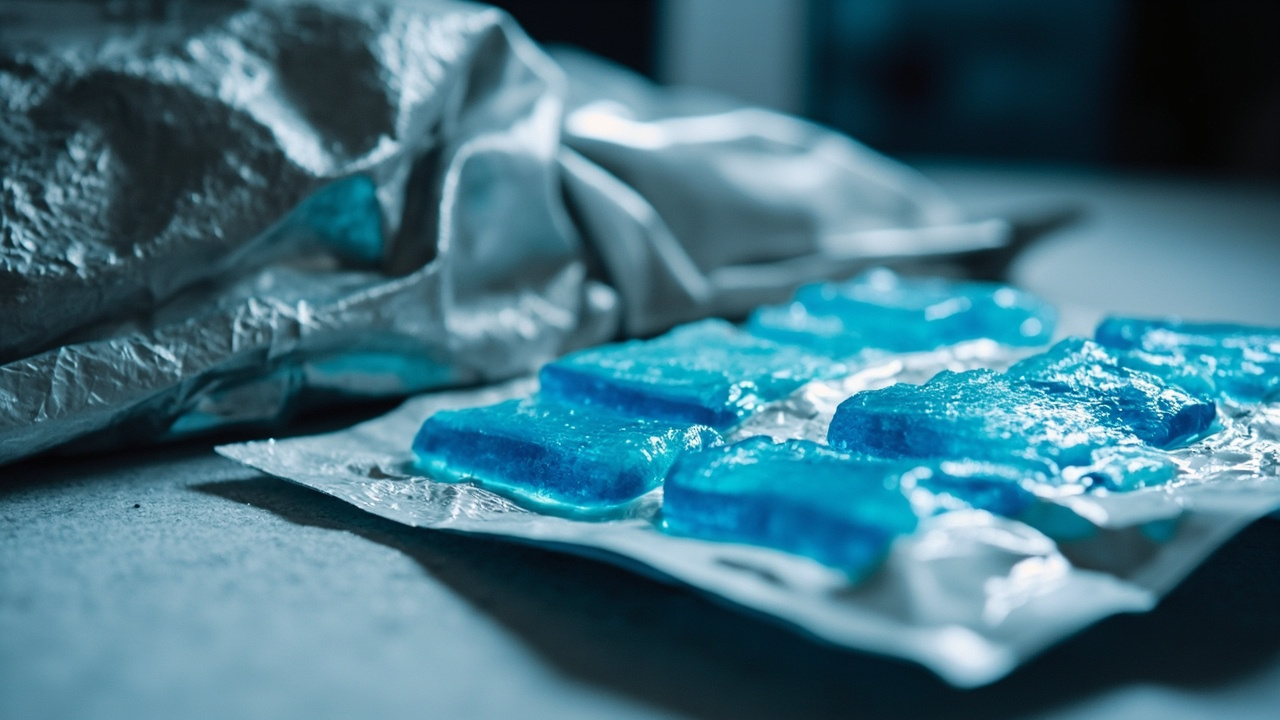
When evaluating cold chain vs ambient patch shipping, the verdict is clear: ambient shipping wins for most transdermal patches, but cold chain is essential for heat-sensitive actives like peptides or certain hormones. This guide breaks down the data, costs, and regulatory considerations so you can make an informed decision for your OEM project.
Key Takeaways
- Understanding Patch Shipping Temperature Requirements
- Cold Chain vs Ambient Shipping: Head-to-Head Comparison
- When Ambient Shipping Wins
- When Cold Chain Is Non-Negotiable
- Choose Ambient If / Choose Cold Chain If
- Cost and MOQ Reality: What to Expect
Key Takeaways
- Ambient shipping is sufficient for most marketed transdermal patches, including nicotine, pain relief, and hormone replacement, due to advances in adhesive and matrix technologies.
- Cold chain is necessary for patches containing sensitive biologics, peptides, or unstable drugs that degrade above 25°C (77°F).
- Cold chain logistics can increase per-unit shipping costs by 50-100% compared to ambient, and often require higher MOQs to justify the setup.
- Regulatory guidelines from the FDA and ICH require stability data to support the chosen shipping conditions; both pathways are acceptable with proper validation.
- Kongdy Health offers both cold chain and ambient shipping options and can prototype both for comparative testing.
Understanding Patch Shipping Temperature Requirements
Transdermal patches are complex drug-device combinations that require careful temperature management throughout their lifecycle. The stability of the active pharmaceutical ingredient (API), the adhesive matrix, and the backing film all influence whether a patch can be shipped at ambient conditions or requires cold chain logistics. According to the International Council for Harmonisation (ICH) Q1A(R2) guidelines, stability testing should consider the climatic zones where the product will be distributed. For most patches, the critical threshold is 25°C (77°F) for long-term storage, with excursions up to 30°C (86°F) permitted for short periods. However, some APIs, particularly peptides and certain hormones, degrade rapidly above 2-8°C, necessitating cold chain.
The global transdermal patch market was valued at approximately $7.9 billion in 2022 and is projected to grow at a CAGR of 6.5% through 2030 (Grand View Research, 2023). As the market expands, manufacturers face increasing pressure to optimize shipping conditions to reduce costs and improve access. Ambient shipping has gained traction due to its lower cost and simpler logistics, but cold chain remains indispensable for certain high-value products. Understanding the specific requirements of your patch is the first step in choosing the right shipping strategy.
Regulatory bodies such as the FDA and EMA require comprehensive stability data to support the proposed shipping and storage conditions. ISO 13485 certification further mandates that manufacturers establish and maintain processes for storage and distribution that ensure product conformity. Kongdy Health, with its ISO 13485 and GMP certifications, provides both ambient and cold chain solutions, backed by rigorous stability testing.
Cold Chain vs Ambient Shipping: Head-to-Head Comparison
To make an informed decision, it’s essential to compare cold chain and ambient shipping across key parameters. The table below summarizes the differences based on industry data and Kongdy Health’s experience serving over 120 countries.
| Parameter | Ambient Shipping | Cold Chain Shipping |
|---|---|---|
| Temperature Range | 15-25°C (59-77°F) with excursions to 30°C | 2-8°C (36-46°F) controlled |
| Typical Patch Types | Nicotine, pain relief (lidocaine, diclofenac), hormone replacement (estradiol), scopolamine | Peptides, proteins, some hormones (e.g., testosterone), vaccines, biologics |
| Stability Data Required | ICH Q1A(R2) Zone IVb (30°C/75% RH) for hot/humid climates | ICH Q1A(R2) Zone I/II (5°C ± 3°C) for cold storage |
| Per-Unit Shipping Cost (indicative) | $0.10 – $0.30 per patch (bulk) | $0.20 – $0.60 per patch (bulk), plus cold chain packaging |
| MOQ (typical) | 50,000 – 100,000 patches | 100,000 – 200,000 patches (to absorb cold chain setup) |
| Lead Time | 4-6 weeks | 6-8 weeks (additional time for cold chain validation) |
| Regulatory Path | Standard ANDA/NDA or 510(k) with ambient stability data | Additional cold chain validation documentation required |
Note: Costs and MOQs are indicative and vary based on order volume, destination, and patch complexity. Cold chain shipping often requires insulated packaging, gel packs, and temperature data loggers, adding to the cost. However, for sensitive APIs, the investment is necessary to ensure product efficacy and safety.
When Ambient Shipping Wins
Ambient shipping is the preferred choice for the majority of transdermal patches on the market. Advances in adhesive technology and matrix design have enabled many APIs to remain stable at room temperature. For example, nicotine patches, which are among the most widely used transdermal products, are typically stable at 15-30°C. Similarly, pain relief patches containing lidocaine or diclofenac are formulated to withstand ambient conditions. Hormone replacement patches with estradiol also generally require only ambient storage. According to a 2021 industry survey, over 70% of transdermal patches are shipped at ambient temperatures, reflecting the industry’s shift toward cost-effective logistics.
Ambient shipping offers significant advantages: lower costs, simpler logistics, and reduced environmental impact. It eliminates the need for insulated packaging, gel packs, and temperature-controlled vehicles. For markets with moderate climates, ambient shipping is often sufficient, provided that stability data supports it. However, for hot and humid climates (ICH Zone IVb), additional testing at 30°C/75% RH is required to ensure product quality throughout shelf life. Kongdy Health conducts such testing to support ambient shipping for its clients.
When Cold Chain Is Non-Negotiable
Cold chain shipping is essential for patches containing sensitive active ingredients that degrade at room temperature. Peptide-based patches, such as those delivering insulin or GLP-1 agonists, are prime examples. These biologics are unstable above 8°C and require strict cold chain from manufacturing to patient use. Certain hormones, like testosterone, also require cold chain due to their susceptibility to temperature fluctuations. Additionally, patches containing live attenuated vaccines or other biologics necessitate cold chain to maintain potency.
The cost of cold chain shipping is justified by the high value of these products and the risk of losing efficacy. For instance, a peptide patch may cost $5-$10 per unit to manufacture, and a cold chain failure could result in complete loss of a shipment. Regulatory agencies require rigorous validation of cold chain processes, including temperature mapping, qualification of shipping lanes, and use of data loggers. Kongdy Health provides end-to-end cold chain solutions, including validated packaging and real-time monitoring, ensuring compliance with FDA and EU GDP requirements.
Choose Ambient If / Choose Cold Chain If
To simplify your decision, here are the key criteria for each option:
- Choose ambient shipping if:
- Your API is stable at 25°C/60% RH or 30°C/75% RH for at least 24 months.
- Your target markets have moderate climates or you have conducted Zone IVb testing.
- You are cost-sensitive and want to minimize logistics complexity.
- Your patch is based on well-established APIs like nicotine, lidocaine, or estradiol.
- Your order volume is below 100,000 units, making cold chain setup uneconomical.
- Choose cold chain if:
- Your API is a peptide, protein, biologic, or sensitive hormone that degrades above 8°C.
- Your product requires storage at 2-8°C per regulatory labeling.
- You are targeting markets with extreme heat or unreliable infrastructure.
- You have a high-value product where efficacy loss is unacceptable.
- You can commit to higher MOQs (100,000+ units) to absorb cold chain costs.
Cost and MOQ Reality: What to Expect
Cost is a major factor in the cold chain vs ambient decision. For ambient shipping, per-unit logistics costs typically range from $0.10 to $0.30 for bulk orders, depending on volume and destination. Cold chain shipping, on the other hand, can cost $0.20 to $0.60 per patch, plus expenses for insulated packaging, gel packs, and temperature monitoring. These figures are indicative and vary with order size and route. For small orders, cold chain may not be feasible due to the high fixed costs of validation and packaging.
Minimum order quantities (MOQs) also differ. Ambient shipping generally allows MOQs as low as 50,000 patches, making it accessible for smaller brands. Cold chain typically requires MOQs of 100,000 to 200,000 patches to justify the investment in validated shippers and temperature-controlled logistics. Kongdy Health works with clients to determine the optimal MOQ based on their product and market. For clients unsure which path to take, Kongdy offers prototyping of both options, allowing comparative stability testing and cost analysis.
Regulatory and Quality Considerations
Both cold chain and ambient shipping must comply with regulatory standards. The FDA’s Current Good Manufacturing Practice (cGMP) regulations (21 CFR Parts 210 and 211) require that drug products be stored and shipped under conditions that ensure stability. The ICH Q1A(R2) stability testing guidelines provide the framework for selecting storage conditions. For cold chain, additional guidance from the WHO and the Parenteral Drug Association (PDA) covers temperature-controlled logistics. ISO 13485 certification, which Kongdy Health holds, ensures that quality management systems cover distribution processes.
Documentation is critical. For ambient shipping, stability data at 25°C/60% RH and 30°C/75% RH (for Zone IVb) must be included in the regulatory submission. For cold chain, you need data at 5°C ± 3°C, plus evidence of temperature control during shipping. Both pathways require validation of shipping lanes and use of qualified packaging. Kongdy Health provides comprehensive documentation to support regulatory filings in the US, EU, and other markets.
Frequently Asked Questions
Q1: Can all transdermal patches be shipped at ambient temperature?
No, not all patches can be shipped at ambient temperature. While many patches, such as those for nicotine or pain relief, are stable at room temperature, patches containing sensitive APIs like peptides, proteins, or certain hormones require cold chain. The stability of each patch depends on its formulation and the climatic conditions of the destination. It is essential to conduct stability testing per ICH guidelines to determine the appropriate shipping conditions. Kongdy Health can assist in evaluating your patch and recommending the best shipping strategy.
Q2: What are the typical cost differences between cold chain and ambient shipping?
Cold chain shipping typically costs 50-100% more per unit than ambient shipping due to the need for insulated packaging, temperature control, and monitoring. For bulk orders, ambient shipping may cost $0.10-$0.30 per patch, while cold chain can range from $0.20-$0.60 per patch. These are indicative ranges, and actual costs depend on volume, destination, and product specifics. Additionally, cold chain often requires higher MOQs to justify the setup. A detailed cost analysis should be part of your decision-making process.
Q3: How does Kongdy Health support both shipping options?
Kongdy Health has over 36 years of experience in transdermal patch manufacturing and offers both ambient and cold chain shipping solutions. With FDA, ISO 13485, and GMP certifications, Kongdy ensures that all shipping processes meet regulatory requirements. The company provides stability testing, validation of shipping lanes, and documentation for regulatory submissions. For clients unsure which option is best, Kongdy offers prototyping of both cold chain and ambient versions, allowing side-by-side comparison. This service helps clients make data-driven decisions and optimize their supply chain.
Sources
- Grand View Research – Transdermal Patch Market Report
- FDA – Guidance Documents
- ICH – Quality Guidelines (Q1A(R2) Stability Testing)
- ISO 13485:2016 – Medical Devices Quality Management
Ready to optimize your patch shipping strategy? Contact Kongdy Health to request prototyping of both cold chain and ambient options for your next project.
Related reading
Comparing suppliers? Send us your specification.
Tell us the product, quantity and target market. You will get pricing, MOQ and lead time within 12 hours — no obligation, NDA available.
MOQ 10,000 pcs · Samples 7–10 days · Factory since 1989 · FDA · ISO 13485 · CE · GMP · 120+ countries
Send Us Your Inquiry
Tell us your requirements — we usually respond with a preliminary quotation and sampling plan within 12 hours.
2 thoughts on “Cold Chain vs Ambient Patch Shipping: Which Wins?”
Comments are closed.