
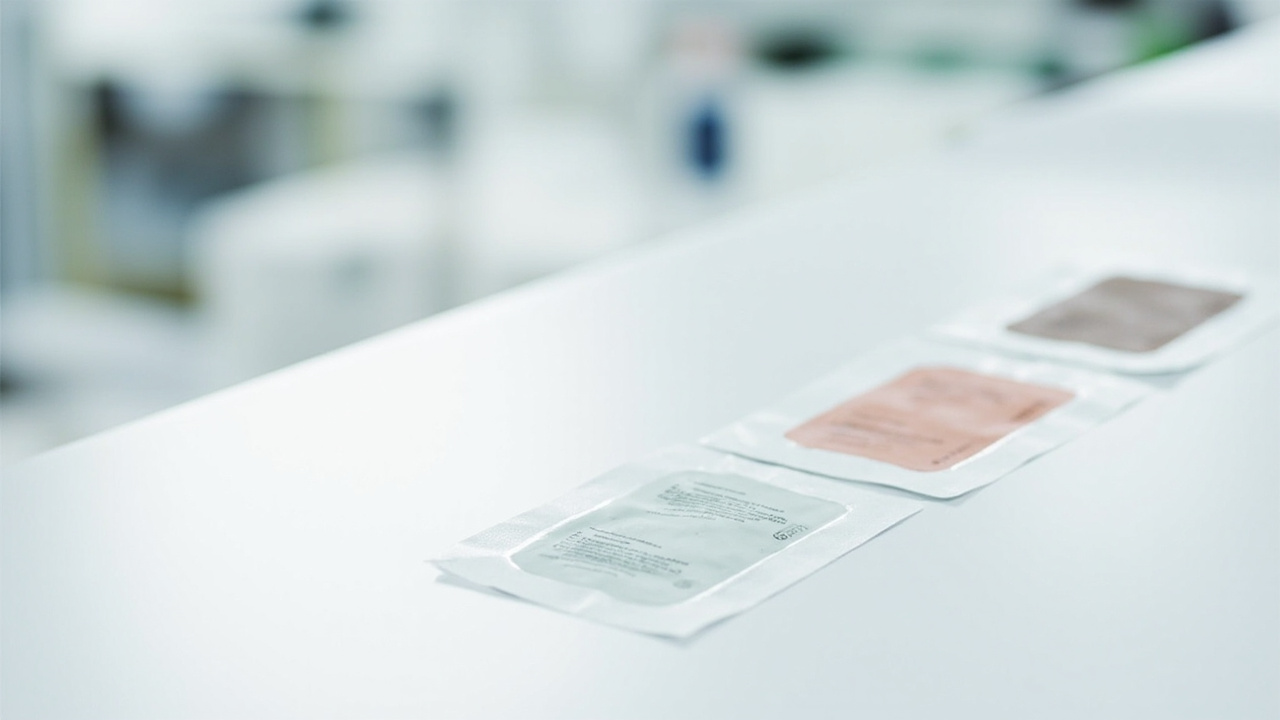
To register a topical patch in Japan, you must obtain a Marketing Authorization (MA) from the Pharmaceuticals and Medical Devices Agency (PMDA) under the Pharmaceuticals and Medical Devices Act (PMD Act). This requires a Japanese Marketing Authorization Holder (MAH), submission of a J-CTD dossier, and compliance with J-GMP. Typical registration fees range from $50,000 to $200,000, and timelines span 12–24 months. This guide provides a data-driven roadmap for OEMs and brand owners entering the Japan patch market.
Key Takeaways
- Understanding the Japan Topical Patch Market
- PMDA Registration Requirements for Topical Patches
- Step-by-Step PMDA Registration Process
- Costs and Timelines: What to Budget
- Common Pitfalls and How to Avoid Them
- How Kongdy Health Supports Your PMDA Registration
Key Takeaways
- PMDA registration for topical patches requires a Japanese MAH and J-CTD dossier, with typical fees of $50,000–$200,000 and timelines of 12–24 months.
- The Japan topical patch market is projected to grow at a CAGR of 5.2% from 2023 to 2030, driven by an aging population and demand for pain management and nicotine replacement patches.
- Compliance with J-GMP (Japanese Good Manufacturing Practice) is mandatory; ISO 13485 certification alone is insufficient for PMDA approval.
- OEM partnerships with experienced manufacturers like Kongdy Health can streamline documentation and reduce time-to-market by 6–12 months.
- Post-market surveillance and periodic PMDA audits are ongoing requirements; failure to comply can lead to license revocation.
Understanding the Japan Topical Patch Market
Japan is the world’s third-largest pharmaceutical market, valued at approximately $95 billion in 2023 (IQVIA). Within this, the topical patch segment is significant, with the Japan topical patch market estimated at $1.8 billion in 2023 and projected to reach $2.7 billion by 2030, growing at a CAGR of 5.2% (Grand View Research). This growth is fueled by an aging population (29% over 65 as of 2023) and a high prevalence of chronic pain and inflammatory conditions.
The market is dominated by prescription patches for pain management (e.g., lidocaine, ketoprofen) and over-the-counter (OTC) patches for muscle aches and nicotine replacement. Recent trends show increasing demand for transdermal patches for systemic delivery, such as rivastigmine for Alzheimer’s and fentanyl for pain. For OEMs, this presents opportunities in both generic and innovative patch development, but success hinges on navigating PMDA’s rigorous regulatory pathway.
Understanding the regulatory landscape is crucial. The PMD Act classifies patches as either pharmaceuticals or quasi-drugs, depending on their ingredients and claims. This classification determines the registration route, fees, and timeline. In the following sections, we break down the requirements, costs, and timelines to help you plan your market entry.
PMDA Registration Requirements for Topical Patches
Registering a topical patch with PMDA involves several key requirements. First, you must appoint a Japanese MAH who holds the license to market the product. The MAH is responsible for ensuring compliance with PMD Act and J-GMP. Second, you must submit a J-CTD dossier, which includes quality, safety, and efficacy data. For patches, this often requires bioequivalence studies if claiming equivalence to a reference product.
Third, manufacturing facilities must comply with J-GMP, which is aligned with PIC/S and ICH guidelines. This requires an on-site inspection by PMDA or a registered certification body. Fourth, labeling and packaging must be in Japanese and meet PMDA’s requirements for patient information. Finally, post-market surveillance (PMS) and periodic safety update reports (PSURs) are mandatory.
To help you visualize the process, here is a checklist table summarizing the key requirements, issuers, timelines, costs, and risks:
| Requirement | Issued by | Timeline | Indicative cost | Risk if missing |
|---|---|---|---|---|
| Marketing Authorization Holder (MAH) appointment | MAH (Japanese entity) | 1–2 months | $10,000–$30,000 (legal fees) | Application rejected |
| J-CTD dossier preparation | Sponsor/MAH | 6–12 months | $50,000–$150,000 | Refuse to file |
| J-GMP certification | PMDA or registered body | 3–6 months | $20,000–$50,000 | Product recall, license denial |
| Bioequivalence study (if applicable) | CRO | 6–9 months | $100,000–$300,000 | Non-approval |
| Labeling and packaging review | PMDA | 1–2 months | $5,000–$15,000 | Delay in approval |
| Post-market surveillance system | MAH | Ongoing | $10,000–$20,000 annually | License revocation |
These figures are indicative and vary based on product complexity. For a generic patch, the total cost can range from $150,000 to $300,000, while an innovative patch may exceed $500,000. Timelines are similarly variable, with simple generics taking 12–18 months and novel products 24–36 months.
Step-by-Step PMDA Registration Process
Navigating the PMDA registration process requires careful planning. Below is a numbered list outlining the key steps, from initial preparation to post-market compliance.
- Appoint a Japanese MAH: Engage a licensed MAH who will act as the legal representative. This entity must have a office in Japan and a qualified responsible person.
- Determine product classification: Confirm whether your patch is a pharmaceutical or quasi-drug. This affects the application route and data requirements.
- Prepare J-CTD dossier: Compile Module 1 (administrative), Module 2 (summaries), Module 3 (quality), Module 4 (nonclinical), and Module 5 (clinical). For patches, ensure stability data and manufacturing details are included.
- Conduct bioequivalence studies (if needed): If your patch is a generic, you must demonstrate bioequivalence to the reference product through a clinical study.
- Implement J-GMP: Ensure your manufacturing site complies with J-GMP. Schedule a PMDA inspection or obtain certification from a recognized body.
- Submit application to PMDA: File the J-CTD and pay the application fee. PMDA will conduct a completeness check and begin review.
- Respond to PMDA queries: PMDA may request additional data or clarifications. Respond promptly to avoid delays.
- Obtain approval: Once PMDA approves, the MAH receives the marketing license. You can then launch the product.
- Implement post-market surveillance: Establish a system for adverse event reporting and periodic safety updates.
Each step involves specific documentation and interactions with PMDA. For example, the J-CTD dossier must include a Certificate of Free Sale from the country of origin, ISO 13485 certificate with scope covering the patch, and a CE Declaration of Conformity if applicable. These documents demonstrate that the product meets international standards and facilitate the review process.
Costs and Timelines: What to Budget
Budgeting for PMDA registration requires understanding the various cost components. Application fees alone range from $10,000 to $30,000, depending on the product type. However, the total cost includes dossier preparation, bioequivalence studies, GMP certification, and MAH fees. For a generic patch, expect total costs of $150,000–$300,000; for an innovative patch, $500,000–$1,000,000.
Timelines are equally important. A typical generic patch registration takes 12–18 months from dossier submission to approval, while an innovative patch may take 24–36 months. Factors that can extend timelines include incomplete dossiers, PMDA queries, and inspection delays. Engaging experienced consultants and OEM partners can help mitigate these risks.
It’s also worth noting that PMDA offers priority review for certain products, such as those addressing unmet medical needs. This can reduce review time to 9 months, but eligibility is limited. For most OEMs, standard review is the norm.
Common Pitfalls and How to Avoid Them
Many applicants stumble on PMDA registration due to avoidable mistakes. One common pitfall is insufficient stability data. PMDA requires real-time stability data for the proposed shelf life, which can take 12–24 months to generate. Starting stability studies early is crucial.
Another pitfall is inadequate GMP compliance. Some manufacturers assume ISO 13485 certification is sufficient, but J-GMP has additional requirements, such as validation of manufacturing processes and rigorous documentation. A pre-inspection gap assessment can identify and address deficiencies.
Additionally, labeling errors can cause significant delays. Japanese labeling requirements are strict, including specific wording for indications, dosage, and warnings. Working with a translation vendor experienced in pharmaceutical labeling is essential. Finally, failing to establish a robust post-market surveillance system can lead to compliance issues after approval. MAHs must have a system for collecting and reporting adverse events, and PMDA conducts periodic audits.
How Kongdy Health Supports Your PMDA Registration
As a leading OEM/ODM transdermal patch manufacturer with over 36 years of experience, Kongdy Health provides end-to-end support for PMDA registration. Our facilities are ISO 13485 certified and GMP compliant, and we have a proven track record of supplying patches to regulated markets worldwide. We assist with dossier preparation, including stability studies and bioequivalence support, and can connect you with trusted Japanese MAHs.
Our team understands the nuances of J-GMP and can help you prepare for PMDA inspections. We also offer flexible manufacturing scales, from pilot batches to commercial production, ensuring a smooth transition from registration to launch. By partnering with Kongdy Health, you can reduce time-to-market by 6–12 months and avoid costly mistakes.
Ready to enter the Japan patch market? Contact Kongdy Health to discuss your OEM/ODM needs and get a customized regulatory roadmap.
Frequently Asked Questions
What is the difference between PMDA and MHLW?
PMDA is the regulatory agency that reviews applications and conducts inspections, while MHLW (Ministry of Health, Labour and Welfare) grants the final marketing authorization. PMDA provides scientific advice and review reports to MHLW, which then issues the approval. For applicants, this means interacting primarily with PMDA during the review process, but the final license is issued by MHLW.
Can foreign manufacturers apply directly for PMDA registration?
No, foreign manufacturers cannot apply directly. They must appoint a Japanese MAH who holds the marketing license. The MAH is responsible for the application and post-market compliance. Foreign manufacturers can still own the product and collaborate with the MAH through contractual agreements. It’s essential to choose an MAH with experience in your product category.
How long does J-GMP certification take?
J-GMP certification typically takes 3–6 months from application to inspection and issuance. This includes document review, on-site inspection, and corrective actions if needed. The timeline can be shorter if the facility already holds PIC/S-compliant certifications. However, PMDA may still conduct its own inspection for high-risk products. Early preparation is key to avoiding delays.
Sources
- Grand View Research – Topical Patches Market Report
- PMDA – Pharmaceuticals and Medical Devices Agency
- ISO 13485 – Medical Devices Quality Management
- IQVIA – Pharmaceutical Market Data
Related reading
Comparing suppliers? Send us your specification.
Tell us the product, quantity and target market. You will get pricing, MOQ and lead time within 12 hours — no obligation, NDA available.
MOQ 10,000 pcs · Samples 7–10 days · Factory since 1989 · FDA · ISO 13485 · CE · GMP · 120+ countries
Send Us Your Inquiry
Tell us your requirements — we usually respond with a preliminary quotation and sampling plan within 12 hours.