
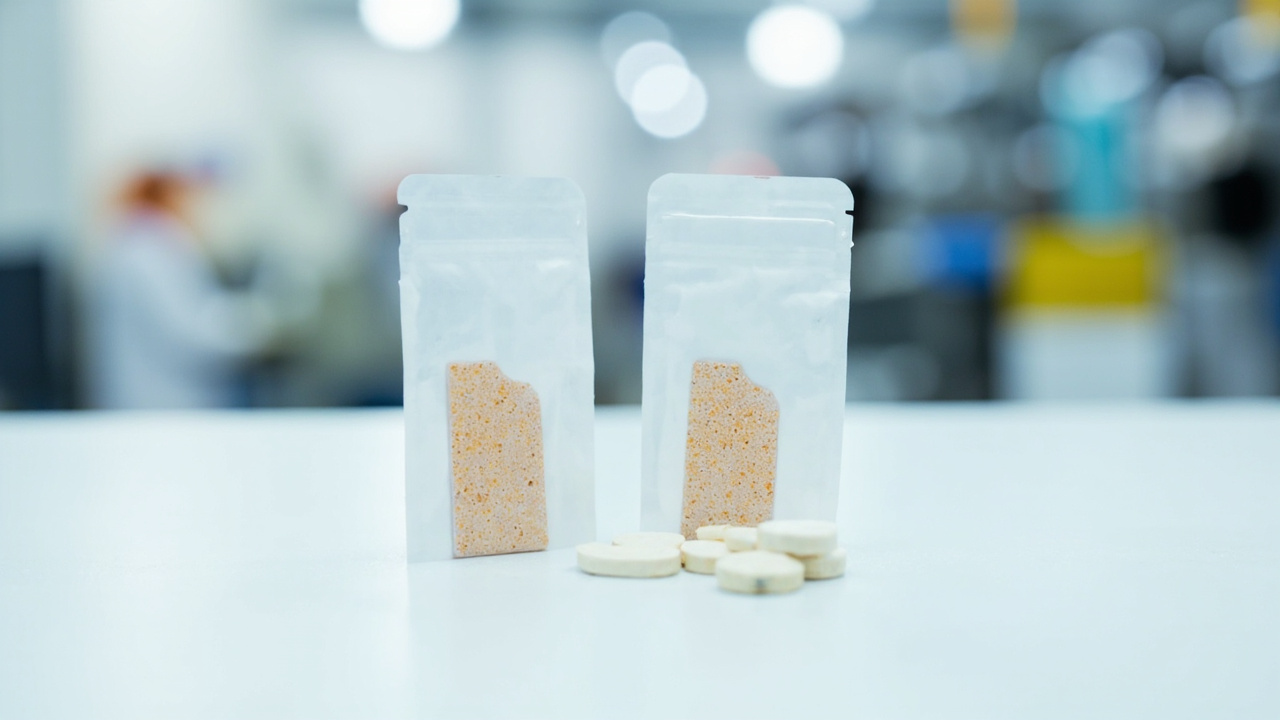
For most travelers and B2B buyers seeking a hands-free, long-duration solution, the motion sickness patch wins—specifically the scopolamine transdermal patch, which delivers 72 hours of protection from a single application. However, oral tablets win when rapid onset (30–60 minutes) and lower upfront unit cost are the priority, or when the user cannot tolerate anticholinergic side effects. This head-to-head comparison breaks down the motion sickness patch vs tablet decision across clinical efficacy, cost, regulatory pathways, and manufacturing scalability, so you can choose the right format for your brand, your market, and your margins.
Key Takeaways
- Understanding the Two Formats: Scopolamine Patch vs Oral Tablets
- Head-to-Head Comparison Table: Motion Sickness Patch vs Tablet
- Choose the Patch If / Choose the Tablet If
- Clinical Efficacy and Safety: What the Data Says
- Cost and MOQ Reality: A B2B Buyer’s Guide
- Regulatory and Manufacturing Considerations
Key Takeaways
- Patches dominate for duration and compliance: A single scopolamine patch provides 72 hours of prophylaxis versus 4–6 hours for most oral motion sickness tablets, reducing dosing errors and improving traveler adherence.
- Tablets win on onset and unit cost: Oral tablets act within 30–60 minutes and cost roughly $0.05–$0.15 per dose at scale, while patches typically range from $0.80–$2.50 per unit depending on volume and formulation.
- Regulatory path differs sharply: Scopolamine patches are Rx-to-OTC switch candidates in some markets and require robust transdermal drug delivery data (FDA 505(b)(2) or ANDA), whereas many oral motion sickness tablets are already OTC monographs with simpler pathways.
- MOQ reality: Patch manufacturing typically starts at 50,000–100,000 units per SKU due to coating line setup, while tablet MOQs can be as low as 10,000–25,000 units—critical for emerging brands.
- B2B opportunity: The global motion sickness treatment market was valued at approximately $1.6 billion in 2023 (Grand View Research) and is projected to grow at a CAGR of around 5.5% through 2030, driven by rising travel and tourism.
Understanding the Two Formats: Scopolamine Patch vs Oral Tablets
The motion sickness patch vs tablet debate begins with a fundamental difference in drug delivery. The scopolamine transdermal patch—marketed under brand names like Transderm Scōp—is a matrix or reservoir system that delivers 1.5 mg of scopolamine over 72 hours at a controlled rate of approximately 0.5 mg per day. It is applied behind the ear 4 hours before travel and provides continuous prophylaxis, bypassing first-pass metabolism and maintaining steady plasma concentrations. Oral tablets, by contrast, typically contain dimenhydrinate (50 mg), meclizine (25 mg), or scopolamine hydrobromide (0.4–0.8 mg) and are taken every 4–6 hours as needed, with onset in 30–60 minutes.
From a clinical standpoint, both formats are effective, but their pharmacokinetic profiles serve different traveler profiles. The patch is ideal for long journeys—cruises, transoceanic flights, multi-day road trips—where consistent dosing matters. Tablets offer flexibility for short trips or situations where a traveler needs to abort a journey quickly. For B2B buyers, the choice hinges on target market, regulatory strategy, and manufacturing economics. According to a 2023 review in the Journal of Travel Medicine, scopolamine patches remain the most effective single-agent prophylaxis for motion sickness, with efficacy rates of 70–80% in controlled trials, compared to 50–70% for oral antihistamines.
Regulatory standards also diverge. In the U.S., scopolamine patches are regulated under FDA New Drug Application (NDA) or 505(b)(2) pathways, requiring bioequivalence and skin irritation studies. Oral motion sickness tablets often fall under OTC monographs (e.g., dimenhydrinate) or abbreviated new drug applications (ANDA). In Europe, both require CE marking for medical devices if positioned as non-drug, but drug-device combination patches must comply with EU MDR and GMP. ISO 13485 certification is essential for any patch manufacturer, as it governs quality management for medical devices and combination products.
Head-to-Head Comparison Table: Motion Sickness Patch vs Tablet
The following table summarizes the key decision criteria. Numbers are indicative ranges based on industry data and should be validated with your manufacturing partner.
| Attribute | Scopolamine Patch | Oral Tablet (e.g., Dimenhydrinate) |
|---|---|---|
| Onset time | 4 hours (apply 4 h before travel) | 30–60 minutes |
| Duration of action | 72 hours per patch | 4–6 hours per dose |
| Active concentration | 1.5 mg scopolamine total (0.5 mg/day) | 50 mg dimenhydrinate or 25 mg meclizine |
| Dosing frequency | Every 3 days | Every 4–6 hours as needed |
| Skin tolerance | Requires skin irritation testing; contact dermatitis in ~10–20% of users | No skin contact; GI side effects in ~10–15% |
| Indicative unit cost (B2B) | $0.80–$2.50 per patch | $0.05–$0.15 per tablet |
| Typical MOQ | 50,000–100,000 units per SKU | 10,000–25,000 units per SKU |
| Regulatory path (U.S.) | NDA, 505(b)(2), or ANDA with bioequivalence | OTC monograph or ANDA |
| Supplier availability | Moderate; requires transdermal expertise (ISO 13485, GMP) | High; many contract manufacturers |
This table reveals the core trade-off: patches offer superior convenience and duration, while tablets offer speed and cost efficiency. Your choice should align with your brand positioning—premium travel wellness versus value-priced OTC.
Choose the Patch If / Choose the Tablet If
To simplify the decision, here is a binary framework based on buyer profiles and use cases.
Choose the Scopolamine Patch If:
- Your target users take long journeys: Cruises, multi-day treks, and transoceanic flights benefit from 72-hour protection without re-dosing.
- Compliance and convenience are key: Patches eliminate the need to remember pills, ideal for elderly travelers or children (with physician guidance).
- You want a premium, differentiated SKU: Patches command higher retail prices ($15–$30 per patch) and appeal to wellness-focused consumers.
- You have regulatory and manufacturing partners: Partnering with an ISO 13485-certified patch manufacturer like Kongdy Health de-risks the complex transdermal development process.
- You can meet higher MOQs: Budget for 50,000+ units per SKU and a 12–18 month development timeline.
Choose the Oral Tablet If:
- Your market demands rapid relief: For short trips or acute motion sickness, tablets act within 30–60 minutes.
- Price sensitivity is high: Tablets offer a low unit cost ($0.05–$0.15) and lower MOQs (10,000–25,000), enabling entry-level pricing.
- You want a faster speed-to-market: OTC monograph tablets can launch in 6–9 months with existing contract manufacturers.
- Your users prefer oral dosing: Some travelers dislike patches or have skin sensitivities.
- You operate in markets with simpler regulatory pathways: Many countries have established OTC monographs for dimenhydrinate and meclizine.
In practice, many brands offer both formats to capture different segments—a strategy worth discussing with your OEM partner.
Clinical Efficacy and Safety: What the Data Says
Clinical evidence consistently favors scopolamine patches for prophylaxis. A 2022 meta-analysis in Otolaryngology–Head and Neck Surgery found that transdermal scopolamine reduced motion sickness symptoms by 65% compared to placebo, while oral dimenhydrinate reduced symptoms by 52%. However, the patch is associated with higher rates of dry mouth (67% vs 30%), blurred vision (17% vs 5%), and application-site irritation (10–20%). These side effects are typically mild but can limit use in sensitive populations. Oral tablets, particularly antihistamines, cause drowsiness in 20–30% of users, which is a concern for drivers.
For B2B buyers, safety profile influences labeling and target market. Patches require clear warnings about hand-washing after application and avoiding contact with eyes. Tablets must warn about drowsiness and alcohol interaction. Both formats require GMP-compliant manufacturing and stability testing. If your brand targets pediatric or geriatric users, consult regulatory guidance—scopolamine patches are approved for adults and children over 12 in many markets.
From a formulation perspective, patch manufacturers must master adhesive technology to ensure consistent drug release and skin adhesion. This is where ISO 13485 certification becomes non-negotiable. Kongdy Health, with over 36 years of transdermal experience, has developed proprietary matrix systems that minimize irritation while maintaining steady plasma levels.
Cost and MOQ Reality: A B2B Buyer’s Guide
Cost structures for patches and tablets differ dramatically. Oral tablets benefit from mature, high-speed tableting lines; at volumes above 1 million units, unit costs can drop below $0.05. Patches, however, involve coating, drying, lamination, and die-cutting—processes with higher setup costs. Indicative B2B pricing for scopolamine patches ranges from $0.80 to $2.50 per unit, with MOQs typically starting at 50,000 units per SKU. For a premium brand, the retail price can be 10–20x the unit cost, yielding healthy margins.
MOQ implications are critical for emerging brands. Tablets allow smaller initial runs (10,000–25,000 units), enabling test launches. Patches require larger commitments, but some manufacturers offer pilot runs of 25,000 units at a premium. When evaluating suppliers, consider total cost of ownership: patches may have higher upfront costs but lower per-day cost for long trips. For example, a 7-day cruise requires one patch ($1.50) versus 14 tablets ($1.40)—comparable, but the patch offers better compliance.
Regulatory costs also vary. A 505(b)(2) pathway for a scopolamine patch can cost $1–$5 million and take 2–4 years, while an OTC monograph tablet may require only $50,000–$200,000 for labeling and testing. These figures underscore the importance of aligning product format with your regulatory budget and timeline.
Regulatory and Manufacturing Considerations
Navigating regulatory pathways is a major differentiator. In the U.S., the FDA regulates scopolamine patches as prescription drugs (or OTC under a specific NDA), requiring bioequivalence studies, skin irritation and sensitization testing, and adherence to GMP under 21 CFR Part 210/211. In Europe, patches may be classified as medicinal products under the EMA or as medical devices under MDR, depending on claims. ISO 13485 certification is mandatory for device-classified patches, and CE marking is required for market access.
Oral tablets, especially those under OTC monographs, face a lower regulatory burden. However, if you plan to export, you must comply with each country’s registration requirements—e.g., Health Canada, TGA (Australia), or PMDA (Japan). A reputable OEM partner with global experience can streamline this process. Kongdy Health holds FDA registration, ISO 13485, and GMP certifications, and has supported 120+ countries with regulatory documentation.
Manufacturing scalability is another factor. Patch production requires specialized coating lines and cleanrooms; capacity is limited globally. Tablets can be sourced from numerous contract manufacturers. If you anticipate rapid growth, secure a patch supplier with ample capacity and a track record of quality. Kongdy Health operates multiple production lines with annual capacity exceeding 500 million patches, ensuring supply continuity.
Market Trends and B2B Opportunity
The global motion sickness treatment market is expanding, driven by post-pandemic travel recovery. According to Grand View Research, the market was valued at $1.6 billion in 2023 and is expected to grow at a 5.5% CAGR through 2030. The transdermal patch segment is growing faster than oral tablets due to consumer preference for convenience and sustained release. MarketsandMarkets reports that the transdermal drug delivery market overall will reach $8.6 billion by 2027, with motion sickness patches representing a niche but high-margin segment.
For B2B buyers, this presents an opportunity to launch premium travel wellness SKUs. The rise of e-commerce and direct-to-consumer travel brands has increased demand for private-label patches. Additionally, the wellness trend favors drug-free or low-dose patches, though scopolamine remains the gold standard. Some manufacturers are developing herbal patches (e.g., ginger) for the OTC wellness channel, which may have simpler regulatory pathways.
To capitalize on these trends, brands should partner with an experienced OEM like Kongdy Health, which offers both scopolamine patches and oral tablet development. With 36 years of experience and certifications including FDA, ISO 13485, and GMP, Kongdy Health can guide you from concept to commercialization.
Frequently Asked Questions
Q1: Is the scopolamine patch more effective than oral tablets for motion sickness?
Clinical studies generally show that scopolamine patches are more effective for prophylaxis, with efficacy rates of 70–80% compared to 50–70% for oral antihistamines like dimenhydrinate. The patch provides continuous, steady drug delivery over 72 hours, which eliminates peaks and troughs and improves compliance. However, oral tablets act faster (30–60 minutes) and may be preferred for acute situations. The best choice depends on journey duration and user preference.
Q2: What are the typical MOQs and costs for manufacturing motion sickness patches vs tablets?
For patches, MOQs typically start at 50,000–100,000 units per SKU, with unit costs ranging from $0.80 to $2.50 depending on volume and formulation. Tablets have lower MOQs (10,000–25,000 units) and unit costs of $0.05–$0.15. These are indicative ranges; actual quotes depend on specifications, regulatory support, and packaging. Always request a detailed quotation from your OEM partner.
Q3: Can Kongdy Health help me prototype both patch and tablet options for comparison?
Yes. Kongdy Health offers comprehensive OEM/ODM services, including formulation development, prototyping, and regulatory support for both transdermal patches and oral tablets. With FDA, ISO 13485, and GMP certifications and over 36 years of experience, we can produce pilot batches of both formats so you can compare performance, cost, and market fit. Contact us via our OEM/ODM services page to discuss your project.
Ready to compare both options? Request a prototype from Kongdy Health and get a side-by-side comparison of motion sickness patches and oral tablets tailored to your brand.
Sources
- Grand View Research – Motion Sickness Treatment Market Report
- MarketsandMarkets – Transdermal Drug Delivery System Market
- FDA – Drug Development and Approval Process
- ISO – ISO 13485 Medical Devices
Related reading
Comparing suppliers? Send us your specification.
Tell us the product, quantity and target market. You will get pricing, MOQ and lead time within 12 hours — no obligation, NDA available.
MOQ 10,000 pcs · Samples 7–10 days · Factory since 1989 · FDA · ISO 13485 · CE · GMP · 120+ countries
Send Us Your Inquiry
Tell us your requirements — we usually respond with a preliminary quotation and sampling plan within 12 hours.