
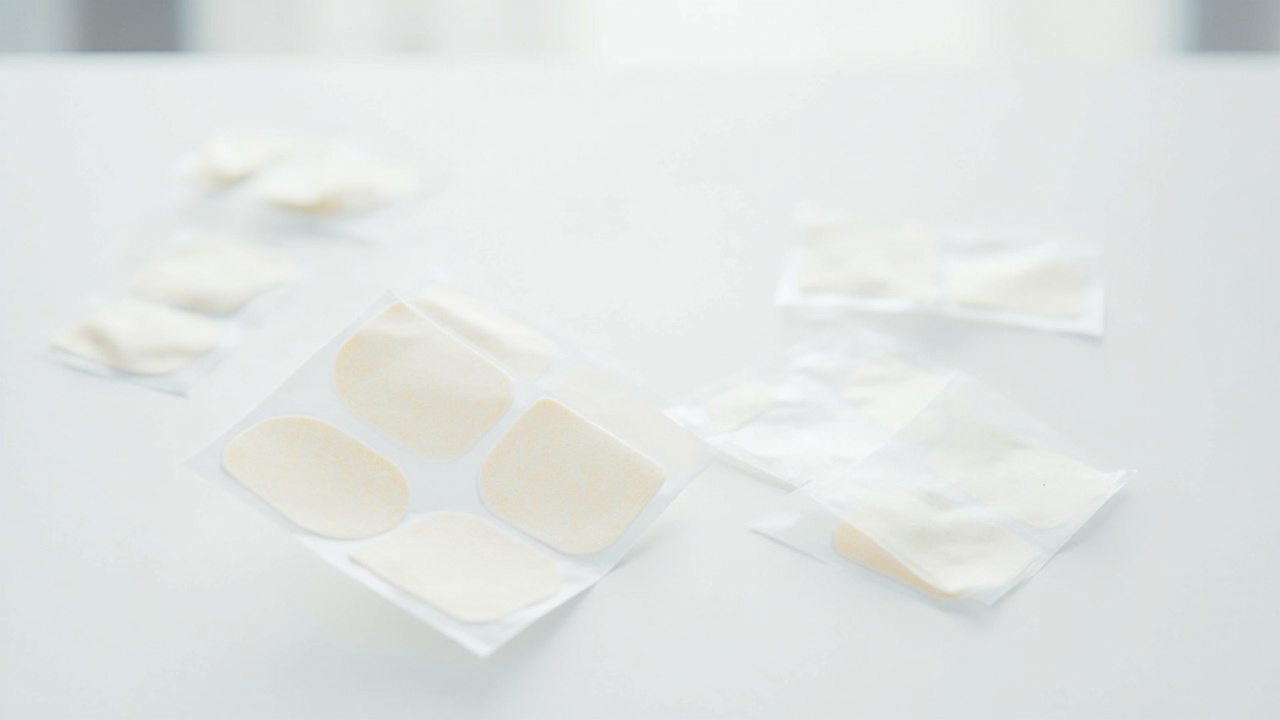
Foot patch size is one of the most overlooked variables in product development—and one of the most consequential. A detox foot patch that adheres poorly, wrinkles under the arch, or peels off during sleep will generate returns and negative reviews regardless of how good the formulation is. Because human feet vary enormously in length, width, arch height, and heel contour, a single “one-size-fits-all” foot patch die cut rarely performs well across a diverse consumer base. For B2B buyers, brand owners, and private-label distributors sourcing from an OEM partner, understanding how patch dimensions interact with foot anatomy is a competitive advantage. This guide breaks down the engineering, material science, and market data behind foot patch sizing so you can specify a design that fits real feet—not just a flat die line.
Key Takeaways
- Why Foot Patch Size Matters More Than Most Brands Realize
- Standard Foot Patch Sizes and Where They Fit
- Foot Patch Die Cut Engineering: Tolerances, Tooling, and Materials
- How to Specify the Right Patch for Your Target Foot Types
- Market Context: Why Sizing Differentiation Is a Growth Strategy
- Partnering With an Experienced OEM for Custom Foot Patch Sizes
Key Takeaways
- Foot length and width vary by more than 30% across global adult populations, so a single patch dimension cannot optimize adhesion for every consumer segment.
- Detox patch design must balance adhesive surface area against flexibility; oversized patches wrinkle, while undersized patches fail at the heel and ball of the foot.
- Foot patch die cut tolerances of ±1–2 mm materially affect peel strength and manufacturing yield, especially on curved or contoured substrates.
- Segmenting SKUs by foot type (wide, narrow, high-arch, large-foot) can reduce return rates and improve perceived efficacy.
- ISO 13485 and GMP-compliant OEM partners can validate patch fit through wear testing before commercial scale-up.
- Market growth in detox foot patches makes differentiated sizing a credible shelf-positioning strategy.
Why Foot Patch Size Matters More Than Most Brands Realize
The global transdermal patch market has expanded steadily, and foot patches occupy a distinct niche within the broader detox and wellness category. Grand View Research estimated the global transdermal patch market at roughly USD 7.5 billion in 2023, with compound annual growth projected in the mid-single digits through 2030. Within that figure, detox and wellness patches—including foot patches—represent a fast-moving consumer segment where differentiation is driven by user experience as much as formulation.
Adhesion is the first failure point. Industry wear-testing data consistently shows that patch detachment is the leading consumer complaint for topical wellness products, and detachment is almost always a geometry problem rather than an adhesive chemistry problem. If a patch is too small for a large foot, the edges lift as the foot flexes. If it is too large, the excess material folds and creates shear stress that breaks the adhesive bond. In both cases, the consumer perceives the product as ineffective.
There is also a compliance dimension. In the United States, foot patches marketed with drug claims fall under FDA oversight, while cosmetic and wellness claims sit in a different regulatory lane. In Europe, CE marking and EU cosmetic or medical device classification may apply depending on claims. Regardless of classification, manufacturers are expected to demonstrate that the product performs as labeled—and fit is part of performance. Working with an ISO 13485-certified and GMP-compliant supplier gives buyers documented control over die-cut dimensions, adhesive coat weight, and release liner specifications.
Finally, size affects cost. Material waste in die cutting can run 8–15% on poorly nested layouts. A thoughtful foot patch die cut that nests efficiently across a web can reduce substrate consumption without compromising fit—an important margin consideration at scale.
The Anatomy of Foot Types: What Your Patch Must Accommodate
Human feet are not uniform. Anthropometric studies across adult populations show foot length ranging from roughly 220 mm to over 300 mm, with width varying proportionally but not predictably. A person with a 265 mm foot may have a narrow (95 mm) or wide (110 mm) forefoot. Arch height adds a third dimension: flat feet present a broad contact surface, while high arches create a gap under the midfoot that a flat adhesive patch cannot bridge without wrinkling.
Heel contour matters too. The heel pad compresses and expands during gait, and a patch that extends too far onto the plantar heel will experience repeated cyclic loading. For overnight wear—the most common use case for detox foot patches—the foot is largely at rest, which reduces shear but increases the importance of initial conformability. A patch that does not conform at application will not improve overnight.
Age and geography add further variation. Older consumers often have thinner skin and more sensitive adhesion needs, favoring lower peel-strength adhesives with larger surface area to compensate. Regional markets differ as well: Southeast Asian and Northern European populations show measurably different average foot dimensions, which is why export-focused OEM programs frequently develop region-specific SKUs rather than a single global size.
The practical implication is that detox patch design should begin with a target foot-type matrix, not a single template. Brands that map their intended consumer segments—athletes, seniors, general wellness, wide-foot consumers—can specify dimensions that actually match the population they serve.
Standard Foot Patch Sizes and Where They Fit
Most commercial detox foot patches fall into a handful of dimensional families. The classic rectangular patch is typically 60 × 80 mm or 70 × 90 mm, sized to cover the plantar arch and ball of the foot. These work well for average adult feet and are the most economical to die cut because they nest efficiently on a rectangular web. However, rectangles do not follow the foot’s outline, so corners are the first to lift.
Oval and elliptical patches, commonly 65 × 95 mm or 70 × 100 mm, follow the plantar contour more closely and reduce corner lift. They cost slightly more per unit due to higher material waste during die cutting, but wear-test data generally shows improved adhesion duration. Anatomically shaped patches—sometimes called “foot-shaped” or “sole-shaped” die cuts—offer the best conformity but require custom tooling and careful nesting to control cost.
Smaller patches (50 × 70 mm) are appropriate for pediatric, travel, or sample formats, but they should not be positioned as equivalent to full-size products. Larger formats (80 × 120 mm) suit wide-foot and large-foot segments but risk wrinkling on smaller feet, so they are best sold with clear sizing guidance.
- Rectangular 60 × 80 mm: Best for average adult feet; lowest tooling cost; highest corner-lift risk.
- Rectangular 70 × 90 mm: Broad coverage for medium-to-large feet; good for overnight wear.
- Oval 65 × 95 mm: Improved contour following; reduced edge lift; moderate waste.
- Oval 70 × 100 mm: Large-foot and wide-foot segments; strong adhesive area.
- Anatomic sole shape: Premium positioning; best conformity; requires custom die tooling.
- Small 50 × 70 mm: Travel, sample, and pediatric formats; not a substitute for full-size coverage.
Foot Patch Die Cut Engineering: Tolerances, Tooling, and Materials
Foot patch die cut quality determines whether your specified dimensions survive manufacturing. Rotary die cutting is the standard for high-volume transdermal production because it delivers consistent registration at speed. Tolerance is typically held to ±1–2 mm on length and width, but tighter tolerances are achievable with laser or precision rotary systems at higher cost. For a 70 × 90 mm patch, a ±2 mm variance represents roughly 5% of surface area—enough to affect both adhesion and consumer perception of consistency.
Tooling choice follows volume. Steel rule dies are economical for short runs and prototyping, while solid rotary dies are preferred for long-run production because they maintain edge quality over millions of cycles. Edge quality matters: a ragged die-cut edge creates stress concentrations where peeling initiates. Buyers should request edge-quality inspection data as part of supplier qualification.
Substrate and adhesive selection interact with geometry. Nonwoven and hydrocolloid substrates conform well but can stretch during cutting, so tension control is critical. Hydrogel and polymer matrices offer excellent skin contact but are less forgiving of tight corners. Release liner choice—PET film versus paper—affects dimensional stability through the coating and cutting process. A GMP-compliant line will document coat weight, liner caliper, and die registration for every lot.
Finally, consider the nesting layout. A well-designed web layout can improve material yield by 10–20% compared with a naive arrangement, directly reducing per-unit cost. This is where an experienced OEM partner adds measurable value before a single patch is produced.
How to Specify the Right Patch for Your Target Foot Types
Specification should be a structured process, not a guess. Start with your consumer segment and work backward to dimensions. If your brand targets general wellness buyers across a broad age range, an oval 65 × 95 mm patch offers a strong balance of conformity, coverage, and cost. If you target athletes or wide-foot consumers, a larger oval or anatomic die cut is more appropriate.
Then validate. Wear testing with a representative panel—ideally 20–30 participants spanning foot lengths and widths—will reveal adhesion failures, wrinkling, and comfort issues before commercial launch. Measure peel strength after 8 hours of wear, and record detachment location. Data from this stage should inform final die-line adjustments.
- Define target consumer segments and their foot-dimension ranges using published anthropometric data.
- Select two or three candidate die lines (rectangular, oval, anatomic) for comparison.
- Request prototype samples from your OEM partner with documented dimensions and adhesive specifications.
- Run a structured wear test with a demographically representative panel over at least three nights.
- Record adhesion duration, detachment location, wrinkling, and comfort ratings for each candidate.
- Review die-cut tolerance and edge-quality data with the manufacturer.
- Confirm regulatory labeling and claims align with the final product classification (FDA, CE, or cosmetic).
- Finalize tooling, nesting layout, and quality inspection criteria before scale-up.
This process typically takes four to eight weeks but prevents costly rework after launch. It also produces documentation that supports supplier audits and regulatory submissions.
Market Context: Why Sizing Differentiation Is a Growth Strategy
The wellness and detox category continues to expand, and foot patches are increasingly sold through e-commerce channels where reviews and return rates directly affect ranking and conversion. MarketsandMarkets has projected continued growth in transdermal delivery overall, driven by consumer preference for non-invasive formats. In this environment, product differentiation through fit is a legitimate strategy: a brand that markets “wide-foot fit” or “anatomic sole shape” creates a specific, searchable proposition.
Returns data reinforces the point. In consumer wellness e-commerce, fit-related complaints are a meaningful share of negative reviews for adhesive products. Reducing those complaints through better sizing improves ratings, which in turn improves visibility. For distributors managing multiple brands, a supplier that can produce several die lines on the same GMP line offers flexibility without multiplying vendor risk.
Regulatory maturity also supports differentiation. ISO 13485 certification signals a documented quality management system, while GMP compliance covers manufacturing controls. Buyers should ask prospective suppliers for certificates, die-cut inspection records, and evidence of wear-testing capability. These are not marketing claims—they are procurement criteria.
Partnering With an Experienced OEM for Custom Foot Patch Sizes
Kongdy Health has manufactured transdermal patches since 1989 and serves more than 120 countries, with FDA registration, ISO 13485 certification, and GMP-compliant production. That experience matters most at the specification stage, when die-line decisions are still flexible and tooling costs are still avoidable. An OEM partner with in-house die cutting, adhesive formulation, and wear-testing capability can move from concept to validated prototype faster than a broker-dependent supplier.
Custom foot patch sizes, anatomic die cuts, and region-specific SKUs are all feasible within a single production program when the manufacturer controls tooling and quality documentation. Buyers should expect transparent tolerance data, sample validation, and clear communication on minimum order quantities and lead times. To explore custom sizing and die-cut options, review Kongdy Health’s OEM/ODM services and request a specification consultation.
Frequently Asked Questions
What is the most common foot patch size for adult consumers?
The most common commercial formats are rectangular patches of 60 × 80 mm and 70 × 90 mm, along with oval patches of 65 × 95 mm. These dimensions cover the plantar arch and ball of the foot for average adult feet while remaining economical to die cut. Brands targeting wide-foot or large-foot segments often move to 70 × 100 mm ovals or anatomic sole shapes. The right choice depends on your target consumer segment and wear-test results.
How tight should foot patch die cut tolerances be?
Standard rotary die cutting typically holds ±1–2 mm on length and width, which is acceptable for most commercial foot patches. Tighter tolerances are available through precision rotary or laser cutting but increase unit cost. For a 70 × 90 mm patch, a ±2 mm variance equals roughly 5% of surface area, which can affect adhesion consistency. Buyers should request edge-quality and dimensional inspection data as part of supplier qualification.
Do I need different patch sizes for different export markets?
Regional differences in average foot dimensions are measurable, so export-focused programs often develop region-specific SKUs. Southeast Asian and Northern European populations, for example, show different average foot lengths and widths. Offering region-appropriate sizing can improve adhesion and consumer satisfaction. A GMP-compliant OEM partner can manage multiple die lines within one production program, reducing vendor complexity.