
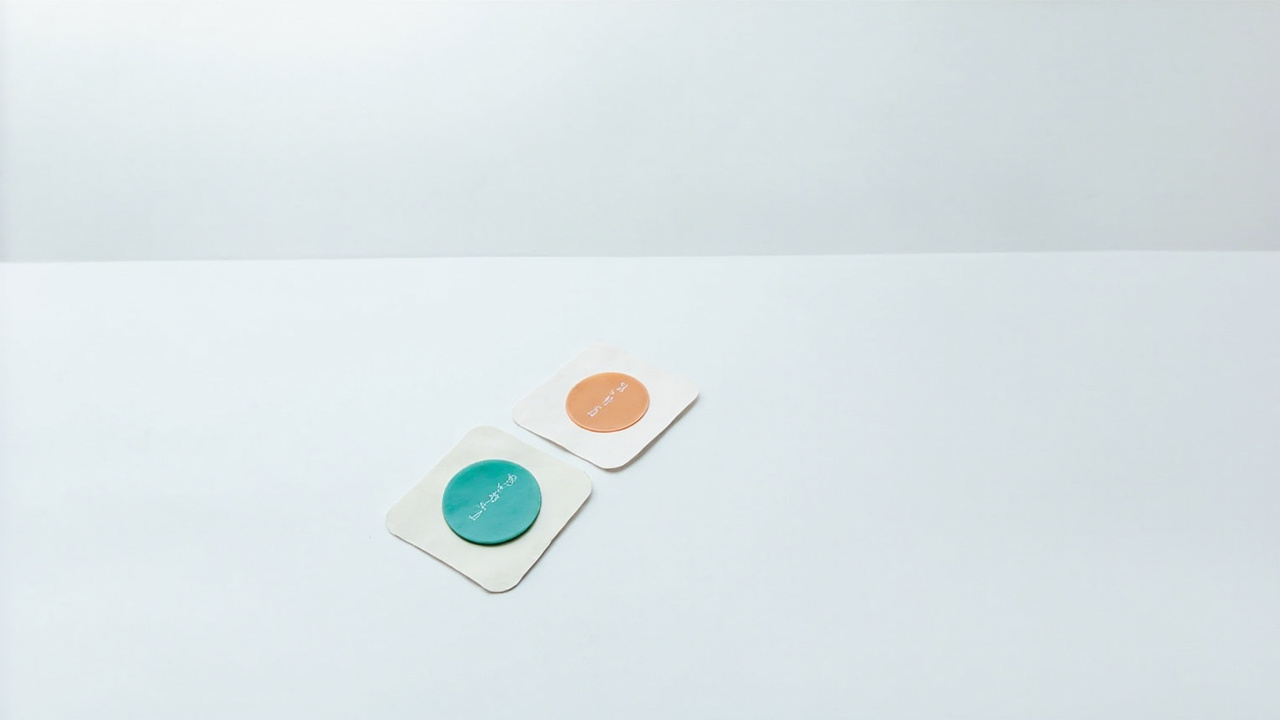
As the demand for topical cooling therapies continues to rise, understanding the raw materials behind cooling patches—hydrogel patch materials, cooling gel ingredients, and menthol gel patch formulation—is critical for B2B buyers, product managers, and formulators. Whether you’re developing a new line of fever-reducing patches, sports recovery products, or migraine relief solutions, the choice of materials directly impacts efficacy, safety, and consumer satisfaction. With over three decades of experience, Kongdy Health has mastered the science of transdermal patch manufacturing, serving 120+ countries with FDA, ISO 13485, and GMP-certified production. In this comprehensive guide, we dissect the key components, market trends, and regulatory considerations to help you make informed decisions for your next OEM project.
Key Takeaways
- Hydrogel Patch Materials: The Backbone of Modern Cooling Patches
- Cooling Gel Ingredients: Menthol, Camphor, and Beyond
- Water-Based Gels: Formulation and Advantages
- Comparative Analysis: Hydrogel vs. Menthol vs. Water-Based Gels
- Manufacturing Process and Quality Control
- Market Trends and Regulatory Landscape
Key Takeaways
- Hydrogel patches dominate the cooling category due to superior skin adhesion, high water content, and sustained release properties.
- Menthol remains the gold standard for cooling sensation, but formulation concentration and complementary ingredients like camphor and eucalyptus enhance performance.
- Water-based gels offer a cost-effective alternative with excellent biocompatibility, though they may require preservatives to ensure microbial stability.
- Regulatory compliance (FDA, ISO 13485, GMP, CE) is non-negotiable; raw material selection must align with target market requirements.
- Market growth is driven by aging populations, sports injuries, and increasing self-care trends, with the global cooling patch market projected to exceed $1.5 billion by 2027.
- OEM partnerships with experienced manufacturers like Kongdy Health accelerate time-to-market and ensure scalable, high-quality production.
Transitioning from these key insights, let’s delve into the foundational materials that make cooling patches effective and consumer-friendly.
Hydrogel Patch Materials: The Backbone of Modern Cooling Patches
Hydrogel is a three-dimensional network of hydrophilic polymers that can absorb and retain large amounts of water or biological fluids. In cooling patches, hydrogel serves as the matrix that holds active ingredients and provides a soothing, moist environment on the skin. The most common polymers used in hydrogel patch materials include polyacrylamide, polyvinyl alcohol (PVA), polyvinylpyrrolidone (PVP), and sodium polyacrylate. Each polymer contributes unique properties: PVA offers excellent film-forming and mechanical strength, PVP enhances solubility and adhesion, and sodium polyacrylate provides high water absorption capacity. According to a 2023 report by Grand View Research, the global hydrogel market size was valued at USD 2.8 billion in 2022 and is expected to grow at a compound annual growth rate (CAGR) of 6.5% from 2023 to 2030, driven by increasing applications in wound care and transdermal drug delivery.
The formulation of hydrogel involves cross-linking the polymer chains to create a stable gel network. This can be achieved through physical cross-linking (e.g., freeze-thaw cycles) or chemical cross-linking using agents like glutaraldehyde or ethylene glycol dimethacrylate. The degree of cross-linking affects the gel’s elasticity, water retention, and drug release profile. For cooling patches, a moderately cross-linked hydrogel ensures the patch remains intact during use while gradually releasing moisture and actives to provide prolonged cooling. Additionally, hydrogel patches are typically transparent and conformable, allowing for discreet use on visible areas like the forehead or neck.
From a manufacturing perspective, hydrogel patch production requires precise control over mixing, coating, and curing processes. Kongdy Health utilizes advanced coating technologies to ensure uniform thickness and consistent active ingredient distribution. Our ISO 13485-certified facilities adhere to strict GMP guidelines, guaranteeing that every batch meets international quality standards. When selecting hydrogel patch materials, B2B buyers should consider factors such as skin compatibility, biodegradability, and cost. While synthetic polymers offer tunable properties and durability, natural polymers like gelatin and chitosan are gaining traction for their eco-friendly profile, albeit at a higher cost.
Cooling Gel Ingredients: Menthol, Camphor, and Beyond
The cooling sensation of a patch is primarily derived from active ingredients that trigger the TRPM8 receptor, a cold-sensing ion channel in the skin. Menthol, a cyclic monoterpene alcohol extracted from peppermint and other mint oils, is the most widely used cooling agent. It activates TRPM8, producing a refreshing, cooling effect without actual temperature reduction. Typical menthol concentrations in cooling patches range from 1% to 5%, with higher levels providing stronger sensations but also increasing the risk of skin irritation. A 2022 study published in the Journal of Pain Research found that a 3.5% menthol patch significantly reduced muscle soreness in athletes compared to placebo, highlighting its efficacy in sports recovery applications.
Camphor, a waxy, flammable terpenoid, is often combined with menthol to enhance cooling and provide mild analgesic effects. It works by stimulating nerve endings, creating a sensation of cold followed by warmth. However, camphor can be toxic if ingested or applied to broken skin, so its concentration is typically limited to 3-11% in topical products. Other cooling gel ingredients include eucalyptus oil, which contains 1,8-cineole (eucalyptol), and methyl salicylate, a counterirritant that produces a cooling sensation followed by warming. These ingredients are often blended to create synergistic effects, but formulators must balance potency with safety and stability.
For B2B buyers, the choice of cooling gel ingredients depends on the target application. Fever patches for children may use lower menthol concentrations (0.5-1%) or rely solely on hydrogel’s evaporative cooling. Adult sports patches often contain higher menthol (3-5%) and camphor for deep penetrating relief. Migraine patches may incorporate menthol along with other actives like lidocaine. It’s crucial to verify that all ingredients comply with regional regulations; for instance, the FDA restricts menthol in over-the-counter (OTC) patches to 1.25% for children under 2 years, while the EU’s REACH regulations govern camphor usage. Kongdy Health’s formulation team stays abreast of these regulations to ensure our clients’ products meet all legal requirements.
Water-Based Gels: Formulation and Advantages
Water-based gels, also known as aqueous gels, are formulations where water is the primary solvent. They are distinct from hydrogel patches in that they may not contain a cross-linked polymer matrix; instead, they use gelling agents like carbomer, xanthan gum, or cellulose derivatives to achieve a semisolid consistency. Water-based gels are popular in cooling patches because they are non-greasy, easily spreadable, and provide a rapid cooling effect through evaporation. The water content can range from 70% to 95%, making them highly refreshing on the skin.
Formulating a water-based gel for cooling patches involves several steps: first, the gelling agent is dispersed in water to form a homogeneous gel; then, active ingredients such as menthol, camphor, and preservatives are added. The pH is adjusted to ensure stability and skin compatibility, typically between 5.5 and 7.0. Preservatives like phenoxyethanol or parabens are essential to prevent microbial growth, as the high water activity supports bacteria and fungi. However, with the clean-label trend, many brands are opting for preservative-free formulations using packaging innovations or sterilized production. Kongdy Health offers both preservative and preservative-free options, tailored to client preferences.
Compared to hydrogel patches, water-based gels offer advantages in cost and simplicity. They require less specialized equipment and can be produced at higher speeds. However, they may lack the structural integrity of hydrogel patches, leading to potential leakage or messiness. For applications where a patch format is desired, water-based gels can be impregnated into non-woven fabrics or foams, creating a hybrid product. This approach combines the cooling benefits of water-based gels with the convenience of a patch. According to MarketsandMarkets, the global transdermal patch market is expected to reach $8.7 billion by 2027, with cooling patches representing a significant and growing segment. Water-based gel patches are particularly favored in Asia-Pacific, where they are commonly used for fever management and hangover relief.
Comparative Analysis: Hydrogel vs. Menthol vs. Water-Based Gels
To aid B2B buyers in selecting the right material, we present a comparative analysis based on key performance criteria. The following bullet points summarize the strengths and weaknesses of each type:
- Cooling Duration: Hydrogel patches provide sustained cooling for 4-8 hours due to slow water evaporation; menthol-based patches offer immediate but shorter cooling (1-3 hours); water-based gels cool rapidly but may require reapplication every 2-4 hours.
- Skin Adhesion: Hydrogel patches exhibit excellent adhesion and conformability; menthol patches may use adhesive layers that can irritate sensitive skin; water-based gels typically require a secondary adhesive or backing.
- Active Ingredient Delivery: Hydrogel can encapsulate and release actives in a controlled manner; menthol patches release actives quickly upon contact; water-based gels allow for easy incorporation of water-soluble actives.
- Cost: Water-based gels are the most cost-effective; hydrogel patches are mid-range; menthol patches with high active concentrations can be expensive.
- Regulatory Complexity: Menthol and camphor concentrations are tightly regulated; hydrogel and water-based gels face fewer restrictions but still require safety assessments.
- Consumer Preference: Hydrogel patches are preferred for their comfort and discreet appearance; menthol patches are favored for strong sensory effect; water-based gels are popular in Asian markets for their refreshing feel.
This analysis underscores that there is no one-size-fits-all solution. The optimal choice depends on the intended use case, target market, and brand positioning. For instance, a premium sports recovery brand might opt for a menthol-hydrogel hybrid, while a pediatric fever patch would likely use a simple hydrogel with minimal actives. Kongdy Health’s R&D team can help navigate these trade-offs through custom formulation and prototyping.
Manufacturing Process and Quality Control
Producing high-quality cooling patches requires a robust manufacturing process and stringent quality control. The typical production flow for hydrogel patches involves:
- Raw Material Sourcing and Testing: All polymers, actives, and excipients are sourced from qualified suppliers and tested for identity, purity, and potency. Certificates of Analysis (CoA) are verified, and samples are retained for traceability.
- Mixing and Homogenization: The hydrogel base is prepared by dissolving polymers in purified water, followed by the addition of active ingredients. High-shear mixers ensure a uniform blend, and the pH is adjusted as needed.
- Coating and Curing: The gel is coated onto a release liner or backing film at a precise thickness using slot-die or knife-over-roll coating. The coated web then passes through a curing oven to cross-link the polymer and remove excess moisture.
- Lamination and Die-Cutting: A backing film and release liner are laminated to the gel layer, and individual patches are die-cut to the desired shape and size. Automated vision systems inspect for defects such as air bubbles or uneven edges.
- Packaging and Sterilization: Patches are sealed into pouches, often with a desiccant to maintain stability. If required, terminal sterilization (e.g., gamma irradiation) is performed, though many cooling patches are produced aseptically.
- Quality Testing and Release: Finished patches undergo tests for adhesion, thickness, active content, microbial limits, and skin irritation. Only batches that meet all specifications are released for distribution.
Kongdy Health’s manufacturing facilities are ISO 13485 certified and comply with GMP guidelines. We employ in-line process controls, such as near-infrared (NIR) spectroscopy for real-time monitoring of active content, ensuring batch-to-batch consistency. Our quality management system includes comprehensive documentation, from batch records to stability studies, facilitating regulatory submissions in the US, EU, and other regions. For clients seeking CE marking, we provide technical files and support for clinical evaluations as needed.
Market Trends and Regulatory Landscape
The global cooling patch market is experiencing robust growth, driven by several factors. An aging population susceptible to muscle and joint pain, increasing participation in sports and fitness activities, and a growing preference for non-invasive pain management are key drivers. According to a 2023 report by Grand View Research, the global transdermal patch market size was estimated at USD 7.3 billion in 2022 and is projected to expand at a CAGR of 6.8% from 2023 to 2030. The cooling patch segment is expected to grow even faster, fueled by rising demand in emerging economies and the expansion of e-commerce channels.
Regulatory oversight varies by region. In the United States, cooling patches are regulated as OTC drugs if they make therapeutic claims, requiring compliance with FDA monographs for external analgesics. The FDA’s Over-the-Counter (OTC) Monograph M017 covers menthol, camphor, and other counterirritants, specifying allowable concentrations and labeling requirements. In the European Union, cooling patches may be classified as medical devices (under MDR 2017/745) or cosmetics, depending on their intended use and claims. The CE mark is mandatory for medical devices, and compliance with ISO 13485 is expected. In Asia, countries like Japan and China have their own regulatory frameworks; for instance, China’s NMPA requires registration for medical devices, while Japan’s PMDA regulates OTC drugs.
Navigating this complex landscape can be daunting for brands. Partnering with an experienced OEM manufacturer like Kongdy Health simplifies the process. We have a dedicated regulatory affairs team that stays updated on changing requirements and can assist with product classification, testing, and documentation. Our existing certifications (FDA, ISO 13485, GMP, CE) demonstrate our commitment to quality and compliance, giving our clients confidence in the products we manufacture.
Frequently Asked Questions
Q1: What is the difference between hydrogel and water-based gel cooling patches?
Hydrogel patches consist of a cross-linked polymer matrix that holds water and actives, providing structural integrity and sustained release. Water-based gels, on the other hand, are semisolid formulations that may not have a cross-linked structure; they rely on gelling agents to thicken water. Hydrogel patches are typically more durable and offer longer cooling, while water-based gels are often more cost-effective and can be impregnated into fabrics. The choice depends on desired cooling duration, adhesion requirements, and budget.
Q2: How do I choose the right menthol concentration for my cooling patch?
The optimal menthol concentration depends on the target application and user demographics. For children’s fever patches, 0.5-1% menthol is generally safe and effective. Adult sports recovery patches may contain 3-5% menthol for a stronger cooling sensation. It’s essential to stay within regulatory limits; for example, the FDA allows up to 1.25% menthol in OTC patches for children under 2 years. Conducting sensory panels and stability tests can help determine the ideal concentration for your product. Kongdy Health can guide you through formulation trials to achieve the desired sensory profile.
Q3: What certifications should I look for in a cooling patch OEM manufacturer?
Look for ISO 13485 certification, which demonstrates a manufacturer’s commitment to quality management for medical devices. FDA registration and GMP compliance are also critical, especially if you plan to sell in the US. For Europe, CE marking indicates conformity with EU regulations. Additionally, check for specific capabilities such as cleanroom manufacturing, in-house testing, and regulatory support. Kongdy Health holds all these certifications and has a proven track record of successful audits and product approvals worldwide.
Sources
- Grand View Research – Hydrogel Market Size Report, 2023
- MarketsandMarkets – Transdermal Patch Market Report, 2022
- FDA – Over-the-Counter (OTC) Monographs
- ISO 13485:2016 – Medical Devices Quality Management
Ready to develop your next cooling patch product? Partner with Kongdy Health for end-to-end OEM/ODM services. With over 30 years of experience and a commitment to quality, we help you bring safe, effective, and compliant cooling patches to market. Contact us today to discuss your project.