
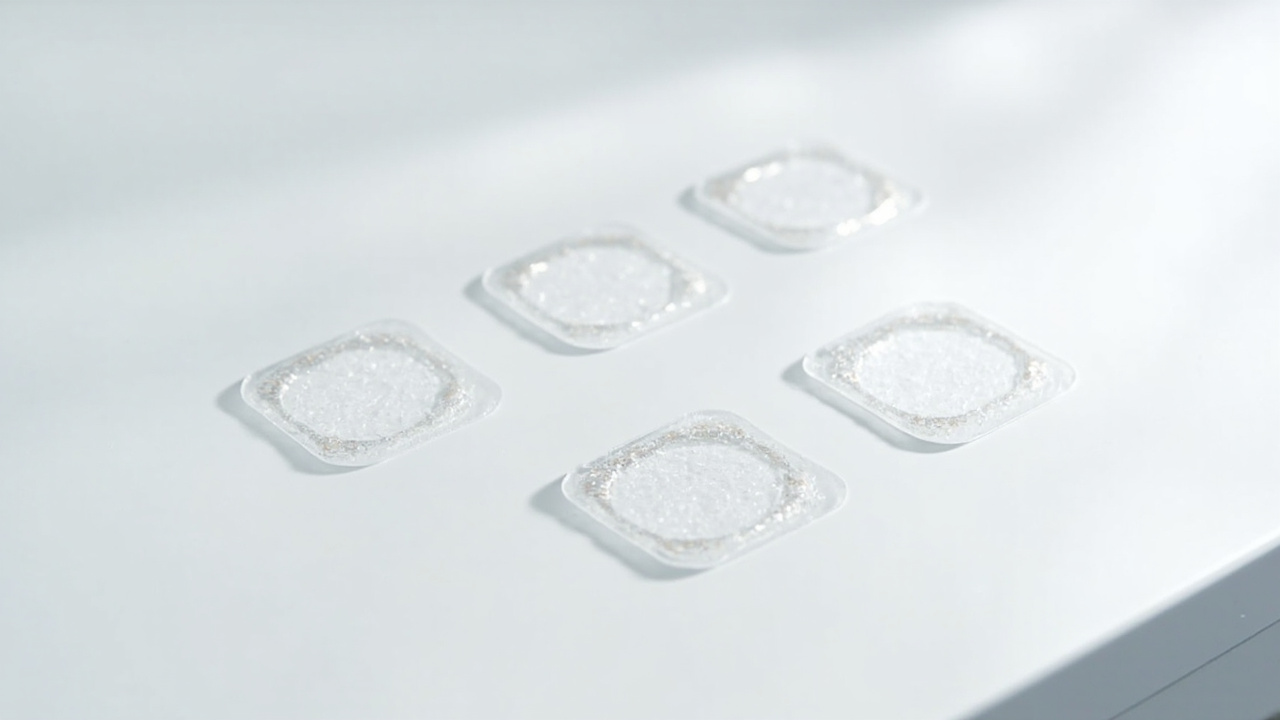
In the competitive landscape of transdermal patch manufacturing, quality control (QC) is the cornerstone that separates industry leaders from the rest. For B2B buyers—whether you’re a pharmaceutical company, a wellness brand, or a medical device distributor—understanding what inspectors actually check during patch manufacturing is essential to ensure product safety, efficacy, and regulatory compliance. This comprehensive guide delves into the intricate layers of patch quality control, offering data-driven insights that will empower you to make informed decisions when selecting an OEM partner. At Kongdy Health, with over 35 years of expertise and certifications including FDA, ISO 13485, and GMP, we’ve mastered these processes, and we’re sharing our knowledge to help you navigate this complex terrain.
Key Takeaways
- The Stakes: Why Patch Quality Control Matters More Than Ever
- The Blueprint: Regulatory Standards That Govern Patch Manufacturing
- Raw Material Inspection: The Foundation of Patch Quality Control
- In-Process Control: Where Defects Are Caught Early
- Finished Product Testing: The Final Gate Before Market
- Environmental Monitoring: The Silent Guardian
Key Takeaways
- Regulatory compliance is non-negotiable: Inspectors verify adherence to FDA, ISO 13485, and GMP standards, which are critical for market access and patient safety.
- Raw material traceability is the first line of defense: Every ingredient and component must be sourced from approved suppliers and undergo rigorous identity and purity testing.
- In-process control is where defects are caught early: Real-time monitoring of coating weight, uniformity, and lamination prevents costly rework and ensures batch consistency.
- Finished product testing is the final gate: Release testing for drug content, adhesion, and microbial limits determines if a batch reaches the market.
- Environmental monitoring is a silent guardian: Cleanroom classification, air quality, and water purity are scrutinized to prevent contamination.
- Documentation is as critical as the product itself: Complete batch records and deviation reports are essential for audits and recalls.
Now, let’s peel back the layers of patch quality control to understand what truly happens in a world-class manufacturing facility.
The Stakes: Why Patch Quality Control Matters More Than Ever
The global transdermal patch market is projected to reach $9.8 billion by 2028, growing at a CAGR of 4.5% from 2021 (Grand View Research, 2021). This growth is driven by the increasing demand for non-invasive drug delivery systems, particularly for chronic conditions like pain management, hormone replacement, and cardiovascular diseases. With such market expansion, the margin for error shrinks. A single defective batch can lead to product recalls, regulatory penalties, and irreparable brand damage. For instance, in 2020, the FDA reported a 12% increase in drug recalls compared to the previous year, with quality issues being a leading cause (FDA, 2020). This underscores the critical role of robust QC systems.
Moreover, the complexity of transdermal patches—multi-layer laminates with precise drug release kinetics—demands meticulous attention at every stage. Unlike conventional dosage forms, patches involve intricate interactions between the drug, adhesives, and backing materials. Any deviation in thickness, adhesive properties, or drug concentration can compromise therapeutic efficacy and patient safety. Therefore, inspectors, whether internal or external, are trained to identify even the subtlest anomalies.
The Blueprint: Regulatory Standards That Govern Patch Manufacturing
Before diving into specific checks, it’s essential to understand the regulatory framework that shapes QC protocols. In the United States, the FDA regulates transdermal patches as drug-device combination products, requiring compliance with Current Good Manufacturing Practices (cGMP) as outlined in 21 CFR Part 210 and 211. Internationally, ISO 13485 sets the benchmark for quality management systems in medical devices, while the European Union’s CE marking requires conformity with the Medical Device Regulation (MDR) 2017/745. Additionally, the International Council for Harmonisation (ICH) provides guidelines for pharmaceutical quality, such as ICH Q7 for active pharmaceutical ingredients (APIs).
These standards mandate a comprehensive quality system that covers everything from facility design to personnel training. For instance, ISO 13485 requires documented procedures for risk management, validation, and traceability. GMP regulations emphasize the need for written protocols, qualified equipment, and validated processes. Inspectors, whether from regulatory bodies or third-party auditors, use these standards as their checklist. They verify that the manufacturer not only has these systems in place but also that they are effectively implemented and continuously improved.
Raw Material Inspection: The Foundation of Patch Quality Control
Quality begins with the inputs. In transdermal patch manufacturing, raw materials include the active pharmaceutical ingredient (API), adhesives, backing films, release liners, and penetration enhancers. Each component must meet stringent specifications to ensure the final product’s safety and performance. According to a survey by the FDA, 70% of drug quality issues can be traced back to raw material problems (FDA, 2019). Therefore, inspectors pay close attention to how manufacturers handle incoming materials.
First, they verify that all suppliers are qualified and approved. This involves reviewing supplier audits, certificates of analysis (CoA), and stability data. For APIs, inspectors check for identity, purity, and potency using techniques like High-Performance Liquid Chromatography (HPLC) and Gas Chromatography (GC). They also ensure that the API’s particle size distribution is consistent, as it affects drug release uniformity. For adhesives, they assess viscosity, adhesion strength, and biocompatibility. Backing films and release liners are inspected for thickness, tensile strength, and barrier properties. Additionally, inspectors ensure that materials are stored under appropriate conditions—temperature, humidity, and light—to prevent degradation.
Traceability is another critical aspect. Each batch of raw material must have a unique identifier that links to its supplier, manufacturing date, and test results. This traceability extends through the entire production process, enabling rapid recall if a defect is discovered. Inspectors often perform random sampling and testing to confirm that the manufacturer’s incoming inspection is effective. For example, they might take a sample from a newly received lot of adhesive and test its peel strength to ensure it meets specifications.
In-Process Control: Where Defects Are Caught Early
Once materials are approved, the manufacturing process begins, typically involving coating, drying, lamination, cutting, and packaging. In-process control (IPC) is the practice of monitoring and controlling the process parameters in real-time to ensure that the product stays within defined specifications. This is where the expertise of a seasoned manufacturer shines. Inspectors scrutinize IPC records to verify that critical parameters were consistently maintained.
One of the most critical IPC checks is coating weight uniformity. The drug-loaded adhesive layer must be applied at a precise thickness and weight across the entire patch. Variations can lead to dose inconsistencies. Inspectors look for data from on-line gauges or off-line sampling that demonstrate the coating weight is within the acceptance criteria. They also check the drying process, as residual solvents can be toxic. Gas chromatography is often used to measure solvent residues, ensuring they are below regulatory limits.
Lamination is another focus area. The adhesive layer must be properly bonded to the backing film and release liner without wrinkles, bubbles, or delamination. Inspectors examine the laminated web for visual defects and measure peel strength to ensure integrity. Furthermore, they review the cutting and die-cutting process to confirm that patches are accurately sized and free from burrs. In-line vision systems are increasingly used to detect these defects automatically, but inspectors still verify that the systems are calibrated and that any rejected patches are properly documented and quarantined.
Finished Product Testing: The Final Gate Before Market
After manufacturing, each batch undergoes a battery of quality tests before release. This is the last line of defense against defective products reaching patients. Inspectors review the testing protocols and results to ensure they are comprehensive and compliant with pharmacopoeial standards (e.g., USP, EP). The key tests include:
- Drug content and uniformity: Patches are analyzed to confirm they contain the labeled amount of API and that the drug is evenly distributed across the patch. This is typically done using HPLC.
- In vitro release testing: This measures the rate at which the drug is released from the patch using a paddle-over-disk or flow-through cell apparatus. It ensures that the patch will deliver the drug at the intended rate.
- Adhesion testing: Patches must adhere adequately to the skin. Tests include peel adhesion, tack, and shear strength. Inspectors check that these values are within the specified range.
- Microbiological testing: Patches must be free from harmful microorganisms. Tests for bioburden, sterility (if applicable), and preservative effectiveness are conducted.
- Packaging integrity: The final packaging must protect the patch from moisture, light, and physical damage. Inspectors verify seal strength and leak tests.
- Grand View Research – Transdermal Patches Market Report
- FDA – Drug Recalls
- ISO 13485:2016 – Medical devices quality management systems
- WHO – Quality Assurance of Pharmaceuticals
Beyond these, stability studies are crucial. Patches are stored under various conditions (e.g., 25°C/60% RH, 40°C/75% RH) and tested at intervals to establish shelf life. Inspectors review stability data to ensure that the product remains safe and effective throughout its intended shelf life. They also check that the manufacturer has a robust stability program in place, including on-going and accelerated studies.
Environmental Monitoring: The Silent Guardian
Transdermal patches are typically manufactured in cleanrooms to prevent contamination. Inspectors pay close attention to environmental controls because even microscopic particles can compromise product quality. They check the cleanroom classification (e.g., ISO 14644-1) and verify that the facility meets the required air particle counts. For example, a typical patch manufacturing facility operates in an ISO Class 8 environment, but some critical steps may require ISO Class 7 or better.
Air quality is monitored for both particle counts and microbial contamination. Settle plates and active air samplers are used to detect viable microorganisms. Inspectors review the trending data to ensure that the environment is consistently within limits. They also check the water system, as water is often used in cleaning and in some formulations. Purified water or water for injection (WFI) must meet pharmacopoeial standards for conductivity and microbial limits.
Personnel hygiene is another area of scrutiny. Inspectors verify that operators are trained in gowning procedures, handwashing, and behavior in cleanrooms. They also ensure that the facility has proper airlocks, pressure differentials, and HVAC systems to maintain the required cleanliness. Any deviation, such as a spike in particle counts, must be investigated and documented, and inspectors will review the corrective and preventive actions (CAPA) taken.
Documentation and Traceability: The Paper Trail of Quality
In the world of regulatory compliance, if it isn’t documented, it didn’t happen. Inspectors place immense importance on documentation. They review the entire batch record, from raw material receipts to finished product release. This includes the master batch record (MBR), which specifies the exact steps, equipment, and parameters for each batch. They also check that all deviations, from minor to major, are logged and investigated. For instance, if a coating machine had a brief stoppage, there must be a deviation report explaining the impact on the batch and any corrective actions.
Traceability is not just about materials but also about equipment and personnel. Inspectors verify that equipment is properly calibrated and maintained, with logs showing regular checks. They also ensure that operators are qualified and have current training records. In the event of a recall, the manufacturer must be able to identify all affected batches and customers quickly. A robust traceability system is essential, and inspectors test it by asking for a mock recall exercise.
Furthermore, inspectors review the complaint handling process. Any customer complaint must be investigated, and if it indicates a quality issue, the manufacturer must take appropriate action, including potentially recalling the product. The documentation of these investigations is critical, as it demonstrates a commitment to continuous improvement.
Choosing a Compliant OEM Partner: Your Quality Assurance
For B2B buyers, understanding these QC checks is only the first step. The next is selecting an OEM partner that not only meets but exceeds these standards. When evaluating a potential manufacturer, consider their certifications, audit history, and track record. Ask for their FDA registration and ISO certificates. Visit their facility if possible, and observe their QC processes firsthand. Review their batch records and stability data. A reputable OEM will be transparent and forthcoming with this information.
Kongdy Health, with three decades of experience, has built a reputation for uncompromising quality. Our facilities are FDA-registered, ISO 13485 certified, and GMP compliant. We employ a multi-layered QC system that includes raw material testing, in-process monitoring, and comprehensive finished product testing. Our team of skilled inspectors uses advanced analytical techniques and state-of-the-art equipment to ensure every patch meets the highest standards. We also invest in continuous training and technology upgrades to stay ahead of regulatory changes.
When you partner with Kongdy Health, you gain more than a manufacturer; you gain a quality assurance partner. We work closely with you to understand your product specifications and regulatory requirements, and we tailor our QC processes to meet your needs. Our robust documentation and traceability systems provide you with complete confidence in the safety and efficacy of your products. To learn more about our OEM/ODM services, visit our OEM/ODM services page.
Frequently Asked Questions
Q1: What is the most critical quality control test for transdermal patches?
The most critical test is arguably the in vitro release test, as it directly measures the rate at which the drug is released from the patch. This test ensures that the patch will deliver the therapeutic dose over the intended period, which is fundamental to its efficacy. However, other tests like drug content uniformity and adhesion are equally vital. A failure in any of these tests can render the patch unsafe or ineffective, leading to product rejection. Inspectors prioritize these tests because they directly impact patient outcomes. Additionally, microbial testing is critical to prevent infections, especially for patches that remain on the skin for extended periods.
Q2: How often are environmental monitoring tests conducted in a patch manufacturing facility?
Environmental monitoring is conducted on a routine basis, typically at least once per shift, and more frequently during critical operations. For example, settle plates may be exposed for the duration of a manufacturing run, while air samplers may run for specific time intervals. The frequency depends on the cleanroom classification and the risk associated with the process. In ISO Class 8 environments, monitoring might be daily, whereas in ISO Class 7 or higher, it could be more frequent. Inspectors expect to see a written monitoring plan that specifies sampling locations, frequency, and acceptance criteria. Any out-of-limit results must be investigated, and corrective actions taken to prevent recurrence.
Q3: What should a B2B buyer look for in a patch OEM’s quality management system?
B2B buyers should look for a robust quality management system that is fully documented and implemented. Key elements include certifications like ISO 13485 and FDA registration, which demonstrate compliance with international standards. Additionally, buyers should assess the manufacturer’s approach to risk management, validation, and change control. They should review audit reports and any corrective actions taken. Transparency is crucial—the OEM should be willing to share batch records, stability data, and environmental monitoring results. A strong quality culture, evident from the top down, is also a good indicator. Ultimately, the OEM should act as a partner in ensuring product quality, not just a supplier.